Dale Cripps

Dale Cripps

Founder & Co-Publisher

Dale Cripps is a professional journalist who has focused two thirds of his career on the subject of high-definition television. Upon completing his education in business and service in the military he formed Cripps and Associates, South Pasadena, California, in 1964, which operated as a market-development company for aerospace services. In 1983 he turned to television and began what has become a 20 year campaign to pioneer HDTV. For fifteen of those years he published the well-regarded HDTV Newsletter (an international monthly written for television professionals). During much of this same time he also served as the HDTV-Technical Editor for \"Widescreen Review Magazine.\" On November 16, 1998 he launched the Internet distributed HDTV Magazine, which remains the only consumer publication devoted exclusively to high-definition television. In April of 2002 he co-founded with Tedson Meyers of Coudert Bros, the High-definition Television Association of America, which is presently based in Washington DC. Cripps is the president of this organization. Mr. Cripps is a charter member of the Academy of Digital Television Pioneers and honored by that organization with the DTV Press Leadership Award of 2002. He makes his home in Oregon.

235 articles

From the Archives - The Next Generation of Television

Written in 1994, this retrospective piece examines HDTV's technical foundations, including the 1,125-line interlaced scanning standard, 16:9 aspect ratio, and the 30-degree field of vision that NHK research identified as the threshold for immersive viewing. The Grand Alliance system, combining MPEG-2 compression and Zenith's 8-VSB transmission within a 6 MHz channel, represented the US technical approach, with Dolby AC-3 five-channel surround audio selected after testing at Lucas Ranch. For consumers, the analysis clarifies why widescreen NTSC sets were a poor substitute for true HDTV, and why broadcast infrastructure inertia remained the primary barrier to adoption.

Articles
DisplaySearch Reports Flat Q2'08 Plasma Panel Results as 1080p Shipments Surge 89% Q/Q

Plasma display panel (PDP) shipments reached 3.5 million units in Q2'08, a modest 1% quarter-over-quarter increase following stronger Q1'08 growth, with softness attributed to weaker demand in North America and China. Meanwhile, 1080p panel shipments surged 89% Q/Q, signaling a rapid shift toward full HD resolution in the plasma segment. Consumers shopping for large-screen TVs in mid-2008 would have found an expanding selection of 1080p plasma options despite overall flat market volume.

Bulletins

SMPTE to Establish 3-D Home Entertainment Task Force Committee to Define Parameters of Stereoscopic 3-D Mastering Standard for Home Display

SMPTE is forming the 3-D Home Display Formats Task Force to define stereoscopic 3-D mastering standards for home viewing across broadcast, cable, satellite, packaged media, and internet delivery channels. The committee will produce a working report within six months covering minimum standards and evaluation criteria, with its inaugural meeting set for August 19, 2008 at USC's Entertainment Technology Center. For consumers, a ratified standard would ensure 3-D content purchased from any source plays correctly on any tethered home display, removing a key barrier to mainstream adoption.

Bulletins

Early HDTV Supporter Dies at 93

Dale Cripps, founder of HDTV Magazine and a figure in the HDTV movement since 1984, memorializes his mother Frances Cripps, who died May 7, 2008 at age 93. In 1986, her unsolicited $50,000 contribution sustained the then-44-page monthly HDTV Newsletter through its critical early years, funding conference appearances worldwide that helped build industry confidence in the technology. Her investment represents the kind of behind-the-scenes support that shaped the trajectory of HDTV as a viable broadcast standard.

Articles

Trade Fuels $1.4 Trillion Consumer Electronics Industry says New CEA Report

A PricewaterhouseCoopers study commissioned by the Consumer Electronics Association projects the U.S. CE industry will generate $1.4 trillion in direct output and $2.6 trillion in total economic activity in 2008, directly employing 4.4 million Americans and supporting 15.4 million jobs across related industries. CE exports alone account for 76 percent of trade-driven output impact and sustain roughly 1.5 million U.S. jobs. For policymakers and industry stakeholders, the data frames free trade agreements with Colombia, Panama, and Korea as critical levers for sustaining this economic engine.

Bulletins

Blu-ray Wins: A Bittersweet Celebration

Toshiba's withdrawal from the HD DVD format war hands victory to Blu-ray, ending a costly industry battle in which hundreds of millions of dollars were spent backing competing high-definition disc formats. Both HD DVD and Blu-ray offered technically capable platforms for home video delivery, making the outcome difficult to predict even for developers and software companies. For consumers, the resolution means a single clear standard for high-definition physical media, though emerging storage and distribution technologies may soon reshape the landscape again.

Articles

HDTV Inventories Piled Up in January

North American flat panel TV distributor inventories surged 68% in January 2008 while HDTV unit sales fell 37%, reversing the prior year's January gain of 18%. The inventory buildup was sharpest in the 30-to-34-inch segment, where stock levels more than tripled despite a 55% sales increase, as manufacturers offloaded unsold holiday stock onto distributors. Consumers in that affordable size tier held back spending amid rising food and energy costs, and the resulting oversupply is expected to push street prices lower in the coming months.

Bulletins
Q4'07 Worldwide LCD TV Shipments Surpass CRTs

Q4'07 Worldwide LCD TV Shipments Surpass CRTs

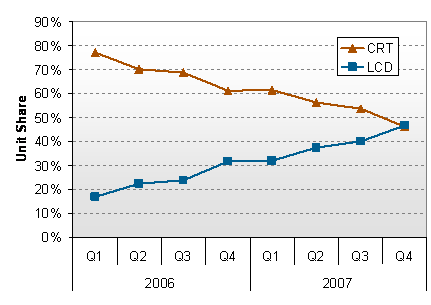
LCD TV shipments surpassed CRT for the first time in Q4 2007, rising 56% year-over-year to 28.5 million units and capturing 47% of the global TV market, while 1080p resolution climbed to 17% of all LCD TV shipments and 57% of 40-inch-plus units. Total 2007 TV revenues exceeded $100 billion for the first time, with LCD alone accumulating nearly $68 billion. For consumers, these shifts signal accelerating price competition across screen sizes and a rapidly shrinking CRT replacement window as LCD penetration reached 86% in Japan and 78% in North America.

Bulletins

December HDTV Sales Jumped 27%

North American flat panel HDTV unit sales surged 27% in December 2008 over November, with LCD capturing 50% of the 50"-54" size segment and pushing plasma's unit share to a record low of 17%. Samsung dominated the market with 29.6% unit share and 32.2% revenue share, led by the LNT4661F 1080p 46" LCD HDTV at an average street price of $1,531, down 15% month-over-month. Consumers leveraged price drops of up to 10% on top-selling models to trade up to larger screen sizes, a trend likely to accelerate as new high-capacity LCD plants come online later in 2008.

Bulletins

Best Buy to Recommend Blu-ray as the Customer's Digital Format Choice

Best Buy announced in early 2008 that it would prominently showcase Blu-ray hardware and software products in its U.S. retail and online channels starting in March, recommending Blu-ray as the preferred high-definition disc format over HD-DVD. The retailer cited the rapid proliferation of HDTVs and the need for a single, widely-accepted format offering product compatibility and expanded content choices as key drivers. Consumers already invested in HD-DVD could still purchase those products, but Best Buy's endorsement signaled a decisive shift in retail support that would accelerate Blu-ray's market dominance.

Bulletins

Netflix Opts for Blu-Ray High-Def DVDs

Netflix announced it will stock only Blu-ray format high-definition DVDs, abandoning Toshiba's HD DVD format after four of the six major studios, including Disney, Sony Pictures, Fox, and MGM, committed exclusively to the Sony-backed standard. The company has carried both formats since their 2006 availability, but the studio alignment made Blu-ray's dominance likely. For consumers who have delayed purchasing a high-def DVD player pending format resolution, Netflix's move signals a clearer path toward Blu-ray as the industry standard.

Bulletins

Displaybank Reports Slight Price Decline In Panels

Displaybank's Q4 2007 flat TV price report shows 42-inch PDP TVs averaging $1,253 (roughly $30 per inch), a 2% quarter-on-quarter decline, while 40/42-inch LCD TVs hovered near $1,412-$1,413, giving PDP a roughly 13% price advantage. The quarterly rate of decline across the 40-inch range eased to 4.0%, signaling a broader price stabilization phase after years of 30-40% annual drops. For buyers, this stabilization suggests fewer dramatic price cuts ahead, making current pricing a more reliable baseline for purchase decisions.

Bulletins

STARZ Bulks Up Movie Line-up

Starz Entertainment has secured extended first-run output deals with Sony Pictures Television (theatrical releases through 2013) and Disney-ABC Domestic Television (through 2012), alongside library agreements with Warner Bros., MGM, and Universal covering approximately 1,200 titles. The content will be distributed across 16 linear channels, HD, Starz On Demand, and the Vongo broadband video download service. Subscribers gain access to a broad catalog spanning major franchises, classic films, and legacy television series, significantly deepening Starz's programming pipeline into the next decade.

Bulletins

Plasma Panel Market Starts Flowing Again in Q3

Global Plasma Display Panel (PDP) shipments rebounded to 3 million units in Q3 2007, a 27.1 percent sequential increase, after a 16.6 percent drop in Q1 and near-flat growth in H1 2007. Rapid price declines are driving consumer demand, particularly for 50-inch and larger screens, while Average Selling Prices are projected to fall from $761 in 2006 to $380 by 2011. Despite flat revenue forecasts through 2011, unit volumes are expected to double to 20.1 million, making plasma a viable but margin-pressured alternative to LCD for large-screen buyers.

Bulletins

DisplaySearch Expects Sales of TFT LCD Manufacturing Equipment to Jump 40% to $11.6 Billion in 2008

DisplaySearch forecasts TFT LCD manufacturing equipment sales to surge 40% to $11.6 billion in 2008, rebounding sharply from the $8.3 billion recorded in 2007, a 35% decline from 2006 levels. Fab utilization reached a record 95.7% in Q3/Q4 2007, and AMLCD TFT array capacity is projected to grow at a 34% CAGR from 4.5 million m2 in 2000 to over 209 million m2 by 2013. For buyers and investors, tightening supply/demand through 2008 is expected to keep panel pricing firm while pre-tax profit margins push toward 20%.

Bulletins

Comcast On The March

Comcast announced three major initiatives at CES 2009, including reaching fourth-largest residential phone provider status with Comcast Digital Voice less than three years after launch, and unveiling Project Infinity - a roadmap to deliver over 1,000 HD choices monthly and expand its On Demand movie library to 6,000 titles with 3,000 in HD. The company also launched Fancast.com, aggregating over 3,000 hours of free streaming content from CBS, NBC, Fox, and others across 50,000 TV shows and 80,000 movies. These moves signal a significant shift in how Comcast positions itself against traditional telecom providers and standalone streaming services, with direct implications for consumers seeking integrated video, phone, and internet services.

Bulletins

Dolby Debuts New Video Technologies at International CES 2008

Dolby Laboratories unveiled its high dynamic range (HDR) imaging suite at CES 2008, with Dolby Contrast - the first product in the lineup - scheduled for distribution to LCD manufacturers in Q1 2008. The technology leverages locally dimmed LED backlighting to deliver contrast ratios that closely approximate real-world visual depth and detail on LCD TVs. For consumers, this means LCD televisions equipped with Dolby Contrast could produce significantly more accurate and nuanced images without requiring a full display hardware overhaul.

Bulletins

Plasma Television Manufacturers Invest Now For the Future

The Plasma Display Coalition reports that its four member manufacturers - Hitachi, LG Electronics, Panasonic, and Pioneer - collectively invested over one billion dollars in the past two years to expand plasma panel production, with output exceeding 15 million units worldwide in 2007. More than two dozen Full HD 1920x1080 plasma sets have been introduced, enabling full compatibility with Blu-ray and HD DVD sources, while improvements in contrast, brightness, and power consumption continue. For consumers, plasma remains the dominant technology in the 50-inch-and-larger segment, with 21 percent growth in Q3 2007 signaling strong market momentum.

Bulletins

Pacific Media Reports 1080p LCD HDTV Outsold Lower Priced Plasma Models

Pacific Media Associates data from October 2007 shows 1080p LCD HDTVs outsold 1080p plasma models nearly three to one in the 50-to-54-inch segment, despite carrying average street prices 19% higher than plasma alternatives. LCDs held 80% of total flat panel unit sales for screens 26 inches and larger, with 1080p LCD unit sales growing 25% month-over-month and accounting for half of total monthly revenues. Samsung led unit market share at 19.6% while Sony topped revenue share at 24.3%, signaling that brand positioning and panel technology are reshaping consumer purchasing decisions.

Bulletins

LCD TVs, GPS, Digital Picture Frames, Camera Accessories and D-SLR Among Top Selling Items for Black Friday

A DisplaySearch Black Friday 2007 webinar revealed that LCD TV sales grew 61% year-over-year in units and 83% in revenues, driven by a 14% improvement in average selling price tied to 1080p adoption and reduced CRT competition. GPS devices posted 237% year-over-year growth, while notebook PC volume rose 29% year-over-year across an expanding retail base. In the next-generation DVD segment, HD DVD led unit sales share while Blu-ray Disc led revenue share, making pricing and bundle strategies critical factors heading into the remainder of the holiday season.

Bulletins

Plasma TVs Have Bright Cost Reduction and Performance Improvement

DisplaySearch's 2007 PDP Technology Report projects that doubling plasma TV luminous efficacy to 5.0 lm/W could reduce panel manufacturing costs by 9-11%, while reaching 10 lm/W could cut costs by up to 40% and push full-screen brightness to 800-1000 cd/m2 at just 150W for a 42-inch HD display. The report also identifies a potential 70-80% reduction in manufacturing process steps, from roughly 50 down to 10-15, with 10 lm/W technology. These advances would directly improve plasma's competitive position against LCD TVs in larger screen sizes where plasma currently holds its strongest market share.

Bulletins

Is It My Choice, or Is It Yours?

HDTV Magazine co-publisher Dale Cripps weighs in on the Blu-ray vs. HD DVD format war, ultimately endorsing Blu-ray based on its superior storage capacity and long-term growth headroom rather than picture quality or features, which he finds comparable across both formats. A visit to Blue Ray Technologies LLC in Spokane revealed a single Blu-ray pressing machine producing 18,000 discs per day at a yield cost of $1.50 to $2.00 per disc, undermining claims that higher plant conversion costs favor HD DVD. For consumers, his core argument is that prolonging the format war delays the mass production economics that would make either format broadly affordable.

Articles

Sharp and Samsung Reclaim Top Positions in LCD and Flat Panel

Sharp reclaimed the top spot in North American LCD TV sales in Q3 2007 with an 11.3% unit share, driven by 65% quarter-over-quarter growth and rapid expansion of its 8th-generation TFT LCD fabrication plant. Samsung overtook Vizio in overall flat panel TV rankings with an 11.8% share, while Sony posted the fastest Q/Q growth among top-five LCD brands at 108%, jumping from 7th to 4th place in units and 3rd to 1st in revenues. Total LCD TV shipments reached a record 6.6 million units, representing 88% of flat panel volume, signaling continued displacement of plasma displays.

Bulletins

"New" vs. "Old" Program Guide

A program guide transition from Tribune Media to TVGuide prompted mixed reader reactions, with some users reporting data quality issues such as mislabeled HD listings and missing station entries. TVGuide, which recently invested $28 million in new data-gathering infrastructure and employs over 200 dedicated content researchers, has committed to incorporating user feedback directly into product improvements. Readers experiencing inaccurate or missing listings are encouraged to submit specific issues, giving them a direct channel to influence the guide's development.

Bulletins

New Category in LCDs - The "Ultra Thin" and Hitachi Is Leading

Hitachi's new Ultra Thin HDTV line achieves a 1.5-inch (35mm) profile using External Electrode Fluorescent Lamp (EEFL) technology, with IPS panels delivering a 178-degree viewing angle and full 1920x1080 resolution on the 37-inch and 42-inch models. The displays also incorporate proprietary anti-judder interpolation to correct 24fps-to-60fps 3:2 pull-down artifacts, and a 6.0W + 6.0W digital amplifier within the same slim chassis. Targeted at affluent consumers seeking multi-room placement, these sets were slated for Japan in December 2007 and U.S. availability in early 2008.

Bulletins

New Wireless Chipset Can Deliver Uncompressed HDTV to Many Rooms

Radiospire Networks has announced its AirHook chipset, a purpose-built wireless HD connectivity solution delivering 1.6 Gbps throughput across 1.7 GHz of unlicensed spectrum - enough bandwidth to transmit uncompressed 1080p audio and video without companion compression chips. Unlike repurposed 802.11n or UWB solutions, AirHook operates across wideband unlicensed spectrum including 3.1-4.8 GHz and 57-66 GHz, eliminating latency and multi-antenna complexity. For consumers, this technology could simplify distributing HDTV signals to multiple rooms without the cabling headaches that have long complicated whole-home HD setups.

Bulletins

DisplaySearch and Meko Ltd Announce Agenda and Sponsors for Upcoming DisplayForum 2007 European Display Market Conference

DisplaySearch and Meko Limited are hosting the DisplayForum 2007 European Display Market Conference in Prague on November 14-15, 2007, featuring eight sessions covering TV, mobile handsets, digital signage, and flat-panel display supply and demand. Platinum sponsors include Sony, Vikuiti Optical Technology from 3M, and Dolby, with 90% of exhibition space already sold. Industry professionals tracking European display market trends, HDTV distribution, and emerging display technologies will find this two-day event a concentrated source of executive-level insight, with early registration priced at $1,599.00 before October 15.

Bulletins

Leading Retailers Discuss Challenges of Selling HDTVs

DisplaySearch's 5th Annual HDTV Conference, scheduled for October 10-11, 2007 in Los Angeles, will convene retail executives to address the challenges of selling HDTVs in a market projected to reach 51 million cumulative units (26 inches and larger) in the US by year-end, yet where only 52% of those sets are expected to receive HD service. A Best Buy study found that 41% of consumers understood little to nothing about HDTV, highlighting a significant education gap that directly threatens retailer margins as TV prices fall. Retailers seeking to offset shrinking margins must focus on attachment rates for HD peripherals such as HD-DVD and Blu-ray players, HD service subscriptions, and home installation offerings.

Bulletins

DisplaySearch Reports Q2'07 TV IC Shipments Rose 12% Q/Q and 51% Y/Y

DisplaySearch Q2'07 data shows TV IC shipments surged 51% year-over-year and 12% quarter-over-quarter, yet total revenue fell to $298.7M as aggressive ASP compression from high-volume brands like Vizio outpaced unit growth. Trident Micro Systems led the DTV market with a 27% share, driven by SOC video processors integrating ME/MC circuitry and 120 Hz technology, while the DVB-T segment is forecast to grow from 9.4M to 23.8M units by 2011. For IC suppliers and TV OEMs, the data signals continued margin pressure alongside strong second-half demand tied to the analog-to-digital transition.

Bulletins

NAB Testimony Before Senate Aging Committee

The National Association of Broadcasters testified before the U.S. Senate Special Committee on Aging regarding the February 17, 2009 analog broadcast shutoff, emphasizing that adults 55 and older are disproportionately affected by the DTV transition. NAB outlined a multi-platform consumer education strategy including closed-captioned PSAs in English and Spanish with a 1-800 helpline, a 160-member DTV Transition Coalition, and outreach to aging agencies across all 50 states. For the roughly 20 million households relying solely on over-the-air broadcast TV, understanding the transition is essential to maintaining uninterrupted access to local news and emergency information.

Bulletins

Large-Size TV Market: Consumers Prefer Full-HD to Larger Sets

A Displaybank survey of 673 respondents found that 65.8% preferred a 46-inch full HD LCD TV over a 50-inch HD PDP TV, even though the LCD option carries a higher price tag of approximately $3,430 versus $2,680 for the PDP set. Notably, 47.8% of respondents still favored the full HD LCD despite the price gap, and 52.8% estimated full HD commands a 10-20% price premium over standard HD. For TV vendors, these findings suggest that resolution and display technology carry significant weight in purchase decisions, potentially outweighing screen size advantages.

Bulletins

LCD-TV Prices Rise in July-but Declines Likely to Resume in September

LCD-TV average selling prices rose 7.4 percent in July 2007, climbing from $1,799 to $1,933, driven by new models featuring LED backlighting and full 1080p support. Prices held steady at $1,931 in August before analysts at iSuppli projected renewed declines starting in September. The 40/42-inch segment has emerged as the primary competitive battleground, with Sony and Samsung fielding 15 premium models each priced within $50 to $150 of one another, signaling intense rivalry that will likely pressure margins heading into the holiday quarter.

Bulletins

Record High For LCD Monitor Shipments

DisplaySearch reported that LCD TV panel shipments reached an all-time high of 7.2 million units in July 2007, up 72% year-over-year, while LCD monitor panels set a record at 16.1 million units, up 35% year-over-year. Samsung Electronics reclaimed the top overall supplier position with a 20.6% share, and AUO led LCD TV panel shipments at 22.1%. For consumers, these record shipment figures signal strong product availability and competitive pricing heading into the holiday shopping season, with 42-inch LCD TVs gaining ground over 40-inch models.

Bulletins

China to Export More Televisions than Ship Domestically in 2007

China is forecast to export 39.6 million televisions in 2007, surpassing its 38.3 million domestic shipments for the first time, driven largely by Japanese manufacturers exiting the CRT market to focus on higher-margin LCD and PDP displays. A U.S. mandate requiring built-in ATSC digital tuners on all tuner-equipped sets, effective March 1, caused CRT exports to the U.S. to drop 38 percent quarter-over-quarter, with royalty fees exceeding $20 per set adding further pressure. Chinese OEMs are adapting by shifting toward flat-panel exports, with total export volume projected to reach 54.5 million units by 2011 at a 9.7 percent CAGR.

Bulletins

LCD TV Panels Enjoyed Record Quarter in Q2'07, Doubled Up on PDPs at 40"+ as Plasma Sales Remained Weak

LCD TV panel shipments hit a record 19.6 million units in Q2 2007, surging 32% quarter-over-quarter and generating $7.2 billion in revenue, while 40-inch-plus LCD panels outsold plasma counterparts at a 2-to-1 ratio for the first time. Plasma panel shipments fell 4% year-over-year to 2.3 million units despite a 51% capacity increase, with revenues dropping 37% Y/Y to $1.2 billion as ASPs declined sharply. Consumers evaluating large-screen flat panels will find LCD increasingly dominant at 40 inches and above, driven by 1080p adoption and expanded Gen 7 fab capacity.

Bulletins

Preparing Consumers for the Digital Television Transition

The U.S. Senate Commerce Committee held a July 2007 hearing on the analog-to-digital television transition, with only 18 months remaining before the February 2009 broadcast cutoff deadline. Senator Daniel Inouye cited estimates that 15 to 21 million households rely exclusively on over-the-air reception, yet only 10 percent of Americans were aware the switchover was imminent, leaving millions at risk of losing access to news and emergency broadcasts. Converter box coupon programs and outreach efforts were underway, but the practical burden of informing unprepared viewers was falling largely on individuals rather than government initiatives.

Articles

Flat Panel Goes Flat In May

Consumer flat panel TV sales in North America grew just 1% in unit volume from April to May 2007, yet revenues climbed nearly 4% as buyers shifted toward 1080p LCD models, which accounted for one in three flat panels sold. Sony led with 22% unit share and 28.1% revenue share, while Pioneer's Elite PRO-1140HD held the top-selling model spot at an average street price of $2,800. The trend raises a practical question for viewers: whether Blu-ray, HD-DVD, cable, or satellite providers will step up to deliver the 1080p signals these displays are built to receive.

Bulletins

Added Versatility to HD Acquisition

The Telecast Fiber Systems CopperHead DLV-3X1 is a camera-mounted fiber optic multiplexer that converts four 1.5-GB/s copper data streams to fiber, enabling uncompressed Dual Link 4:4:4 and 4:2:2 HD/SDI transmission over a single lightweight cable. The unit extends signal range from a few hundred feet to up to nine miles while replacing three or four coax cables, and its compact 3.7 x 5.5 x 1.75-inch form factor mounts between a dual-link 4:4:4 camera and its battery. For production crews, this translates to significantly greater mobility and faster shot acquisition during on-set and remote HD productions.

Bulletins

Consumers Want Internet-Connected TV

A 2007 iSuppli consumer survey found that 61 percent of respondents wanted Internet connectivity on their televisions, with male respondents reaching 71 percent agreement, signaling strong demand for networked consumer electronics. iSuppli projected shipments of network-equipped devices to reach 732.9 million units by 2011, more than tripling the 225.3 million shipped in 2006, with Wi-Fi 802.11n emerging as the dominant physical interface. For consumers, this shift means televisions and DVRs will increasingly support IP-based media portals and multi-room content sharing over home LANs.

Bulletins

Sundance Channel and Universal HD to Deliver New High Definition Programming Block

Sundance Channel and Universal HD are launching a weekly HD programming block beginning August 1, 2007, at 8 PM ET, presented by Microsoft, running Wednesdays through December 26th. The block delivers three original series in high definition: 'Iconoclasts,' 'Big Ideas for a Small Planet,' and the 12-part 'Live from Abbey Road,' which was filmed at the legendary London studio marking its 75th anniversary. For early adopters of HDTV, this partnership expands access to critically-acclaimed content previously unavailable in high definition on Universal HD.

Bulletins

A Battle Won, War In Question...Blu-ray vs. HD DVD

The Blockbuster announcement to carry Blu-ray exclusively in 1,450 of its roughly 4,500 U.S. stores drew immediate claims of a format war turning point, but IMS Research analyst Paul Erickson argues the impact is limited given the steady decline of retail video rental and standalone player prices still too high for mass adoption. HD DVD players are projected to hit the $200 price point by holiday 2007 or early 2008, maintaining a 40-50% price advantage over the cheapest Blu-ray players. For consumers, 2008 will be the real test of whether low entry price or broader studio support determines which high-definition disc format survives.

Bulletins

Don't Let Your High Definition Productions Perish Like Figs In The Sun

The Sony VPL-VW50 Pearl 1080p projector, paired with a 104-inch screen in a dedicated 12x17-foot home theater at 9-10 feet viewing distance, reveals a perceptible resolution advantage over 720p and 480p sources that smaller displays cannot expose. Blu-ray and HD DVD deliver the full impact of 1080p transfers, while the street price of capable 1080p projection systems has dropped from $10,000 to under $4,000. Content producers who master below 1080p risk devaluing their work as front-projection setups become increasingly affordable for mainstream home theater buyers.

Articles

LSI Provides Professional Broadcasters with First High Definition Encoder Supporting Full HD

LSI Corporation introduced the DX-1810, the industry's first real-time HD encoder capable of 1080p60 encoding, supporting H.264, VC-1, and MPEG-2 compression formats with up to 3.5 TOPS of processing power. The platform's programmable architecture and scalable media processor design allow broadcasters, cable, satellite, and IPTV providers to upgrade algorithms and add compression formats without replacing hardware. For consumers, this development signals a near-term pathway to 1080p broadcast and streaming delivery, complementing the full-HD experience already available via Blu-ray and HD DVD on large-screen front projection setups.

Bulletins

Coalition Pledges to Alert Consumers About Transition

The DTV Transition Coalition, led by former FCC Chairman Richard E. Wiley who shepherded the ATSC terrestrial HDTV transmission standard through a nine-year pro bono process ending in 1996, has launched a consumer education campaign ahead of the mandatory analog broadcast shutoff on February 17, 2009. A NAB survey found 56 percent of over-the-air viewers had heard nothing about the transition, with nearly 20 million households solely dependent on analog signals at risk of losing reception. Congress provisioned a $1.5 billion converter box subsidy program to help affected viewers maintain access, while Homeland Security is slated to receive 25 percent of the reclaimed analog spectrum.

Articles

BitTorrent, Sign of the Times - BitTorrent, Inc. Inc. Launches the BitTorrent Entertainment Network

BitTorrent, Inc. launched the BitTorrent Entertainment Network in February 2007, offering over 5,000 titles including more than 40 hours of HD programming from partners such as MGM, 20th Century Fox, and Paramount, with movie rentals priced at $2.99 to $3.99 and TV episodes at $1.99. Leveraging a base of 135 million existing clients and a peer-assisted delivery platform, the network also supports DRM-free content for independent creators. Separately, DS2 announced a 200Mbps UPA-compliant powerline chipset enabling flicker-free HD IPTV streaming over standard wall sockets, signaling that home HD delivery infrastructure was maturing rapidly.

Bulletins

Top HDTV Sellers

DisplaySearch's Q4 2006 global TV shipment report reveals LCD TVs reached a record 18.6 million units, capturing a 32% market share while overtaking plasma displays in the 40-44 inch segment for the first time with a 52% to 45% advantage. Total TV revenues hit a record $30.8 billion, up 15% year-over-year, driven by flat panel demand as LCD and plasma ASPs fell 21% and 29% respectively. For consumers, these price declines translated into significantly more accessible large-screen flat panel options, with 1080p LCD TVs climbing to a 7% unit share globally and 15% in Japan.

Bulletins

Bill Introduced To Ensure Education of Consumers

Legislation introduced in the House of Representatives targets consumer education ahead of the February 17, 2009 mandatory analog television shutoff, requiring manufacturers to label analog TV sets and retailers to post in-store notices. The bill also mandates that the NTIA establish energy standards for digital-to-analog converter boxes and that the FCC create a public outreach working group including broadcasters, cable and satellite operators, and consumer electronics retailers. Consumers who rely on over-the-air broadcast signals will need a converter box or pay-TV subscription to continue receiving television after the hard cutoff date.

Articles

Still a Mystery...

A Frank N. Magid Associates study reveals that only 47% of consumers purchasing HD sets planned to watch HD programming, down from 63% two years prior, while 30% of HDTV owners have not connected to any HD cable or satellite service. The looming analog broadcast shutoff on February 17, 2009 compounds the problem, as uneducated consumers risk losing over-the-air reception entirely. Closing this education gap requires coordinated, independent outreach from all industry stakeholders to prevent stalled adoption from undermining the digital transition.

Articles

Interactive Services in China Raise More than Revenues

Interactive digital set-top box shipments to China surged an estimated 563% in 2006 to 212,000 units, with IMS Research forecasting growth to approximately 5.3 million units by 2010. China's government-backed 'Total Migration Plan' is driving the transition from analog to digital cable, with operators distributing boxes free to subscribers while recovering costs through raised monthly fees. The shift toward value-added services such as video-on-demand is pushing operators to invest in interactive set-tops rather than basic low-cost units, signaling a meaningful upgrade cycle ahead.

Bulletins

Pacific Media Predicts Holiday HDTV Sales Will Soar, but Revenues Go Flat

Pacific Media Associates projects more than 3.2 million flat panel HDTVs will be sold to U.S. consumers in Q4 2006, more than double the Q4 2005 figure, driven by aggressive price competition from retailers including Wal-Mart and Target. Despite an estimated 80% unit sales increase for full-year 2006 over 2005, revenues are projected to grow only 42% in 2006 and go flat in 2007 as average street prices decline steadily. Consumers stand to benefit directly, with lower prices enabling upgrades to larger screen sizes than originally budgeted.

Articles

Panasonic Plasma HDTV Goes From Wish List To Reality

Panasonic, the top-selling plasma TV brand in the U.S. in 2006, promoted its HDTV lineup spanning 37 to 103 inches with claims of superior black reproduction, full ITU HDTV Broadcast Standards color compliance, and wider viewing angles compared to LCD rivals. The panels are lead- and mercury-free, contrasting with LCD backlights that contain mercury. Backed by a $200 installation rebate and a dedicated Plasma Concierge support program, the lineup targeted consumers entering the flat-panel market during a holiday season when flat-panel TV sales were projected to reach $7.3 billion.

Bulletins

Panasonic Offers Open Access to its Plasma Concierge Service over Holiday Season

Panasonic temporarily opened its Plasma Concierge toll-free service (1-888-777-7134) to all consumers through December 31, 2006, normally reserved exclusively for Panasonic HD Plasma owners since its June 2006 launch. The program connects callers with trained consultants who address setup, troubleshooting, and home entertainment integration, and builds customized flat-panel profiles based on viewing habits and room dimensions. This move directly addresses a CEA/Yahoo survey finding that consumers spend an average of 15 hours researching digital television purchases across six sources, offering a single expert resource during the holiday buying season.

Bulletins

The CES Show Approaches -- Less Hotel Space and Higher Prices

The 2007 International CES, running January 8-11 in Las Vegas, is expanding to the Sands Expo and Convention Center and the adjoining Venetian Hotel, relocating keynotes from the Las Vegas Hilton to the Palazzo Ballroom and hosting over 200 high-performance audio and home theater exhibitors. Attendee registration fees are increasing from $150 to $200, while reduced hotel availability due to ongoing demolition and construction is expected to push accommodation costs higher. Prospective attendees should plan logistics carefully, as shuttle loops and an earlier 8 a.m. venue opening are being introduced to manage traffic across multiple show locations.

Bulletins

Is the 800 lb Gorilla Coming?

Holographic storage technology, capable of writing and reading one million bits of data in parallel with a single flash of light, poses a serious long-term threat to both HD DVD and Blu-ray formats. Kagan Research projects high-definition DVD revenue will reach $18.3 billion by 2015, but the $100-per-disc holographic medium could follow the same cost-reduction trajectory seen with early CD laser components, which dropped from $1,000 to pennies. A proposed model combining a single holographic disc with online content keys could redefine how consumers purchase and rent movies.

Articles

The HDTV Expo Sets Out To Solve Customer Confusion About HDTV

HDTV Magazine and Affinity Marketing announced The HDTV Expo at the CEDIA Trade Show in Denver, a nationwide series of free consumer education events targeting the mandatory switch to all-digital TV broadcasting mandated by law for February 2009. A July 2006 Panasonic survey revealed that 25% of consumers incorrectly believed an HDTV automatically delivered high-definition pictures on all channels, and 30% admitted they did not know what to do with a new set after unboxing it. The Expo plans to cover up to 50 television markets in 2007 and 2008, offering no-pressure demonstrations of display technologies and classes for both consumers and retail sales staff.

Articles
Broadcast TV Profitability Still Wows

Broadcast TV Profitability Still Wows

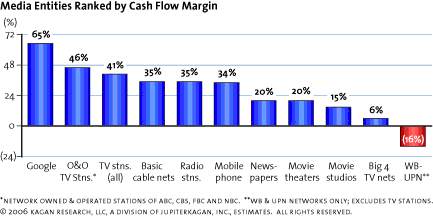
Despite a 0.4% decline in broadcast network upfront ad sales marking the second consecutive annual drop, top TV stations owned by the big four broadcast networks posted cash flow profit margins of 46%, with the broader broadcast TV station industry averaging 41%. These figures, drawn from Kagan Research's Broadcast Investor newsletter, measure core operational profitability as a percentage of net sales. For media investors and industry observers, the data suggests that even as internet audiences fragment free TV viewership, broadcast television remains a remarkably high-margin business.

Articles

When Is Network News Coming In HDTV?

CBS's VP of Advanced Technology Robert Seidel explains why network news has not yet transitioned to HD, citing the logistical challenge of converting 8 domestic bureaus, 8 international bureaus, and 200 stringers to deliver only 16 minutes of usable HD footage per broadcast. CBS is actively deploying Sony XDCAM-HD across all 18 owned-and-operated stations over 18 months, while also converting microwave links to digital and HD as part of the Nextel project. Viewers in major markets including Los Angeles, Chicago, and Philadelphia can expect fully HD local newscasts as new all-HD facilities come online in the near term.

Articles

Dan Rather and David Hill Keynote new HD Conference

The inaugural HD World Conference and Exposition, scheduled for November 29-30, 2006 at the Jacob K. Javits Convention Center in New York, will feature broadcast veterans Dan Rather and David Hill as keynote speakers addressing the industry-wide transition from SDTV to HDTV. Sessions developed by the HD World Council cover technical challenges including surround sound delivery for digital television, HD content distribution, and origination-to-transmission workflow integration. Professionals navigating the shift to full HD production pipelines will find targeted case studies and solutions from major networks and technology vendors including Dolby, Sony, Grass Valley, and Linear Acoustic.

Bulletins

ABC Taking "The View" To HDTV

ABC is expanding its HDTV daytime lineup by bringing 'The View' to high-definition starting September 5, 2006, broadcast in 720p progressive format with Dolby Digital 5.1-channel surround sound. This makes 'The View' the first daytime program on ABC to receive HD treatment, joining a primetime slate that already includes comedies, dramas, and 'Good Morning America.' Viewers tuning in will benefit from the same HD infrastructure ABC has built since its landmark 1998 broadcast of '101 Dalmatians,' the first HDTV transmission by a major U.S. broadcast network.

Bulletins

In The Eye of The Beholder

Television engineer and historian Mark Schubin has launched a podcast series with CMP Entertainment Media examining the technical decisions behind HDTV system design, covering TV resolution, contrast ratios, and viewing distance thresholds. The audio format allows repeated playback for mastering complex concepts such as the Contrast Sensitivity Function and its role in perceived image quality. Companion reference links provide additional scientific grounding, making this a practical resource for anyone seeking a rigorous understanding of what HDTV visibility actually means in real-world viewing conditions.

Articles

HD DVD Research Summary

An Ipsos-Vantis consumer survey of 469 HDTV owners found that purchase intent for HD DVD players was over seven times higher than Blu-ray (57% vs. 8% definitely or probably buying) when all studios support both formats, with HD DVD rated a 'very good' or 'fairly good' value by 57% of respondents compared to just 14% for Blu-ray. The survey coincided with the launch of the North American HD DVD Promotional Group, backed by Universal, Warner, Paramount, Microsoft, Intel, HP, and Toshiba, with a $150 million marketing campaign planned through 2007. For consumers navigating the format war, these figures suggest HD DVD held a significant perceived value advantage heading into the 2006 holiday season, though the survey's sponsorship context warrants careful interpretation.

Articles

DisplaySearch Reports Global LCD TV Shipments Rise 135% in Q1

Global LCD TV shipments surged 135% year-over-year in Q1 2006 to 7.4 million units, with revenues rising 114% to $8.8 billion as average screen size climbed 19% Y/Y to 27.0 inches and ASPs held relatively firm at $1,195. LCD was the only TV technology to gain sequential market share, rising from 15% in Q4 2005 to 17% in Q1 2006, while overtaking CRT TVs in the 30-34 inch segment for the first time. Brand rankings diverged sharply depending on metric: Philips led in unit share while Sony dominated revenues, reflecting Sony's concentration of 63% of shipments at 30 inches and larger.

Articles

A New President, A New Sony?

Stan Glasgow, newly appointed president and COO of Sony Electronics and the first American in the role in 9.5 years, outlined a four-part growth strategy targeting double-digit sales increases and deeper cross-division collaboration with PlayStation, movies, and music units. Glasgow identified Blu-ray, HDTV, third-generation HD camcorders, and a strengthened Digital SLR lineup via the Konica Minolta acquisition as key growth drivers. For consumers, the strategy signals a push toward simpler, more integrated Sony products and greater openness in industry standards development.

Bulletins

Samsung's Next Generation Back Lighting

Samsung Electronics announced plans to develop amorphous silicon (a-Si) based white OLED panels as a next-generation LCD backlight unit (BLU), leveraging its existing Gen.5 (1100x1300mm) TFT LCD production line in Cheonan with a 50 billion won investment in deposition and encapsulation equipment. The company targets mass production by 2008, citing superior color gamut and higher efficiency compared to flat fluorescent lamps and LEDs. Eliminating prism sheets could meaningfully reduce component count, simplify manufacturing, and lower costs for LCD display production.

Bulletins

DisplaySearch Announces Agenda for 4th Annual HDTV Conference

DisplaySearch's 4th Annual HDTV Conference, scheduled for August 15-16 at The Beverly Hilton in Beverly Hills, will cover the full TV industry supply chain with sessions addressing HD content delivery via IPTV, iTunes, DivX, and BitTorrent alongside the HD-DVD versus Blu-ray adoption curve. The agenda also examines 1080p transition timelines, LCD versus PDP flat panel competition, and emerging LED and laser light sources for rear-projection TVs. Industry professionals across retail, manufacturing, and content development will find actionable market intelligence spanning technology roadmaps and distribution strategy.

Bulletins

Rear-Projection HDTV Sales Rose 10% in March

Rear-projection TV unit sales in North America climbed 10% in March 2006, while average street prices fell 4%, according to PMA's RPTV Sell-Through Tracking Service. DLP technology captured 64% of unit market share, and 720p resolution edged ahead of 1080p with 52% share versus 45%. Samsung's 46-inch HLR4667W led all models in sales, pushing Samsung past Sony to the top unit-sales position, signaling that mid-size, lower-cost sets were driving consumer purchases.

Bulletins

Flat Panel HDTV Sales Up

Flat panel HDTV unit sales in North America rose more than 12% in March 2006 over February, with average street prices falling nearly 7% despite tighter supply conditions. The 40-to-45-inch plasma and 30-to-35-inch LCD segments led growth, each capturing roughly 30% of total unit sales share. Year-on-year unit sales climbed 110% over March 2005, with the Pioneer PRO-1130HD plasma and Sony KDL-V40XBR10 LCD tied as top consumer models at approximately 7% share each.

Bulletins

DTV Sales Up More Than 100 Percent During 1st Quarter 2006

DTV unit sales surged 101 percent year-over-year in Q1 2006, with 3.4 million units sold and $3.6 billion in revenue, while flat panel display shipments jumped 201 percent in the same period. HD DVRs accounted for 36 percent of all US DVR shipments in 2005, with IMS Research forecasting that share to reach 54 percent worldwide by 2010. Retailers and operators face a pivotal role in guiding consumers through the analog-to-digital broadcast transition, as competing high-def disc formats and emerging HD PVR adoption reshape how households access and store content.

Bulletins

California Monkey Wrench

The California Energy Commission's mandatory energy consumption regulation for DTV converter boxes threatens to derail the federally backed $1 billion subsidy program designed to help Americans transition from analog to digital broadcasting before the February 17, 2009 deadline. CEA and NAB leaders argue the CEC based its regulation on flawed data, citing the Commission's claim that 46,000 DTV converters are already in use despite no such products being commercially available in the U.S. If left in place, the regulation could force California-specific, premium-priced converter boxes that reduce the practical value of the federal subsidy for over-the-air viewers.

Articles

Ask Me Again

HDTV Magazine editor Dale Cripps frames HDTV not merely as a display technology but as a medium capable of delivering arts and live events with full fidelity - without dilution, distortion, or signal impairment - to a global audience simultaneously. The argument hinges on HDTV's ability to transmit high-clarity, live content at scale, a technical capability Cripps positions as culturally transformative. For viewers and industry observers, this editorial suggests that the real-world value of HDTV extends beyond resolution specs into the realm of shared human experience.

Bulletins
It's a Big, Big Mitsubishi World

It's a Big, Big Mitsubishi World

Mitsubishi Electric's 2006 consumer electronics line show previewed an all-1080p display lineup spanning four LCD models in 37 and 46-inch sizes and seven DLP rear-projection sets ranging from 52 to 73 inches, with a headline announcement of a forthcoming RGB laser-addressed DLP projector promising a wider color gamut, lifetime light source, and lower power consumption. The company's push toward 1080p native resolution is driven by the need to support closer viewing distances of three picture heights or less, a practical requirement for selling large screens in typical American living rooms. Signal quality from compressed sources like DirecTV and cable remains a real-world limiting factor for big-screen 1080p performance, making high-definition disc formats increasingly relevant.

Articles

Looking Ahead

YouTube.com, serving 30 million daily clip downloads in 2006, is examined as an early incubator for future HDTV programming and a decentralized content distribution model. The piece argues that prosumer HDTV cameras, computer editing tools, and emerging IPTV infrastructure will enable bedroom producers to scale into professional content creators, with advertiser-supported IP delivery replacing traditional distribution. For readers, this signals a practical shift: bandwidth expansion and web-based rating systems will determine which productions gain prominence, reshaping how HDTV content is funded and consumed.

Articles
Interview - Mark Knox, Toshiba on HD DVD

Interview - Mark Knox, Toshiba on HD DVD

HD DVD, the Toshiba-backed high-definition optical disc format launching in March 2006 at a $500 entry price point, faces a contested market against Blu-ray while relying on HDMI 1.1, multi-codec decoding (MPEG-2, MPEG-4, VC-1), and a mandatory managed-copy provision to differentiate itself. The format's Image Constraint Token under the AACS specification allows studios to optionally downgrade component output for the estimated 6 million early HDTV adopters lacking HDMI or DVI connections, a policy generating significant consumer backlash. Prospective buyers must weigh format-war risk, copy-protection restrictions, and the absence of mandatory 1080p output before committing.

Articles
Copyright Piracy in Asia - An Update

Copyright Piracy in Asia - An Update

A 2005 MPA enforcement report covering the Asia-Pacific region documented a tactical shift by movie pirates from large optical disc factories to low-cost DVD-R burner labs, with burner seizures up 220 percent year-over-year and over 34 million illegal discs confiscated across more than 10,500 raids. Landmark legal actions included the first BitTorrent user prosecution in Hong Kong and a ruling against the Kazaa P2P network in Australia. For consumers and industry stakeholders, the data underscores how cheap burning hardware and broadband expansion are decentralizing piracy in ways that make enforcement increasingly difficult.

Articles
1080p Sales Propelled the MD RPTV Category Forward in 2005

1080p Sales Propelled the MD RPTV Category Forward in 2005

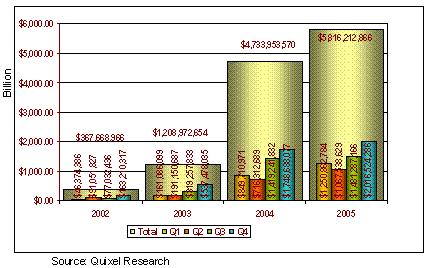
Microdisplay rear projection TVs (MD RPTVs) posted strong double-digit growth in 2005, with 1080p models capturing 31 percent of Q4 revenues as consumers paid up to $1,800 more for 1080p over 720p sets. USA MD RPTV revenues reached $5.8B in 2005, a 22 percent increase from $4.7B in 2004, driven largely by 50-inch-and-above screen sizes that accounted for 80 percent of segment revenues. For buyers prioritizing longevity, the data suggests MD RPTVs offered the most accessible path to native 1080p display technology at the time.

Bulletins

President Bush Signs Historic DTV Bill, CEA Says HDTV Is On A Roll

The U.S. DTV transition reached a legislative milestone when President Bush signed the bill mandating the February 17, 2009 analog broadcast shutoff, with up to $1.5 billion allocated for digital-to-analog converter box subsidies. The CEA projected over 18 million DTV sets sold in 2006, a 50 percent increase over 2005, while HDTV programming availability reached 4,670 hours in a single week. Consumers navigating the transition must also weigh competing HD disc formats, copy protection concerns, and the educational challenge of understanding display technologies including DLP, LCD, plasma, and LCoS.

Articles
NBC Universal, DISH Network Team to Deliver Dynamic Interactive and HD 2006 Olympic Winter Games Coverage; Multiple Channels on One Screen Let Viewers Quickly Select the NBC Universal Channel They Want to Watch

NBC Universal, DISH Network Team to Deliver Dynamic Interactive and HD 2006 Olympic Winter Games Coverage; Multiple Channels on One Screen Let Viewers Quickly Select the NBC Universal Channel They Want to Watch

DISH Network and NBC Universal partnered to deliver the 2006 Olympic Winter Games via an interactive TV mosaic built by OpenTV, enabling subscribers to monitor six channels simultaneously on a single screen before switching to full-screen viewing. The coverage included high definition broadcasts available to all DISH Network HD viewers, plus a new NBC Olympics Showcase featuring medal counts, TV listings, and athlete biographies. Subscribers on the America's Top 120 package or higher could access five NBC Universal networks concurrently, making it practical to track multiple Olympic events without channel surfing.

Bulletins

Sales to dealers rose 35 percent

Digital television sales to dealers surged 35 percent year-over-year to 2.3 million units in November and December 2005, according to Consumer Electronics Association data. The majority of these units were either HD-ready displays or sets equipped with integrated HD decoding tuners. For retailers and consumers, the figures signal strong and accelerating mainstream adoption of digital television technology heading into 2006.

Bulletins

Pacific Media Reports Flat Panel TV Sales More than Double over December 2004

Flat panel TV sales in North America surged 112% year-over-year in December 2005, according to Pacific Media Associates' Flat Panel Display Tracking Service, while average street prices dropped 26% compared to December 2004. The 30-to-35-inch segment captured 27% unit market share, with average prices falling 8% to $1,500, and the Panasonic TH-42PX50U 42-inch XGA plasma led unit sales while Pioneer held the top revenue share position. Consumers shopping for flat panels in early 2006 faced a rapidly expanding market with accelerating price declines across both LCD and plasma technologies.

Bulletins

Winter Olympics on Universal HD This February and Other Things

Universal HD is broadcasting over 100 hours of the 2006 Torino Winter Olympics in high definition with 5.1 Dolby surround sound, including a new nightly one-hour program called 'Olympic Ice' dedicated to figure skating coverage with athlete interviews and analysis. The channel is also premiering the classic series 'Quantum Leap' remastered in 1080i from original negatives and reformatted to 16x9 for the first time in HD. Viewers gain access to premium sports and archival content in upgraded formats without seeking out additional sources.

Bulletins
ESPN Zone Installing HD In Time For Super Bowl XL

ESPN Zone Installing HD In Time For Super Bowl XL

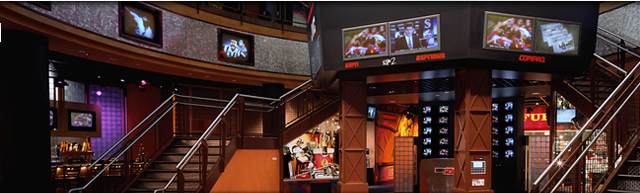
ESPN Zone is completing a multi-million dollar conversion of its restaurants to High Definition, deploying Philips flat-screen plasma and LCD monitors alongside 16-foot HD-capable projection screens, up to eight HD satellite and cable receivers per location, and 10,000 feet of CAT 6E skew-free network cable per facility. Four locations in New York, Las Vegas, Washington D.C., and Baltimore were converted ahead of Super Bowl XL on February 5, 2006, with remaining sites in Chicago, Anaheim, Atlanta, and Denver scheduled for completion by end of 2006. Sports fans visiting ESPN Zone can expect over 150 HD monitors per location carrying ESPNHD and ESPN2HD content totaling more than 6,500 hours of high-definition programming annually.

Bulletins
National Geographic Goes HD

National Geographic Goes HD

National Geographic Channel launched NGC-HD in early 2006, with 90% of its prime time first-quarter programming already produced in HD and transmitted in 720p via Fox's uplink infrastructure. Executive Vice President John Ford, who previously launched Discovery HD Theater in 2001, notes that NGC's real-world nature and science content benefits more from the HDTV upgrade than scripted or instructional programming, with productions accepting both 720p and 1080i capture formats. Viewers without NGC-HD access are encouraged to contact their cable or satellite providers directly, as consumer demand is cited as a key factor in carrier bandwidth allocation decisions.

Articles

How Many Depend On Over-the-Air?

An Associated Press poll conducted by Ipsos Public Affairs (margin of error +/- 3.1%, n=1,006) found that 22% of U.S. TV households rely exclusively on over-the-air broadcasting, a figure corroborated by the NAB, GAO, and Consumers Union but disputed by the CEA. The same survey found digital cable penetration reaching approximately 46% of cable subscribers versus 52% still on analog, signaling near parity. For consumers and policymakers, the 22% over-the-air figure carries significant weight in ongoing HDTV transition debates, as it determines how many households could lose access without a converter or cable subscription.

Articles

NAB's David Rehr Praises Senate Vote on DTV

NAB President David Rehr endorsed the Senate vote on the DTV transition, calling it a balanced compromise addressing consumer, public safety, and broadcaster interests ahead of the legislated analog cutoff. The statement signals a 2006 lobbying priority: preventing cable operators from restricting consumer access to digital and high-definition television signals. For viewers, the outcome shapes whether HD content reaches homes without interference from cable gatekeepers.

Bulletins

House Passed a Compromise DTV Hard Date Bill

The U.S. House passed a compromise Digital Television transition bill setting February 17, 2009 as the hard cutoff date for analog television broadcasts, with $1.5 billion allocated for DTV-to-analog converter box subsidies. A key provision strips cable operators of the ability to down-convert HDTV signals to standard definition, a significant win for broadcasters. For consumers, the bill triggers a firm industry-wide deadline and a subsidy program intended to ease the transition away from analog reception.

Articles

New VOOM Deals

RAVE HD, a commercial-free Dolby Digital 5.1 surround sound music channel within the VOOM HD Networks group, has secured three major programming deals for 2006, including exclusive U.S. HD rights to 18 episodes of the BBC's Later...with Jools Holland, which required a production upgrade from standard-definition to HD. The channel also committed to 13 original episodes of Beautiful Noise, taped in a converted gothic-style church, and secured world premiere HD broadcast rights to 14 episodes of the PBS concert series Soundstage. Viewers gain access to high-definition music performances featuring artists such as Santana, Robert Plant, and Garbage before many of these episodes air on public television.

Bulletins

To Subsidize or Not To Subsidize, That Was Almost The Question

The U.S. HDTV transition, initiated in 1987, freed large blocks of broadcast spectrum by eliminating analog 'taboo' channels and reassigning unused UHF frequencies, with each broadcaster receiving two 6 MHz channels during the changeover. The proposed ATSC tuner subsidy for low-income households would be funded from future spectrum auction proceeds estimated between 10 and 70 billion dollars, making it a cost-of-doing-business rather than a pure giveaway. For consumers, understanding this financial architecture clarifies why the government mandated digital broadcasting standards and why completing the transition carries significant public-interest implications beyond simple technology upgrades.

Articles

AccessIT To Meet Asian Exhibitors, Push Asian Digital Cinema Market Development

Access Integrated Technologies (AccessIT) is expanding its 4,000-screen U.S. digital cinema deployment model into the Asia Pacific region, targeting 7,000+ screens through meetings at the CineAsia convention in Beijing in December 2005. The company will demonstrate its International Theatrical Distribution System (iTDS), a distribution management application already used by four of the six major Hollywood studios, which consolidates global movie releasing into a singular codebase. For exhibitors and distributors in Asia, this signals a concrete pathway to adopting digital cinema infrastructure with proven financial and operational management tools.

Bulletins

Doremi Labs' V1-HD Video Servers

Doremi Labs demonstrated its V1-HD JPEG2000-compressed HD video server at HEAVENT 2005, where two units delivered four synchronized HD-SDI streams at 2K resolution to feed a Sony SXRD 4K Digital Cinema Projector. The V1-HD supports selectable JPEG2000 compression up to 320 Mb/s, with a single removable hard drive providing approximately 4 hours of storage at 160 Mb/s, and dual-link HD-SDI inputs enabling 4:2:2:4 recording. For professionals in digital cinema and large-venue presentation, this combination of high-quality compression and synchronized multi-stream playback offers a practical path to 4K display without prohibitive storage overhead.

Bulletins
DisplaySearch Forecasts $3B Market for FPD Public Displays by 2009; PDPs Out-Ship LCDs 3 to 1 in Q2'05

DisplaySearch Forecasts $3B Market for FPD Public Displays by 2009; PDPs Out-Ship LCDs 3 to 1 in Q2'05

DisplaySearch's Quarterly Public Display Shipment and Forecast Report projects the worldwide flat-panel public display market to reach $3B by 2009, driven by a 36% compound annual growth rate, with 40-43 inch ED PDPs commanding a 38.8% share of Q2'05 shipments. PDPs currently dominate the public display space, outselling LCDs roughly 3 to 1, though large-format LCDs (26-inch and above) are forecast to grow at an 82% CAGR through 2009. For buyers and integrators, falling weighted average street prices - dropping from $3,616 in Q2'04 to a projected $3,032 by Q3'05 - signal improving economics for deployments in signage, flight information, and corporate environments.

Bulletins

Celebrate the Holidays with Universal HD This December

Universal HD, an NBC Universal Cable network broadcasting in 100% 1080i HD and available in over 28 million homes, is programming a full week of themed marathons from December 25 through December 31, 2005. The lineup spans action films, sci-fi features, sports coverage including all five stops of the Dew Action Sports Tour, and the 2005 US Open match between Andre Agassi and James Blake. Viewers with HD-capable setups can use this schedule to evaluate real-world high-definition picture quality across a wide range of content genres.

Bulletins
DisplaySearch Announces Q3'05 OLED Y/Y Growth: Shipments Up 144%, Revenues Up 49%

DisplaySearch Announces Q3'05 OLED Y/Y Growth: Shipments Up 144%, Revenues Up 49%

OLED display shipments surged 144% year-over-year to 16.7 million units in Q3 2005, with revenues reaching $130.9 million, driven primarily by a 2,721% year-over-year spike in MP3 player applications and 93% growth in industrial displays. Nearly all growth came from PMOLED small-molecule panels, while AMOLED producers including Sanyo Kodak, AUO, and Sony combined shipped fewer than 50,000 units. Samsung SDI led the market with 4.4 million units and $37.1 million in revenue, signaling that PMOLED technology dominated practical consumer deployments at this stage.

Bulletins

Turner Entertainment Standardizes on Snell & Wilcox MEMPHIS Encoders for HD Content Mastering and Archiving

Turner Entertainment Networks has standardized on 22 Snell & Wilcox MEMPHIS MPEG-2 encoders at its Atlanta facility for HD content mastering, archiving, and playout across more than 30 SD and HD network feeds. The systems leverage variable bit rate encoding for optimized transmission while processing CEA-708 closed captions and Dolby-E audio, with direct integration into Pinnacle MediaStream servers. This deployment positions Turner to scale HD channel launches and extend content delivery to low-bit-rate platforms without sacrificing picture quality.

Bulletins

Dreamworks Is Newest Studio to Support Digital Cinema Funding Plan

DreamWorks SKG has joined Disney, Fox, Universal, and Sony in supporting the Christie/AIX digital cinema rollout, which targets 4,000 DCI-compliant DLP Cinema screens across the United States. The funding model requires no upfront hardware cost for exhibitors beyond a project management fee and a 10-year maintenance contract, with studios paying virtual print fees per film projected on Christie/AIX-funded systems. For theater operators, this arrangement lowers the financial barrier to adopting digital projection infrastructure that includes media players, satellite communications, and centralized content management software.

Bulletins

DIRECTV Charges $99 For 'Free' HDTV Upgrade

DIRECTV has launched local HDTV channels in five major markets, including Chicago, Philadelphia, and Atlanta, requiring subscribers to adopt the new H-20 MPEG4 receiver paired with a five-LNB dish to access the signals. Despite a September commitment to provide free hardware upgrades for existing HDTV customers who had already paid up to $400 for incompatible equipment, reports from launch cities indicate DIRECTV is billing subscribers $99 for the transition. Customers planning to access local HD content should verify upgrade pricing terms before committing to the new system.

Bulletins

World's Only High Definition Film Festival Presented by Intel

HDFEST 2005 Los Angeles, the world's only high definition film festival, runs December 1-5 at two venues featuring 2K projection and Dolby multichannel sound. The festival showcases HD documentaries, animation, features, and shorts, with advanced technology presentations including DivX HD short films and demonstrations from DALSA Digital Cinema, Intel, and JVC. Attendees can experience a practical preview of cinema's future in HD playback, including Intel Centrino mobile technology demonstrations, for $10 per screening or panel.

Bulletins

GOOGLE Co-Founder To Keynote At The 2006 International CES

Larry Page, co-founder and president of products at Google, is scheduled to deliver a keynote address at the 2006 International Consumer Electronics Show on January 6, 2006, joining a lineup that includes Microsoft's Bill Gates, Intel's Paul Otellini, Sony's Howard Stringer, and Yahoo!'s Terry Semel. The 2006 International CES spans January 5-8 in Las Vegas across four venues with more than 2,500 exhibitors covering over 30 product categories. For technology professionals and enthusiasts, the keynote schedule signals how major internet and software platforms were becoming central to the consumer electronics industry.

Bulletins

US Final of World's Biggest Video Game Tournament to Be Aired by Mark Cuban's HDNet

HDNet will broadcast the 2005 World Cyber Games US Final on November 10, 2005, marking the first time a US television outlet has aired video game tournament coverage in a sports-style format in high definition. The event features competition in Halo 2 on Xbox, Counter-Strike on PC, and FIFA soccer, with US winners advancing to face players from 67 countries in Singapore for a share of $2.5 million in prizes. For viewers, this broadcast signals a convergence of HD television and competitive gaming at a moment when next-generation consoles like the Xbox 360 are being built with HD output as a core feature.

Bulletins

PMA Reports Record-High Front Projector Shipments In Q3 '05

Front projector sell-in shipments hit a record 1,069,000 units in Q3 2005, marking 20% year-over-year growth driven by narrowing price gaps between XGA and SVGA models and surging demand in the sub-$1,000 segment. Native 16:9 widescreen projectors posted nearly 30% year-over-year growth globally, with Asia leading all regions in growth rate due to strong professional projector sales in China. Consumers heading into the holiday season can expect widescreen models under $1,000 and new 480p instant-theater units with built-in DVD players.

Bulletins

Monsters HD Goes Ape Over King Kong Classics

Monsters HD, a 24-hour high-definition horror channel distributed via VOOM HD Networks on DISH Network, has secured exclusive HD broadcast rights to 44 digitally restored horror titles from Warner Bros. Domestic Cable Distribution, including the 1933 original King Kong and franchises such as Hellraiser and Children of the Corn. Many titles will air in high definition for the first time, with all content shown uncut and uninterrupted. For horror fans, the deal represents the largest specialty horror library assembled for television, delivered with full HD picture quality and audio fidelity.

Bulletins

WealthTV to Roll-out with Optical Entertainment Network

Optical Entertainment Network's FISION fiber-to-the-home IPTV service, targeting 1.6 million households in Houston, Texas, will carry WealthTV in both standard and high definition as part of a long-term affiliation agreement. The FISION platform is designed to deliver over 400 channels alongside high-speed internet at 10 to 100 Mbps per subscriber, plus IP voice and telehealth applications over a purpose-built FTTH infrastructure. Subscribers in the Houston market will gain access to WealthTV's 24/7 HD lifestyle programming at launch, expected in December 2005.

Bulletins
Bennetts Innovators In Broadcasting'Sports...and HDTV

Bennetts Innovators In Broadcasting'Sports...and HDTV

Bennett Media Worldwide is showcasing its HDTV content catalog at MIPCOM 2005, including 'The Extremists in High Definition', a successor to the 88-episode extreme sports series that helped popularize the term 'extreme sports' in the early 1990s. The company is offering clients standard-format rights immediately alongside a no-cost option to acquire HDTV rights for future use, a dual-licensing model designed to ease the transition to high-definition broadcasting. Producers with decades of experience spanning WCVB-TV's original programming legacy and early HDTV series production position Bennett Media Worldwide as a notable independent HDTV content distributor.

Bulletins
HDNet New Programming Line-up for fall schedule features both series premieres and new episodes of current favorites.

HDNet New Programming Line-up for fall schedule features both series premieres and new episodes of current favorites.

HDNet, Mark Cuban's high-definition television network, announced its fall 2005 programming lineup spanning seven nights of original and acquired HD content, including a 52-game NHL schedule broadcast as a national high-definition league partner. The schedule features expanded news programming with 'HDNet World Report' growing to one hour, new original series across music, sports, and reality genres, and live MLS Conference Championship coverage beginning October 22nd. For early HDTV adopters, this lineup represents a meaningful expansion of native HD content across diverse genres at a time when compelling high-definition programming remained scarce.

Bulletins
Thomson and LG Electronics Partner with Broadcasters

Thomson and LG Electronics Partner with Broadcasters

MSTV and NAB have selected LG Electronics and Thomson to each develop prototype digital-to-analog terrestrial converter boxes, targeting the more than 73 million analog TV receivers that rely exclusively on over-the-air antenna signals. The prototypes, jointly funded by MSTV and NAB with development support from both manufacturers, are intended to serve as performance benchmarks and low-cost blueprints for mass-market products ahead of the full analog broadcast shutdown. For viewers without cable or satellite, these converter boxes represent the critical path to retaining free, over-the-air access to local television and emergency broadcasts during the DTV transition.

Bulletins

The NPD Group Acquires DisplaySearch

The NPD Group acquired DisplaySearch in October 2005, combining NPD's point-of-sale and consumer tracking data with DisplaySearch's supply chain coverage of the $70 billion flat panel display industry. DisplaySearch, a 31-person firm with operations across North America and Asia, will continue operating independently under the NPD umbrella. The combined data assets give manufacturers and retailers end-to-end supply chain visibility, enabling more accurate market forecasts for a rapidly evolving display sector.

Bulletins

Paramount embraces Blu-ray--Warner expected to make similar move this week

Paramount Home Entertainment has announced support for Sony's Blu-ray Disc format while retaining its existing commitment to Toshiba's HD DVD platform, becoming the first major studio to back both competing next-generation high-definition disc standards simultaneously. This dual-format stance breaks the industry's strategy of exclusive studio alignments, which had been seen as the best defense against a repeat of the Betamax/VHS format war. For consumers, the move signals growing uncertainty about which format will ultimately dominate the high-definition home video market.

Bulletins

Universal HD Delivers Thrills and Chills This October

Universal HD, broadcasting exclusively in 1080i HD and available in over 28 million homes, announces its October 2005 programming slate headlined by a 70-plus-hour Halloween Scare-athon running October 29-31. The lineup includes HD premieres of Complete Savages and new episodes of Medical Investigation, alongside a Tom Cruise-athon and continued Friday SportsNight coverage featuring live Dew Action Sports Tour events. Viewers gain access to a broad range of unedited films and award-winning series delivered in full high-definition around the clock.

Bulletins

USDTV Signs Agreement

USDTV secured a $25.75 million investment from major broadcasters including Fox Television Stations and Hearst-Argyle to expand its over-the-air digital subscription TV service, which delivers approximately 30 all-digital channels including HDTV via a VHF/UHF antenna and proprietary set-top box for under $20 per month. The service leases spectrum from broadcast partners and is currently operating in three pilot markets - Salt Lake City, Albuquerque, and Las Vegas - with planned upgrades including VOD and DVR capabilities. For cost-conscious consumers, this model offers a legitimate low-cost alternative to cable with digital picture quality and popular cable networks such as ESPN and Fox News Channel.

Bulletins

Soderbergh challenges 'out of whack' studios

Director Steven Soderbergh and entrepreneur Todd Wagner are testing a vertically integrated distribution model with the digitally shot film 'Bubble,' produced for $1.6 million through HDNet Films. Their 2929 Productions pipeline spans production, overseas financing, distribution through the 200-screen Landmark Theater chain, and a simultaneous day-and-date release on the HDNet Movies cable channel alongside DVD. This simultaneous multi-platform release strategy directly challenges the traditional studio windowing system and could signal a shift in how independent films reach audiences.

Bulletins
Saturday Night Live In HDTV Starting October 1, 2005

Saturday Night Live In HDTV Starting October 1, 2005

Saturday Night Live launches its 31st season on October 1, 2005, with a notable upgrade to High Definition broadcast, marking a technical milestone for the long-running NBC sketch series. The October premiere features Steve Carell alongside musical guest Kanye West, whose sophomore album 'Late Registration' debuted at Number One on the Billboard charts. Viewers can expect a season of high-profile hosts and musical acts, with the HD format offering a noticeably improved viewing experience for audiences watching on compatible displays.

Articles
Program Review - Winged Migration on HDNet Movies

Program Review - Winged Migration on HDNet Movies

Jacques Cluzaud's 89-minute documentary 'Winged Migration,' broadcast in HDTV on HDNet Movies, delivers a visually striking bird migration film shot across 40 countries and all seven continents using planes, gliders, helicopters, and custom camera rigs. The reviewer benchmarks it against Winter Olympics HDTV coverage, noting that the high-definition presentation - paired with strong accompanying audio - elevates material that would have been unremarkable in standard NTSC. For HDTV owners, this broadcast represents a compelling demonstration of what the format can deliver when paired with cinematography of genuine artistic ambition.

Articles

CEA Files Comments to the FCC Assessing the Status of Competition in the Market for Delivery of Video Programming

The Consumer Electronics Association filed comments with the FCC in September 2005 highlighting that only 32.7 million of 285 million U.S. television sets receive over-the-air signals, while DTV sales in the first half of 2005 reached 3.8 million units totaling $4.6 billion. With 85 percent of DTV sets sold in 2004 capable of HDTV resolution and entry-level prices approaching $400, the digital transition was gaining clear momentum. CEA also urged cable operators to improve CableCARD availability and warned that weakening Section 629 protections would stifle device innovation across IP-connected video platforms.

Bulletins

NHL & HDNet Announce 2005-06 HDTV Schedule

HDNet's 52-game NHL broadcast package for the 2005-06 season launches October 5 with all games produced natively in 1080i high-definition at a 16:9 aspect ratio, avoiding any standard-definition 4:3 compromise. The schedule highlights Wayne Gretzky's coaching debut with the Phoenix Coyotes and Sidney Crosby's national TV first appearance with the Pittsburgh Penguins, alongside the NHL's newly adopted shootout rule designed to guarantee a winner every game. Hockey fans with HDTV setups gain a Thursday and Saturday broadcast slate updated bi-monthly to prioritize the most compelling matchups.

Bulletins

CEDIA EXPO 2005: Bigger Screens, Higher Resolution, and Lower Prices

CEDIA Expo 2005 showcased a broad range of display technologies - front projection, rear projection, plasma, and LCD - across more than 500 booths at the Indiana Convention Center, reflecting strong industry momentum toward larger screen sizes and lower price points. The sheer volume of big-screen TV product on the floor signals that high-resolution displays were becoming increasingly accessible to custom installers and their clients. Readers looking to track emerging display specs and interface standards from that show will find detailed coverage of notable TVs, monitors, and signal interfaces.

Bulletins

The Health of HDTV As of September 14, 2005

HDTV adoption surged in 2005, with displays comprising 11% of all display sales and global markets from Europe to China accelerating deployment, while 1080p 60fps delivery remained constrained by MPEG-2 limitations in the ATSC standard. Modern 1080p panels across DLP, LCoS, LCD, and plasma technologies now exceed what the ATSC signal can deliver, reversing years of the signal outpacing display capability. Buyers weighing the roughly 20% price premium over 720p and 1080i sets must consider up-conversion quality, as interpolation artifacts like motion smear remain a practical concern.

Articles

CBS to Deliver Primetime Scripted Entertainment in HDTV for Seventh Consecutive Year

CBS announced its seventh consecutive year of primetime scripted programming in HDTV, broadcasting 17 hours of high-definition content weekly while expanding 5.1 surround sound to the majority of its lineup, including shows such as CSI, NCIS, and Criminal Minds. The network also averages 34 hours per week of original HD programming across 189 owned and affiliated stations covering approximately 99 percent of the country. For viewers, this combination of HDTV and 5.1 audio delivers a more immersive experience with wider dynamic range, from subtle ambient sounds to full directional audio effects.

Bulletins

ATSC Publishes "ACAP" Standard for Interactive Television

The ATSC has approved the Advanced Common Application Platform (ACAP) Standard, designated A/101, which harmonizes the ATSC DASE standard with CableLabs' OCAP specifications to enable interoperable interactive TV services across terrestrial, cable, and satellite networks. Used alongside the companion A/96 Interaction Channel Protocols standard, ACAP provides a complete interactive system covering both forward broadcast download channels and two-way interaction channels. For consumers, this means a unified platform that allows content creators and device manufacturers to build enhanced interactive services that work consistently across broadcast, cable, and satellite environments.

Bulletins

Improving picture for high definition television

A 2005 Informa Telecoms and Media report projects global HDTV set penetration to reach 106.2 million homes by 2010, up from 28.6 million at year-end 2005, with the U.S. and Japan commanding a combined 85% share of the current market. A critical gap exists in actual content consumption: only 9.8 million of those 28.6 million households have the required set-top box or integrated tuner to receive HD content, representing just one-third of HDTV set owners. Informa forecasts that by 2010, over 75% of HDTV homes will be receiving HD programming as content availability expands and set prices continue to fall.

Bulletins

2006 FIFA World Cup Chooses Media Links as Major Video Transport Equipment Supplier

Media Links' MD6000 video transport system has been selected to carry all live uncompressed HD and SD video feeds across a DWDM contribution network from 12 venues throughout Germany to the International Broadcast Center in Munich for the 2006 FIFA World Cup, covering all 64 matches. The system supports transport over STM-16/OC-48 and STM-64/OC-192 networks, incorporating forward error correction, differential delay adaptation, and hitless protection switching to ensure signal integrity. Broadcasters relying on multilateral and unilateral feeds can expect the same uninterrupted performance the MD6000 demonstrated over a redundant STM-16 network during the 2004 Athens summer games.

Bulletins

More News July 10 - 11, 2005 from Lee Wood

A wide-ranging bulletin from August 2005 tracks the accelerating shift to digital television, with forecasts projecting 50% of U.S. TV households adopting digital TV by 2007 and nearly 90% by 2009. Flat-panel TV prices fell sharply in Q2 2005 while Pioneer's new PureVision plasma displays touted enhanced contrast ratios and improved black levels, and the Blu-ray vs. HD DVD format war was heating up with analysts predicting a two-year battle. Consumers and broadcasters navigating tuner mandates, DTT rollouts, and competing HD disc formats faced a rapidly shifting landscape with real purchasing and infrastructure decisions ahead.

Bulletins

Choosing A New DVD for HDTV

Drawing a direct parallel to the 1989 MIT survey that nearly derailed the transition from NTSC to HDTV, this editorial argues that Blu-ray represents a necessary platform leap over HD-DVD, much as digital broadcast superseded analog. Just as NTSC improvement proposals offered ghost canceling and 16:9 compatibility but no true resolution headroom, HD-DVD's backward compatibility is framed as a constraint rather than an asset. For consumers, the practical implication is clear: backing a format with room to grow outweighs the short-term convenience of legacy support.

Archive & History

HDNet's High-Def Shuttle Live Landing

HDNet will broadcast the STS-114 Space Shuttle Discovery landing at Kennedy Space Center live in 1080i high-definition on Monday, August 8, beginning at 4:30 a.m. EDT, with natural audio and direct NASA mission control commentary. The network is also producing a prime-time landing highlight report airing August 9 and an hour-long documentary on August 16, both sourced from its own HD footage. Viewers seeking on-demand access can download a free 20-minute HD highlight reel from the launch day coverage.

Bulletins

HDNet Offers Free Downloads of Exclusive HD Video from Shuttle Discovery Launch

HDNet is distributing a free 20-minute, 1080i high-definition highlight reel of the Space Shuttle Discovery launch via a hybrid RSS and peer-to-peer delivery system, combining Box.net's BetaFeed RSS infrastructure with Red Swoosh's P2P technology for efficient content distribution. The Windows Media Video HD files require a minimum 2.4 GHz processor, 384 MB RAM, and a broadband connection for playback. This approach lets HD enthusiasts sample premium HDNet content without a cable or satellite subscription, representing an early test of P2P-assisted HD video delivery over the internet.

Bulletins

2005 - And What About This Subsidy and a Date Certain?

The U.S. HDTV transition, rooted in a 1987 FCC mandate to protect free over-the-air broadcasting, required each station to receive a new digital spectrum allocation before vacating its analog NTSC channel for auction. With roughly 400 million legacy NTSC sets still in circulation and a 2006 analog shutoff deadline tied to 85% digital penetration, the final phase of the transition risked leaving low-income and elderly viewers without reception. Subsidized ATSC decoder boxes, estimated at under $50 with a $6-$9 power supply, could be funded through spectrum auction proceeds rather than general tax revenue, making the program fiscally self-contained.

Archive & History

2001 - Thoughts on HDTV

Written in 2001, this editorial examines the early commercialization of HDTV, noting that DTV product sales rose 110% year-over-year in May while decoder unit sales represented only about 15% of high-scan monitor sales, with over three million monitors sold but most driven by DVD rather than broadcast signals. Copy protection disputes, poor retail demonstrations, and cable-readiness gaps were actively suppressing set-top box adoption and slowing the transition from NTSC. The author argues that resolving these market impediments is critical before consumer demand can reach the velocity needed to compel broadcasters, cable operators, and financial institutions to fully commit to HDTV.

Archive & History

Disney/ABC Agrees to Rejoin NAB

Disney/ABC is rejoining the National Association of Broadcasters after a two-year absence that began in mid-2003 over a dispute regarding FCC network television station ownership deregulation rules. The reinstatement covers the ABC television network, ten TV stations, and 70 radio stations, with Preston Padden immediately taking a seat on the NAB Board of Directors. The reunion follows Congress passing legislation capping national audience reach for a single broadcast company at 39%, resolving the core policy conflict and consolidating the industry's lobbying voice before Congress and the FCC.

Bulletins

Prices for Flat Panel Televisions Drop Sharply in 2Q2005

Pacific Media Associates reports that 40"-45" flat panel TV street prices fell sharply in Q2 2005, with 42"-43" plasma HDTV sets dropping 17% and 40"-42" LCD HDTV sets dropping 14% quarter-over-quarter. DLP rear-projection TV sales surged 65% while 3LCD RPTV sales collapsed 44%, intensifying price competition across display technologies. Consumers shopping for large-screen HDTVs in mid-2005 could find plasma sets near $3,500 and LCD sets near $4,500, with micro-display RPTVs pressuring flat panel pricing downward.

Bulletins

More News for July 28, 2005 from Lee Wood

A July 2005 news bulletin covers several converging DTV developments, including FCC digital television tuner mandate debates where the CEA warned that accelerating compliance rules would raise prices on smaller TV sets and harm low-income consumers. Separately, 40-inch LCD panel costs were falling below $1,000 according to iSuppli, signaling a broader consumer price drop ahead of the holiday season. European digital switchover timelines were also flagged as at risk of missing targets, with Portugal planning a DTT relaunch in 2006.

Bulletins

CinemaNow To Offer Selected Programs from HDNet's High Definition Library

CinemaNow, positioning itself as the leader in HDVOD, has struck a deal with HDNet to offer over 100 episodes from HDNet's original high-definition library as permanent download-to-own titles via broadband, delivered in Windows Media Video HD format. This marks the first time HDNet has made its HD programming available on-demand through an online service. For consumers, this means unlimited playback of purchased HD content on the download device, representing an early milestone in legal high-definition digital distribution.

Bulletins

New DTV Tuner Mandate Schedule Will Raise TV Prices

The CEA and CERC filed comments with the FCC opposing an accelerated DTV tuner mandate that would move the compliance deadline from July 1, 2007 to December 31, 2006, and extend requirements to sub-13-inch screen sizes. Manufacturers require a minimum of 18 to 24 months to plan, develop, and deploy new equipment, making the shortened timeline infeasible for most producers. For consumers, particularly those with low or fixed incomes, the practical result would be sudden price increases on smaller sets and reduced access to affordable television options.

Bulletins

More News July 27, 2005 from Lee Wood

A July 2005 news bulletin covers the ATSC approval of the Enhanced AC-3 (EAC-3) audio standard, which introduces a non-backwards-compatible bit stream syntax with additional coding tools beyond the original AC-3 specification. Additional items address the analog-to-digital broadcast transition, must-carry carriage disputes between broadcasters and cable operators (NCTA), JVC adopting ATI DTV chipsets for HDTV, and SnapStream's Beyond TV 4 PVR adding HDTV and DivX support. Readers tracking the DTV transition, audio codec developments, or HDTV hardware will find multiple threads worth following.

Bulletins

Baseline Criteria for High Definition DVD Format

The Video Software Dealers Association (VSDA) outlined baseline criteria in July 2005 for an emerging high definition DVD format, specifying a minimum resolution of 1920x1080, a disc diameter of 120mm matching existing DVD standards, and a thickness of 1.2mm to ensure compatibility with legacy playback equipment. Copy protection requirements called for watermarking that survives digital-analog conversion alongside renewable security frameworks, while video quality had to match or exceed contemporary HD satellite and cable offerings. Retailers needed packaging differentiated from standard DVD by a distinct color or labeling scheme, and sufficient replication capacity at launch to prevent supply shortfalls.

Bulletins

Cable On Top Claims INHD

A 2005 telephone survey of 1,100-plus digital cable subscribers with HDTV sets found that 71% were very or somewhat satisfied with cable HD service, while 90% rated HD picture quality favorably and 97% planned to continue subscribing. INHD ranked first among national cable HD networks for picture quality, with 97% of its viewers awarding it a four or five on a five-point scale. The findings also challenge demographic assumptions, revealing that 48% of active HD viewers were women and 69% fell in the 25-49 age bracket, suggesting a broader and younger audience than previously assumed.

Articles

Cable On Tops Claims INHD

A 2005 telephone survey of 1,100-plus digital cable subscribers with HDTV sets, conducted by Frank N. Magid Associates for INHD, found that 90% of respondents were very or somewhat satisfied with HD picture quality and 80% with audio quality. INHD ranked first among national cable HD networks for picture quality, with 97% of its viewers rating it a four or five on a five-point scale, and first for true high-definition programming at 87%. The findings also challenge demographic assumptions, revealing that 48% of active HD viewers were women and 69% fell in the 25-49 age group, suggesting a broader and younger HD audience than previously assumed.

Bulletins

DisplaySearch HDTV Conference

DisplaySearch is hosting its third annual HDTV Conference 2005 on August 23-24 at The Beverly Hilton in Los Angeles, with early-bird registration priced at $1,495 through July 31 before a $100 increase takes effect. The two-day event covers nine sessions spanning LCD, PDP, and rear-projection TV technologies, with confirmed presenters from Samsung, Sony, Panasonic, LG.Philips LCD, and Texas Instruments, among others. Professionals across the full TV supply chain - from panel suppliers to retailers - will find targeted sessions on HD content distribution, display electronics, and global market outlook.

Articles

1999 -- Chips Ahoy (VSB vs. COFDM)

Motorola's MCT2100 single-chip 8-VSB demodulator, priced under $20 in quantity and operating at 1.8V with a 19.39 Mb/s data throughput, claimed in 1999 to fully eliminate multipath interference for home and pedestrian-portable reception by deploying blind equalization techniques capable of handling dynamic echoes up to 20 Hz. Nxtwave Communications, a David Sarnoff Research Center spin-off, simultaneously announced a competing equalizer chip at $22 per unit in quantities of ten thousand. These announcements directly challenged Sinclair Broadcast Group's pending FCC petition to add COFDM as an alternative to 8-VSB, with field validation in real-world multipath environments still required before broadcasters could confidently abandon the COFDM debate.

Archive & History

2004 - September -- Is There a Super Service Coming?

Excessive compression is degrading HDTV signal quality, with satellite and cable bit rates in many cases reduced to DVD-level bandwidth, undermining the capability of improving display hardware. Telecine transfers compound the problem through low bit rates and inadequate operator practices, while ATSC over-the-air broadcasters have begun subdividing digital channels into culturally targeted sub-channels at the cost of resolution. For quality-focused viewers, the practical implication is that a market-driven super-premium tier may be the only viable path to receiving genuinely high-fidelity HD content.

Archive & History

2002 - HDTV, A Love Story?

Writing in 2002 for the Hollywood-facing Highdef.Org Magazine, Dale Cripps frames HDTV as more than a technical upgrade, positioning it as a cultural force capable of reshaping 21st-century storytelling and artistic communication. Cripps notes that cost barriers were already falling rapidly at the time, making adoption increasingly practical for both creators and consumers. For readers tracking the early adoption curve of high-definition television, this piece captures the optimistic industry sentiment that preceded HDTV's mainstream breakthrough.

Archive & History

TFT LCD Supply/Demand, Capital Spending and Equipment Supplier Rankings

DisplaySearch's Q2 2005 Quarterly TFT LCD Supply/Demand and Capital Spending Report finds the TFT LCD market shifting from shortage to near-equilibrium, with AMLCD capacity projected to more than double from 7.6 million to 15.4 million square meters between Q1'05 and Q1'07. Cumulative 2004-2006 capital equipment spending has been revised upward 11.5% to $29.95 billion, with Tokyo Electron leading array process equipment vendors at approximately $768 million in 2004 shipments. Panel manufacturers and component suppliers face a widening 2006 surplus, making supply chain positioning and capital planning critical decisions for industry stakeholders.

Bulletins

CONSULTING - Dale Cripps

Dale E. Cripps is a long-standing HDTV industry consultant and publisher who founded HDTV Magazine in 1998 as the first daily consumer online publication covering high definition television. Over 25 years he has advised industry leaders across the USA, Japan, Taiwan, and Europe, authored more than 80 published articles, and served as technical editor for Widescreen Review and HDTV for Dummies. Professionals and consumers seeking guidance on advanced television technologies and the digital transition can engage Cripps directly for consulting services.

Archive & History

1995 -- Being Wright For HDTV

NBC president Robert Wright's 1995 announcement to launch HDTV broadcasting by 1997 marked a pivotal moment in the transition from NTSC to the Grand Alliance digital standard, which supported up to 18 Mbit/s peak throughput within a 6 MHz channel and could multiplex at least four standard-definition programs in that same bandwidth. The article examines competing industry pressures, including a potential $40 billion spectrum auction threat, manufacturer frustration over broadcast delays, and critics like Nicholas Negroponte who favored open, scalable digital architectures over a fixed HDTV standard. For consumers, the outcome hinged on whether broadcasters would commit to delivering compelling HDTV programming or exploit the new spectrum allocation for other purposes.

Archive & History

NAB Seeks Speaker Proposals For NAB2006

NAB2006, scheduled for April 22-27, 2006 in Las Vegas, is accepting speaker and presenter proposals through October 7, 2005 for its conference sessions and the 60th annual NAB Broadcast Engineering Conference. The event, billed as the world's largest electronic media show, focuses on professional video and audio content development, delivery, and management across all mediums. Broadcast engineers, technology executives, and media professionals are targeted as both presenters and attendees, making this a key networking and knowledge-sharing opportunity for those shaping broadcast and digital media strategy.

Bulletins

2002 - The Transition To Digital Television (a cable view)

The 2002 NCTA white paper examines the broadcast industry's federally mandated transition to digital television, noting that Congress allocated an additional 6 MHz of spectrum per local broadcaster in 1996 to facilitate the analog-to-digital shift. DTV technology supports CD-quality audio, cinema-grade video, and signal compression enabling multiple programming streams within a single 6 MHz channel. Readers with interests in cable carriage rules, consumer electronics compatibility, or digital content protection will find this a useful policy-era snapshot of how competing industries navigated the early DTV transition.

Archive & History

Projection Monthly Is Now Published

Projection Monthly's July 2005 issue covers the Projection Summit, where presenters examined critical image quality trade-offs in transitioning from CRT to HD displays, including the finding that most 1080i processors output only a 540p signal scaled up rather than true progressive conversion. Silicon Optix noted that 85% of viewed content is not native display resolution, while Pixelworks demonstrated that MPEG-2 source encoded at 4Mbps must be scaled to 2900Mbps for 1080p output, generating 94% filler data. These processing challenges have direct consumer impact, as poor SD video performance on 720p HD rear-projection TVs is the leading cause of product returns.

Bulletins

HDNet To Produce NASA Return to Space in Hi-Def Launch

HDNet will deliver exclusive North American high-definition coverage of NASA Space Shuttle Discovery's STS-114 Return to Flight mission using up to 14 cameras shooting in 1080i, including a Canon DIGI SUPER 86 TELExs lens with a 2,322mm focal length capable of tracking the shuttle 176,000 feet into the atmosphere. The production relies on the Grass Valley Kalypso HD Video Production Center switcher and a pan-tilt robo head positioned at the launch pad. Viewers will receive uninterrupted launch-to-landing coverage with NASA mission control audio rather than network commentary.

Bulletins

1995 - HDTV - The Big Wave Breaking (2002)

Written in early 2002, this editorial examines the HDTV transition in the United States, noting that over 300 H/DTV products had reached showrooms while NTSC still held 97 million households yet to convert. ABC had added new HDTV series, Major League Baseball committed to 29 games in high definition, and Mark Cuban's HDNet was delivering notable coverage including Winter Olympics footage. For consumers and industry stakeholders alike, the piece underscores that the transition's success hinges on coordinated investment in programming, retail, and public engagement rather than hardware alone.

Archive & History

DLP Projection TV is Market Trend

DLP projection TV technology is gaining dominance in the South Korean market, with LG Electronics having fully shifted away from LCD-based projection TV production in favor of DLP-only output. Samsung Electronics, a longtime DLP specialist, is reinforcing its position by launching new models, while Daewoo Electronics is also entering DLP development after halting LCD projection TV production. Despite LCD still holding a 60% share of the global projection TV market, local consumer preference for DLP's superior image quality is driving a notable regional reversal of that trend.

Bulletins

INTERVIEW: Robert Graves, Chairman, ATSC -June, 2001

In this 2001 interview, ATSC Chairman Robert Graves explains the organization's role in developing the U.S. digital television standard, including the 8-VSB modulation system, which he argues delivers usable signals at less than half the signal strength required by Europe's COFDM, and the PSIP protocol governing channel naming, numbering, and navigation across 19.3 Mb/s broadcast streams. Graves also outlines the DASE middleware framework, which enables interactive broadcaster applications on a standardized software layer, and the in-progress data broadcasting standard supporting opportunistic channel use. For consumers, his core message is that HDTV adoption hinges on compelling content, not technical barriers, with reception and receiver quality improving steadily.

Interviews

1994 - Technology and the Future of Broadcasting by Dr. Joseph Flaherty, CBS, Inc.

CBS Senior Vice President Joseph Flaherty traces the arc of television technology from 30-line mechanical scanning systems to the 1993 Grand Alliance HDTV standard, which specifies dual scanning formats of 1080i and 720p at up to 60 fields/second, MPEG-2 video compression, Dolby AC-3 audio at 384 Kb/s, and 8-VSB transmission in a 6 MHz channel. With one billion TV sets in use worldwide and a $8.5 billion annual US market, the stakes of the analog-to-digital transition are enormous, and terrestrial broadcasters require a second 6 MHz simulcast channel to maintain competitive parity with already-digital cable, DBS, and fiber distribution systems.

Archive & History

1996 - The Digital HDTV Grand Alliance--Robert Graves Commerce Committee Testamony

Robert Graves, representing the digital HDTV Grand Alliance and the Advanced Television Systems Committee, testified before Congress in 1996 urging support for the FCC's simulcast transition plan, under which broadcasters would receive a temporary second 6 MHz channel to transmit digital ATV signals while maintaining analog service. The Grand Alliance system, backed by roughly $500 million in private investment, demonstrated five times the picture resolution of analog TV and a 19 Mbps data throughput per channel, roughly 1,000 times faster than contemporary modems. Auctioning the transition spectrum prematurely, Graves argued, would undermine free over-the-air broadcasting and forfeit far greater auction revenues achievable after analog spectrum reclamation and repackaging.

Archive & History

1998 - CBS DTV/HDTV Rollout--How, Why, & When by Joseph Flaherty, Senior vp, CBS. Inc.

CBS Senior VP Joseph Flaherty outlines the network's 1998 commitment to launching primetime HDTV broadcasts in the 1080I format, which delivers 1,421,000 displayable pixels per frame versus 720P's 829,000, making it the superior choice by a significant margin. CBS chose 1080I at 60 pictures per second to avoid motion artifacts inherent in lower frame rates, and to ensure 1080I decoders would be integrated into all ATSC-compliant DTV receivers rather than requiring separate set-top boxes. With at least 33 DTV stations projected on-air by November 1999 reaching 53% of U.S. households, the format decision carried direct implications for how broadcasters would compete against DBS and cable providers.

Archive & History

1991 - A World Of Change By Joseph A. Flaherty

Joseph Flaherty, CBS SVP of Technology, examines the state of HDTV in 1991, noting that while up to 90 percent of U.S. prime time programming was already shot on high-definition 35mm film, no HDTV signal had yet reached home viewers. He outlines competing transmission proposals including General Instrument's all-digital system targeting a 6 MHz terrestrial channel, contrasting the U.S. simulcast approach with Europe's multi-step D2MAC-to-HD-MAC migration path. The absence of a single worldwide production standard or transparent standards converter poses a critical barrier to global HDTV program exchange.

Archive & History

INTERVIEW - Martin D. Franks, VP, CBS, Inc. 2003

Martin Franks, CBS VP overseeing the HD/DTV transition, outlines the technical and logistical barriers slowing full HD sports coverage, including the shortage of digital production trucks, the absence of an HD first-down line, and the need to replace coaxial stadium infrastructure with fiber cabling. CBS had only recently achieved HDTV super-slow-motion capability for college football by fall 2002, highlighting how production equipment was still maturing. For viewers, these gaps mean HD sports coverage remains selective rather than comprehensive, with full NFL HD delivery dependent on resolving both infrastructure costs and unresolved copy protection and cable compatibility standards.

Interviews

INTERVIEW -- Andrew Nelkiin, VP Panasonic - 2002

Panasonic VP Andrew Nelkin outlines the company's signing of the PHILA agreement with CableLabs, enabling unidirectional plug-and-play cable-ready HDTVs that accept a PC card-sized POD for conditional access without a set-top box. The agreement supports premium cable services and picture-in-picture functionality on a single remote, while bypassing the 65-70% of viewers reliant on cable rather than terrestrial broadcast. For consumers, this means a portable, nationally compatible HDTV that eliminates set-top box rental fees and accelerates the broader transition to high-definition.

Interviews

1991 -Technical Trends by Mori Morizono, Sony (Retired)

In a 1987 keynote at the Montreux International Television Symposium, Sony R&D chief Masahiko Morizono outlined a sweeping technical roadmap covering sub-micron IC design rules down to 0.1-0.2 micrometers, perpendicular magnetic recording at 1 bit per 1 micrometer squared, photo-chemical hole-burning memory capable of storing up to 1 terabit per square centimeter, and 10-to-12-bit video quantization at sampling frequencies up to 1 GHz. His predictions for bit rate reduction algorithms, solid-state audio recorders, and optical disc post-production workflows have since become standard practice, making this address a remarkably accurate forecast of modern broadcast and consumer electronics infrastructure.

Archive & History

2003 - Copy Protection, The Perilous Irony of the Digital Age

Attorney Jim Burger outlines a four-step framework for addressing digital copyright protection, arguing that creating honest markets, such as on-demand HD video delivery, must precede education, enforcement, and technical speed bumps. He cites the $800 billion U.S. information technology industry's dependence on intellectual property and warns that bandwidth constraints, not piracy, are the current limiting factor for movie sharing. Until content owners offer fair, reasonably priced alternatives, consumer education and enforcement efforts will remain ineffective.

Archive & History

1999 - Local Profile On Dale Cripps -- High-definition TV just starting to lift off

Dale Cripps, a longtime HDTV advocate operating from rural Oregon, had spent over 17 years promoting high-definition television through his newsletter and online publication hdtvmagazine.com by 1999. HDTV delivers five times the pixel density of standard television alongside a discrete 5.1-channel surround sound system replacing the limited FM audio band of analog broadcasts. For consumers willing to adopt early, Cripps argued the format represented a fundamentally different viewing experience, though a full industry transition was projected to take roughly 20 years given entrenched infrastructure and competing commercial interests.

Archive & History

1991 Fall - HD World Review

This archival issue of HDTV World Review from the early 1990s documents competing proposals for the U.S. HDTV standard, including the Zenith/AT&T DSC-HDTV system featuring progressive scanning at 1,575 lines per 1/30th of a second and a 6 MHz channel compression scheme, alongside the ATRC's ADTV system using MPEG++ compression, Prioritized Data Transport, and Spectrally-Shaped QAM. NHK's work in Japan demonstrated HDTV's viability for film production, with cameras achieving sensitivity down to 200 lx at F2.8 using HARP target tubes. Readers interested in how today's digital broadcast standards emerged from this competitive standardization process will find the technical rationale and industry politics behind the eventual Grand Alliance directly documented here.

Archive & History

The Challenge of Choice - Richard E. Wiley - 1996

The Grand Alliance HDTV system, developed under FCC Advisory Committee oversight, uses a packetized data transport system with roughly 20 megabits per second payload capacity, enabling features like dynamic allocability and dynamic scalability that analog NTSC transmission cannot support. These capabilities allow broadcasters to simultaneously deliver ancillary data streams or multiple standard-definition programs alongside HDTV content within a single 6 MHz second channel. Former FCC Chairman Richard Wiley argues that broadcasters should receive flexible use of this second channel, but not at the expense of eliminating HDTV service entirely, preserving the public's opportunity to evaluate higher-quality over-the-air reception.

Archive & History

Broadcast Flag - FCC Press Release 2003

The FCC's 2003 Report and Order (FCC 03-273) established the broadcast flag, a digital code embedded in DTV broadcast streams requiring all DTV demodulator-equipped receivers to comply with content redistribution controls by July 1, 2005. The rule mandates that covered devices follow compliance and robustness standards governing digital and analog outputs, while permitting analog pass-through and approved 'Table A' digital content protection technologies. Consumers using existing equipment faced no mandatory upgrades, but the ruling had significant implications for how future DTV receivers, PCs with tuners, and MVPD systems would handle digital broadcast content.

Archive & History

INTERVIEW - Reed Hundt, Chm, FCC - April, 1996

In this April 1996 interview, FCC Chairman Reed Hundt frames the pending ATSC digital television standard as a flexible transmission technology rather than an HDTV-only mandate, emphasizing that broadcasters could use their 6 MHz allotment for multiple channels or varied formats at the market's discretion. Hundt confirms the Commission planned to issue an NPRM in May 1996 to formally accept the standard, with license allocation deferred to the incoming 1997 Congress. He warns that inadequate R&D investment, including funding shortfalls at the ATTC testing lab, risks leaving broadcasters unable to fully exploit the standard's multiplexing capabilities against cable and satellite competitors.

Interviews

INTERVIEW - Gary Shapiro, President CEA - 2003

In a 2003 interview, CEA president Gary Shapiro identifies the 'plug and play' cable agreement with the FCC as the most critical advocacy priority for HDTV adoption, while noting that only 11% of HDTV monitor buyers were also purchasing decoders. Shapiro argues that HDTV, priced above $1,000, is outpacing color TV adoption on an inflation-adjusted basis and represents the most successful major product category launch in history. His sharpest criticism targets broadcasters for failing to promote over-the-air antenna usage, warning that their inaction mirrors the slow market-share erosion they experienced when cable and satellite emerged.

Interviews

Consumers to React To Grokster Case

Consumer rights groups prepared to respond to the Supreme Court's June 27, 2005 rulings in MGM v. Grokster and FCC v. Brand-X, two cases with direct implications for digital distribution and broadband access. The Grokster ruling threatened to overturn the Sony Betamax precedent protecting inventors of dual-use technologies from copyright liability, while the Brand-X case centered on whether the FCC's exemption of cable modem services from nondiscrimination obligations would allow cable operators to act as gatekeepers. The outcomes stood to determine whether consumers could access open, competitively priced digital content and nondiscriminatory broadband networks.

Bulletins

INTERVIEW - 2001 - Richard Wiley, Chairman of ACATS

In a 2001 interview, Richard Wiley, former FCC Chairman and pro bono head of ACATS since 1987, outlines four major impediments to the ATSC-standard HDTV transition: limited compelling programming, unresolved copy protection (including broadcast watermarking), cable interoperability gaps affecting the roughly 70% of households on cable, and insufficient digital tuner adoption in new sets. Wiley notes that over 350 HD equipment models were available with prices falling faster than expected, yet without broader network commitment to 720p or 1080i content, consumer adoption would remain constrained.

Interviews

The Creation of The ATSC Standard - Dr. Robert Hopkins

The six-year U.S. public process to establish a terrestrial HDTV broadcasting standard culminated in the formation of the Grand Alliance, which merged four competing all-digital systems into a single proposal fitting within the 6 MHz broadcast channel. The resulting specification adopted MPEG-2 video compression at main profile/high level, Dolby AC-3 audio, MPEG-2 transport, and scanning formats of 720x1280 progressive and 1080x1920 interlaced at 60 Hz - with modulation selection between 4-level VSB, 6-level VSB, and 32 QAM pending final testing. For broadcasters and consumers alike, this outcome meant a fully digital HDTV standard capable of accommodating 100% of existing NTSC stations while delivering picture quality approaching the 1125-line studio reference.

Archive & History

Panasonic, Pioneer, Samsung CEOs Discuss Industry Issues

At the CEA CEO Summit, executives from Panasonic, Pioneer, and Samsung projected strong fourth-quarter growth driven by plasma TV, large-screen LCD, HDTV, and MP3 players, with Panasonic's Yamada citing triple year-over-year sales in flat-panel categories. All three leaders identified accelerating price erosion as their primary concern, noting that CE prices are falling faster than in the PC industry as products shift from analog to digital. For consumers and retailers alike, the practical takeaway is that product differentiation, faster technology cycles, leaner inventories, and improved consumer education on complex home networking and HDTV systems will determine which manufacturers and retailers survive the margin squeeze.

Bulletins

More News 6/21/2005 from Lee Wood

A legislative push sets a Jan. 1, 2009 analog spectrum return deadline for broadcasters, while the FCC unanimously denied a CEA petition and accelerated DTV tuner mandates, requiring tuners in all TVs 13 inches and larger by Dec. 31, 2006. Simultaneously, the broadcast flag debate intensified as public interest groups lobbied against embedding the copy-protection amendment into federal spending legislation. These regulatory shifts carry direct implications for consumers purchasing televisions, as DTV tuner inclusion requirements and HDTV adoption confusion reshape the retail landscape.

Bulletins

CEA'S Shapiro Stands Firm On Intellectural Property Issues

CEA president Gary Shapiro delivered a keynote at the 2005 Digital Media Conference warning that narrowing fair use rights and restrictive intellectual property policy pose the greatest threat to technological innovation, just days before the Supreme Court's expected ruling in MGM v. Grokster. Shapiro defended the 1984 Betamax standard, which protects products with significant non-infringing uses from copyright liability, calling Grokster the most consequential IP case since that ruling. For consumers and technology companies, the outcome could determine whether future devices and platforms face legal jeopardy based on potential misuse rather than actual design intent.

Bulletins

INTERVIEW - Nicholas Negraponte. Media Lab (1994)

In this 1994 interview, MIT Media Lab director Nicholas Negroponte argues that digital transmission, not high-definition resolution, is the defining advantage of next-generation television, predicting MPEG-II as the likely de facto world standard due to its international, multi-company origins. He outlines a 20 Mb/s broadcast model where licensees dynamically allocate spectrum across multiple NTSC channels, paging, radio, and data services rather than a single HDTV feed. His forecasts of per-bit pay-per-view pricing, downloaded movies via 1.5 Mb/s phone lines, and on-demand access to digitized studio film vaults read as a precise blueprint for today's streaming landscape.

Interviews

The Politics of the Transition to DTV - Jeff Hart

The U.S. transition to digital television (DTV) in the mid-2000s was shaped by competing broadcast formats including 720p, 1080i, and 1080p, with no single standard mandated by the FCC, creating significant marketplace confusion. The 1997 Congressional resolution set a spectrum return deadline contingent on 85 percent of households having DTV-capable equipment, a threshold far from met when fewer than 3 percent of homes could decode DTV signals as of early 2005. For consumers, this meant navigating incompatible connectors, converter box costs estimated between $50 and $300 per unit, and unresolved must-carry disputes between broadcasters and cable operators.

Articles

The Legendary Sam Runco - 1998

Sam Runco, founder of Runco International and pioneer of home theater projection since the early 1970s, argues in this 1998 interview that HDTV adoption hinges on selling the immediate picture quality improvement over NTSC rather than leading with broadcast availability. His DTV-852 was the first CRT projector with a built-in line doubler, and he contends that displays capable of 1080i via component or RGB inputs deliver enough value today to justify $5,000-$10,000 price points, with HDTV broadcast as a future bonus. The practical takeaway is that retailers should demonstrate widescreen DVD with 5.1 Dolby Digital audio to convert skeptical buyers before HDTV signals are widely available.

Interviews

ANIMANIA Creators Mike Young and Bill Schultz

Mike Young Productions discusses its transition to HDTV production, noting that CGI animation rendered in high-definition reveals a meaningful quality advantage over traditional 2D, while standard NTSC 425-line libraries face obsolescence. The studio is producing content simultaneously in 4:3 and 16:9 aspect ratios, with HD rendering adding roughly 5 to 10 percent to production budgets, and has sold its CGI series Pet Alien to VOOM's Animania HD channel. For animation studios, the shift signals a need to build HD-native libraries now to remain competitive as broadcasters increasingly split standard-definition and high-definition rights.

Interviews

More News 6/20/2005 From Lee Wood

Legislative momentum is building around the U.S. digital television transition, with a proposed hard deadline of January 1, 2009 for broadcasters to return analog spectrum and the SAVE LIVES Act of 2005 targeting converter box subsidies for low-income households. TV manufacturers are responding by removing analog tuners rather than adding digital ones, while broadcast trade groups MSTV and NAB are soliciting proposals for prototype D-to-A converter boxes. These developments signal accelerating industry and regulatory pressure that will directly affect how consumers receive over-the-air television.

Bulletins

Mark Schubin - Engineer, Historian, Author

Veteran television engineer Mark Schubin details the evolution of HDTV production, noting that early tube-based cameras required tape burnishing and severely restricted lens placement, while modern 720p workflows using fiber optic camera cable and standardized routing switchers now closely match NTSC operational flexibility. Key remaining challenges include HDSDI signal degradation beyond roughly 700 feet of coaxial cable, depth-of-field difficulties tied to the smaller circle of confusion in HD pixels, and the quality shortfall of two-thirds-inch imaging chips paired with NTSC lenses. Productions bridging HD and NTSC simultaneously must manage multiple down-conversion latencies and aspect-ratio compromises that can reduce a 1080-line, 1920-pixel image to roughly one-third vertical and one-fifth horizontal resolution for broadcast viewers.

Interviews

1996 - The Third Coming of Television

Written in 1995, this overview traces HDTV's development from NHK's 1963 research origins through the Grand Alliance's all-digital 6MHz terrestrial transmission system, which uses MPEG-2 compression, Dolby AC-3 5.1-channel audio, and supports both 787.5-line progressive and 1080-line interlaced scanning modes. The piece also examines competing analog systems such as Japan's MUSE and Europe's HD-MAC, both of which faltered as the industry shifted to digital. For readers, the practical takeaway is that HDTV's commercial viability hinged less on hardware readiness than on coordinated signal delivery across broadcasters, cable, and satellite providers.

Archive & History

1990 - Vision

Japan's HDTV initiative, pioneered by NHK Laboratories under Dr. Takio Fujio in the early 1960s, survived decades of international political obstruction and press abandonment to emerge as a transformative display standard. HDTV delivers five times more visual information per second than conventional NTSC, PAL, or SECAM systems, enabling a range of subtle detail that legacy standards cannot reproduce. For consumers and businesses alike, that resolution gap translates into richer storytelling, more persuasive commercial presentations, and a potential shift in how society processes and values visual information.

Archive & History

The Appearance of TV Displays...

MIT's Advanced Television Research Program (1983-1990), led by Professor William Schreiber, conducted consumer evaluations comparing 1125-line studio-quality HDTV against NTSC 525-line television, finding only slight viewer preference for HDTV and little willingness to pay a premium for it. The study also revealed that picture size ranked as the most important quality factor, with viewers preferring larger images even when acknowledging a smaller picture was sharper. Research into motion rendition demonstrated that motion-compensated interpolation consistently outperformed both frame repetition and motion blur, with successful frame-rate conversion between 24-fps and 12-fps sources - findings that carry direct implications for display and broadcast engineers evaluating temporal aliasing and motion processing tradeoffs.

Archive & History

1994 - HDTV: Moving Toward the Tube or Down It? by Shawn Welch

A 1994 legislative and technical overview of the U.S. digital television transition examines the Tauzin Amendment to H.R. 3636, which granted broadcasters fully flexible use of their ATV transition channel, opening the door to multichannel standard-definition NTSC rather than mandating HDTV. Key technical debates centered on COFDM versus VSB transmission, interlaced versus progressive scanning, and whether 6 MHz multichannel NTSC could coexist with HDTV in a single channel. For consumers and the industry, the outcome raised serious questions about whether a genuine upgrade to high-definition television would ever materialize under a market-driven, broadcaster-controlled spectrum policy.

Archive & History

Technology, Television, and Competition : The Politics of Digital TV

Dr. Jeffrey Hart's book traces the contentious political and industrial history of HDTV standardization, beginning with the European Community's 1986 rejection of NHK's analog HDTV production method and culminating in the U.S. adoption of a digital television (DTV) standard in April 1997. The work examines how competing interests across broadcasting, consumer electronics, computers, and telecommunications shaped policy decisions in Japan, the United States, and Europe. Readers seeking to understand the regulatory and geopolitical forces that still influence digital broadcast standards today will find this a rigorous and essential reference.

Articles

More News from Lee Wood for June 17, 2005

A June 2005 news bulletin covers the U.S. DTV transition, including the McCain-Lieberman SAVE LIVES Act proposing to reallocate analog TV spectrum to emergency responders by January 1, 2009, and the FCC's denial of a request to eliminate the 50 percent DTV tuner requirement for mid-sized sets. Additional items include Dell pricing a 42-inch plasma HDTV at $2,999, Sharp showcasing new LCD and projector lines at InfoComm 2005, and Malaysia advancing its digital TV broadcasting rollout. Readers tracking broadcast policy, display hardware pricing, or HD compression standards will find multiple threads worth following.

Bulletins

HDTV Newsletters Provide The History of the Movement

A 1989 HDTV industry newsletter captures the fierce technical and political battle over competing production standards, including NBC's ACTV widescreen 525-line system, the 1125/60 and 1250/50 studio formats, and CCIR Study Group 11's push for a single worldwide HDTV studio standard. Japanese manufacturers estimated that a true 2x NTSC resolution display delivering 800 lines in each direction would cost $4,000 to $6,000 by 1994, making mass-market adoption impractical for most of the decade. For engineers and broadcasters today, this primary-source record illustrates how fragmented standards, satellite frequency allocation debates, and equipment cost pressures shaped the uneven global rollout of high-definition television.

Archive & History

From the Father Of HDTV In U.S.A.--Dr. Joseph Flaherty. CBS - 1995

Joseph Flaherty, CBS Senior Vice President of Technology, outlines the state of HDTV in the mid-1990s, noting that while up to 90 percent of U.S. prime time programming had long been shot on high-definition 35mm film, not a single frame of high definition had yet been delivered to home viewers. Six competing transmission proposals were under evaluation for terrestrial broadcast within a 6 MHz channel, including General Instrument's all-digital system, with an FCC HDTV standard decision targeted for the second quarter of 1993. The absence of a single worldwide production standard or a transparent HD-to-HD standards converter remained a critical barrier to global program distribution.

Archive & History

"Clubhouse" Returns, Thursdays on HDNet

HDNet has acquired broadcast rights to the family drama series 'Clubhouse,' airing all episodes in 1080i HDTV on Thursday nights at 9:00 p.m. ET, including six previously unaired installments. The series, originally produced by Spelling Television and distributed by Paramount Domestic Television, is presented in its original HD format. For viewers who missed the show's 2004 network run, HDNet offers the only complete broadcast of the full episode catalog in high-definition.

Bulletins

More News for 6/16/2005 by Lee Wood

A June 2005 news digest covers the Lieberman-McCain bill proposing a hard January 1, 2009 deadline for analog TV spectrum return, alongside broadcaster efforts to define low-cost set-top box specifications for the DTV transition. Additional items address HDTV LCD pricing, LCOS rear-projection TV development, DVB-T combo tuner launches, and Bell EspressVu's dual-tuner HD PVR rollout in Canada. Readers tracking the analog-to-digital switchover and emerging display technologies will find this a useful snapshot of the regulatory and hardware landscape at mid-2005.

Bulletins

An Interview with Dale E. Cripps, HDTV Pioneer - 1998

Dale Cripps, founder of Advanced Television Publishing and a key figure in HDTV's development, traces the technology from its origins as a 2-million-pixel, 16:9 production standard competitive with 35mm film to its late-1990s deployment challenges. The interview details the 8-VSB versus COFDM transmission debate, noting that 8-VSB's vulnerability to dynamic multipath interference threatened indoor reception quality while COFDM showed advantages in urban environments. Cripps argues that resolving the modulation standard and building a stable industry coalition are prerequisites before HDTV can achieve meaningful consumer adoption.

Interviews

InfoComm 2005 by Pete Putman

Pete Putman, a display technology consultant and industry writer, presented two sessions at InfoComm 2005 covering flat panel display competition and broader display technology trends. The presentations, available in both PowerPoint and PDF formats, examine the competitive landscape among flat panel technologies as of mid-2005. Readers seeking a technical snapshot of where display technologies stood at a pivotal period in the transition from CRT to flat panel dominance will find these slide decks a useful reference.

Articles

First Ever Action Sports Tour To Air Entirely in HD

Universal HD, NBC Universal's high-definition channel, will broadcast the entire 2005 Dew Action Sports Tour in HD, marking the first time an action sports tour has aired exclusively in high-definition. The coverage spans multiple live telecasts from venues including HP Pavilion in San Jose and TD Waterhouse Arena in Orlando, anchoring a new Friday Night Sports programming block launching July 22 at 9:00pm ET. Viewers gain access to live HD coverage of professional skateboarding, BMX, and freestyle motocross competitions across six disciplines, representing the largest combined network and cable commitment in action sports history.

Bulletins

News From Lee Wood 6/15/2005

A June 2005 legislative push by Senators McCain and Lieberman introduced the 'Save Lives Act,' which sets a hard deadline for broadcasters to return analog spectrum, with a proposed $436 million US switchover subsidy to support the DTV transition. The bill includes must-carry provisions opposed by the cable industry and ties analog channel relinquishment to public safety, as portions of the spectrum are designated for emergency services. Consumers and industry stakeholders face a shifting regulatory landscape that will directly affect over-the-air reception, HDTV adoption, and emerging mobile broadcasting technologies such as Digital Multi-media Broadcasting.

Bulletins

HIGH-DEFINITION PRODUCTION Quo Vadis--March 2000

In a March 2000 address, CBS Senior VP Joseph Flaherty makes a technical and strategic case for the 1920x1080 Common Image Format as the sole ITU-R BT-709-3 approved international HDTV production and exchange standard, noting its superiority over competing formats by at least one million pixels per frame. CBS was already broadcasting 15 hours per week of 1080i/p prime time programming, while 80% of the Star Wars Episode I production used the 1920/1080 CIF format electronically. Broadcasters and programmers delaying full HDTV adoption risk competitive disadvantage as display technology improves and the quality gap between 1080 HDTV and lesser formats continues to widen.

Archive & History

DTV/HDTV Standards - The Route To World Communications - Dr. Joseph Flaherty - 1998

Dr. Joseph Flaherty, CBS senior vice president of technology, delivered this 1998 address advocating for global adoption of the ITU BT-709-2 HD-CIF standard, which defines HDTV production at 1080 lines by 1920 pixels per line at a 16:9 aspect ratio supporting both 50 Hz and 60 Hz frame rates. He notes that CBS was simultaneously launching digital HDTV broadcasts across four major U.S. markets, with the FCC mandating full transition of all 1,650 U.S. stations to digital by 2003 and analog NTSC shutdown by 2006. Broadcasters and receiver manufacturers worldwide are urged to commit to full HDTV decoding capability from the outset, or risk costly incompatibility as HDTV adoption accelerates.

Archive & History

A Perspective on Digital TV and HDTV

Dr. Joseph Flaherty, Senior Vice President of Technology at CBS, traces the development of the ATSC DTV/HDTV standard from NHK's original 1125-line wide-screen system in 1973 through the formation of the Grand Alliance and the FCC's December 24, 1996 approval of the ATSC standard for terrestrial broadcasting. The final system specifies 1080-line interlaced and 720-line progressive scanning formats, MPEG-2 video compression, and Dolby AC-3 audio at 384 Kb/s transmitted within a 6 MHz channel using VSB modulation. Broadcasters in the top 10 markets faced a May 1, 1999 on-air deadline, with a target of 2006 for full NTSC shutdown, making this a practical roadmap for the industry's transition to digital television.

Archive & History

FCC Grants First HDTV License to WRAL-HD

On June 19, 1996, the FCC granted the nation's first experimental HDTV license to WRAL-TV in Raleigh, NC, with the new station WRAL-HD assigned to operate on channel 32 using a Harris Sigma transmitter delivering 100 kilowatts via an Andrew UHF antenna mounted at 1,750 feet. The broadcast system promised wide-screen digital picture quality with CD-quality Dolby surround sound, representing over a decade of Advanced Television development. For viewers in the Raleigh-Durham region, this marked the first real-world test of over-the-air digital television as a free alternative to cable and satellite pay services.

Archive & History

HDTV: It's Going To Be Great...Or Is It?

Written in 1988, this analysis of the emerging HDTV landscape examines the technical and regulatory challenges facing a format that would require roughly 30 MHz of bandwidth per channel compared to the existing 6 MHz NTSC standard, with compression schemes targeting 1125-line or reduced-resolution alternatives. The FCC's tentative decisions - including a backward-compatibility mandate and a cap of 6 MHz additional spectrum per station - effectively eliminated the Japanese MUSE E system from U.S. consideration. For consumers and industry stakeholders, the piece outlines a realistic 1992-1994 decision-to-deployment timeline while warning that spectrum scarcity in major markets and lack of regulatory consensus could delay adoption by years.

Archive & History

INTERVIEW - Gary Shapiro, CEO or CEA

In this 2003 interview, CEA CEO Gary Shapiro outlines the state of HDTV adoption, noting that 2002 sales reached 2.4 million units, exceeding the 2.1 million forecast, with DVD widescreen content identified as the primary market driver. Shapiro addresses the FCC mandate requiring ATSC tuner integration, the PHILA cable compatibility agreement with CableLabs, and ongoing patent royalty disputes involving Zenith and Thomson among the five Grand Alliance members. The cable compatibility deal promises plug-and-play HDTV sets across cable providers, though interactive functionality remains unresolved, with content protection rules allowing home shifting but restricting internet distribution.

Interviews

INTERVIEW - Alex Wallau - President ABC Network

Alex Wallau, President of ABC Network Operations, discusses the network's commitment to 720p progressive scanning for HDTV broadcast, citing advantages including expanded digital spectrum capacity that allows ABC to carry additional services such as the News Now SDTV 4:3 channel launched during the 2004 Democratic Convention. He notes that price point reductions accelerated consumer adoption faster than anticipated, while flagging PVR ad-skipping as the single greatest near-term threat to broadcast advertising revenue. Wallau also addresses Ultra HD development in Japan, satellite carriage disputes with affiliates, and the retransmission consent battles with cable MSOs.

Interviews

INTERVIEW - Bryan Burns - ESPN

ESPN launched ESPN HD in 2003 with a 720p progressive scan format, a deliberate choice over 1080i to better capture fast-motion sports content such as 98 mph pitches and hockey pucks. The network commissioned three dedicated HD remote production trucks and planned a 120,000-square-foot digital center in Bristol, Connecticut, projected to add 3,700 hours of native HD studio programming annually once completed. For viewers and distributors, this meant a 24/7 upconverted signal at launch with a growing slate of live HD events across all four major pro sports leagues.

Interviews

INTERVIEW - Jean-Briac Parrette

In this 2005 interview, NBC Universal Cable SVP Jean-Briac Perrette outlines the strategic pivot from Bravo HD to Universal HD, a 100% 1080i service reaching 25 million U.S. homes via DirecTV, COX, and VOOM within 18 months of launch. The channel's dual revenue model combines advertiser and subscriber income, anchored by uncut, commercial-free mini-blockbusters and top-rated cable franchises including Battlestar Galactica, Monk, and Law and Order SVU. Perrette's firm stance against upconversion and standard-def mixing offers a practical signal to viewers seeking uncompromised HD content.

Interviews

No One Will Be Left Unaffected

Originally published in 1993, this retrospective traces HDTV's development from NHK's 1963 research origins through competing analog standards - Japan's MUSE system requiring 8.3 MHz of satellite bandwidth and Europe's HD-MAC - both of which became casualties of the global shift to digital. The U.S. Grand Alliance system offered flexibility within a 6 MHz broadcast spectrum, supporting either full HDTV or four-plus NTSC-quality sub-channels plus data services. The piece warns that without coordinated commitment across manufacturers, broadcasters, and consumers, HDTV risked stalling in a costly technological limbo.

Archive & History

It Is Time For A Public Debate

The U.S. transition to ATSC digital television standards introduced complex technical and legal questions around Digital Rights Management (DRM), a set of technical methods used to control digital media content on electronic devices, that were never subject to public debate. The MPAA's push for a broadcast flag in DTV legislation, contested in courts and Congress, illustrates the tension between copyright enforcement and consumer fair-use rights. Understanding how intellectual property law applies to digital broadcasting directly affects what viewers can legally do with over-the-air content they receive.

Articles

A Brief History of HDTV to 2001

Written in 2001, this retrospective examines the stalled U.S. DTV transition, highlighting how slow adoption of 8-VSB decoders, the Sinclair modulation dispute, and fragmented industry commitment left HDTV struggling to gain market traction. The CBS-Panasonic deal to underwrite prime-time HDTV programming and FCC Chairman Kennard's push for a hard 2006 analog shutoff deadline with mandatory DTV tuner mandates by January 2003 represent the era's key policy flashpoints. For consumers and broadcasters alike, the core argument is that HDTV remains the only viable killer application to justify the DTV transition and defend broadcast spectrum from wireless industry competitors.

Archive & History

The Pirate Movie

Los Angeles is deploying a network of surveillance cameras in the downtown fashion district, with the MPAA contributing $186,000 toward the system, to combat street vendors selling counterfeit DVDs. Police report confiscating thousands of illegal DVDs weekly in the area, though early results suggest sellers may relocate once surveillance is known. For consumers and retailers, the expansion of law enforcement infrastructure funded by industry groups signals an increasingly aggressive approach to street-level piracy enforcement.

Articles

An Enormous Marketplace Success

Richard Wiley's leadership of the FCC's Advisory Committee on Advanced Television Services (ACATS) produced the ATSC digital broadcast standard, which by 2005 supported over 2,000 hours per week of HDTV programming and more than 800 receiver models at prices that had fallen over 75% in five years. The Grand Alliance, formed by Wiley from competing patent holders, resolved technical and commercial rivalries to deliver a standard that outperformed later European alternatives. For consumers, this cooperative engineering effort laid the foundation for a complete U.S. analog-to-digital television transition, with all new sets required to be digital after 2007.

Articles

Cable's View On The Transition

NCTA President Kyle McSlarrow testified before the House Subcommittee on Telecommunications in May 2005, arguing that cable operators should be permitted to down-convert digital must-carry broadcast signals to analog at the headend, protecting the 134 million analog TV sets in cable homes from disruption. The proposal avoids a dual-carriage mandate that would consume excessive system capacity and burden non-broadcast programmers, while the estimated cost of deploying 134 million set-top boxes ranges from $9 billion to $29 billion depending on box type. For cable subscribers, the practical outcome is seamless continuity of service on existing analog sets without requiring new equipment purchases on the day of the digital-only transition.

Articles

Program Note - Cable's INHD and INHD2 Special Concert Honoring Marines

INHD2 will broadcast Rockin' the Corps, a live high-definition concert filmed at Camp Pendleton before more than 40,000 Marines and their families, debuting July 4 at noon with repeat airings throughout the day. Parent company iN DEMAND Networks will simultaneously make the event available On Demand to digital cable subscribers on systems carrying INHD2 through the end of July. Viewers with HD-capable setups and digital cable access can watch performances by Destiny's Child, Kiss, Godsmack, and others in high definition or on demand at their convenience.

Articles

CEA's Shapiro Wants Congress To Support Deadline For Shutting Off Analog

CEA President Gary Shapiro testified before the House Telecommunications Subcommittee in May 2005, urging Congress to set a hard deadline for ending analog broadcast television and completing the DTV transition. CEA data showed 2.3 million DTV units shipped through April 2005, a 36 percent year-over-year increase, with projections of 97 million DTV tuners in U.S. homes by 2009 covering 86 percent of households. For consumers, the testimony suggests that fewer than 13 percent of TV households rely solely on over-the-air analog signals, though Shapiro acknowledged the need for low-cost digital-to-analog converters to protect those affected.

Articles

Educate the Public by Educating the Retailers

A proposed online certification course for retail sales personnel covers the full spectrum of HDTV and DTV technology, including signal formats such as 720p and 1080i, display technologies like DLP, LCOS, DILA, and LCD, and FCC rulings governing the analog shutoff transition. The curriculum also addresses installation considerations across terrestrial, cable, and DBS delivery platforms, as well as audio integration for a complete home theater setup. Retailers who complete the course would receive credentials and promotional materials, giving consumers greater confidence in the expertise of the staff advising their purchasing decisions.

Articles

Looking Out For Movies In The Digital Age

A 2005 industry perspective examines how Hollywood must adapt to a future where 200 Mbps downstream connections deliver HD content via IP from massive servers to every home, with MPEG-2 architects and studio engineering VPs already positioned to drive HDTV adoption. The author projects a distribution model where a single global release day generates billions in revenue, with PVR recording replacing repeat theatrical runs and copyright windows collapsing to as little as one day. For content creators, the practical implication is that embracing open distribution rather than enforcing copy protection may yield greater returns than litigation-heavy rights management.

Articles

A Vision Forward With IP Still Ends On HDTV

A 2005 editorial forecasts the convergence of cable and telephone providers into unified IP delivery platforms supporting resolutions from 480i through 2160p, rendering traditional carrier distinctions obsolete. The author argues that fiber backbone capacity is sufficient for at least 50 to 100 years, with compression and error-correction efficiencies further expanding headroom, while studios evolve into direct distribution hubs. For consumers, this means on-demand video selection will function like web browsing, with local broadcasters reduced to just another competitor in an open IP video marketplace.

Articles

Future HDTV Magazine Bloggers

HDTV Magazine, launched on the official HDTV broadcast date of November 16, 1998, is recruiting expert columnists and bloggers to address persistent consumer confusion surrounding the digital television transition, including issues like missing set-top boxes and unclear HD standards. The publication currently serves 350,000 page views per month across 5,000 subscribers, with the ATSC DTV standard having been accepted by the FCC in late 1996 as the technical foundation for the transition. Readers considering HDTV hardware and programming decisions will find this context useful for understanding why authoritative, accurate guidance remains critical to accelerating adoption.

Articles

History Of HDTV

NHK began HDTV research in 1963, driven by goals ranging from viewer engagement to competitive positioning, and by the early 1980s had demonstrated satellite transmission of HDTV using their MUSE decoding scheme. The system was designed to increase perceived realism through larger, artifact-free images at typical Japanese viewing distances, a fundamentally different objective than simply improving resolution. Understanding this history clarifies why governments, broadcasters, and electronics manufacturers invested billions of dollars in HDTV development and why its technical standards became a geopolitical flashpoint.

Archive & History

"Good Morning America" in HDTV

ABC News will begin broadcasting 'Good Morning America' seven days a week in 720p high definition with 5.1-channel surround sound starting early fall 2005, marking the first regularly scheduled commercial network news program to air in HDTV. The announcement builds on ABC's HDTV leadership since its November 1, 1998 debut and a season-to-date total of 441 hours of HD content. Viewers with HDTV-capable sets and access to one of the 102 ABC stations already broadcasting in HD will benefit from significantly improved image clarity and immersive audio during morning news coverage.

Articles

Communications Technologies -- Path to Democracy and Self-determination

CEA President Gary Shapiro, speaking before the FCC Bar Association in May 2005, argued that U.S. communications policy is a success, citing over 16 million HDTV products in American homes and the world's leading HDTV standard as evidence. He outlined six national policy goals, including universal broadband access of at least 1 Mbps and completing the analog-to-digital broadcast transition. For consumers and industry stakeholders, his remarks signal a clear push toward open standards, competitive broadband deployment, and expanded digital content rights.

Articles

Who Needs Broadcasting?

CEA President Gary Shapiro, speaking at the 2005 ATSC annual meeting, warned that only 13 percent of U.S. homes rely solely on over-the-air broadcast signals, with 87 percent already served by cable, satellite, or alternative delivery pipelines including fiber optic and DSL. Shapiro also criticized the Enhanced VSB (E-VSB) standard as a misguided effort that risks stranding the more than 17 million DTV products already sold. For consumers, the debate directly affects when analog broadcasts will be cut off and whether existing digital television sets will remain compatible with future broadcast standards.

Articles

Broadcasting's Challenge, Or Is It Too Late?

CEA president Gary Shapiro delivered a pointed 2005 keynote at NAB arguing that broadcasters were squandering the HDTV opportunity, noting that fewer than 15% of American homes still relied on over-the-air reception while competitors aggressively marketed their services. Shapiro urged broadcasters to promote free OTA high-definition programming, support a hard analog cut-off date, and leverage the full 6 MHz broadcast pipe for HDTV rather than multicasting schemes. His remarks carry a direct practical implication: consumers who act on antenna adoption - aided by resources like antennaweb.org, which was drawing 150,000 to 200,000 monthly visits - stand to receive free HD content that broadcasters were failing to publicize.

Articles

We Are Close -- Let's Bring it Home

CEA president Gary Shapiro, speaking at the CBS NAB 2005 Engineering breakfast, championed HDTV adoption by citing 16.5 million HD products sold in just six years and a 15 percent household DTV penetration rate, compared to a decade needed to reach only 5 percent for color TV. Shapiro called for a hard analog broadcast cut-off date, full-power DTV transmission, and cable operators to retransmit HD signals without downgrading quality. His remarks underscore that consumers choosing their next television set will increasingly find HDTV the default option at retail.

Articles

Do You Want A Date Certain?

Gary Shapiro, head of the Consumer Electronics Association, urged Congress in 2005 to legislate a hard December 31, 2007 cutoff date for analog broadcasting, citing that 87% of American households already receive signals via cable or satellite and only 13% rely exclusively on over-the-air analog. CEA projected 2005 DTV product sales would reach 14.8 million units, up from 7.1 million in 2004, with roughly 5 million homes already receiving an ATSC digital signal. For consumers, a firm cutoff date would trigger mandatory warning labels on analog sets and accelerate the FCC tuner mandate, clarifying purchasing decisions before the transition.

Articles

Digital Television Is Our Gift To The Next Generation

NAB President Edward Fritts addressed the ATSC Annual Membership Meeting in May 2005, citing 1,500 DTV stations on air across 211 markets and billions in broadcaster investment as evidence that the DTV transition had shifted from a broadcaster challenge to a consumer challenge. Fritts outlined four legislative priorities, including opposition to cable headend down-conversion of broadcast signals and support for broadcast flag protection, while criticizing CEA's push to delay the DTV tuner mandate. For consumers, the speech underscores that analog TV's end was a policy certainty, with the key unresolved question being how to avoid disenfranchising households still dependent on over-the-air reception.

Articles

Joe Azar's Report From Home Entertainment Show In New York

A 2005 New York Home Entertainment Show report notes a striking absence of video and HD displays, with only Samsung, RCA, and Runco represented and no major HD-DVD or high-resolution projection demos comparable to the prior year. By contrast, the audio segment thrived, with strong showings from vinyl, tube amplifiers, audiophile CD players, and speaker and cable manufacturers. For enthusiasts, this signals a potential gap in videophile community development, while suggesting that improved audio culture could raise the bar for HD broadcast and DVD movie sound quality.

Articles

Dish Network is adding 21 of the (formerly) VOOM channels

VOOM satellite TV service, operated by Cablevision, shut down April 30 after failing to survive despite efforts by Chairman Charles Dolan to preserve it. DISH Network has stepped in to absorb the content, adding 10 of VOOM's 21 HD original networks effective May 1st, with channels including Rush HD, Monsters HD, and HD News, and the remaining 11 scheduled for integration the following year. Subscribers seeking high-definition programming will find VOOM's content continuing through DISH Network rather than disappearing entirely.

Articles

Quality Is The Only Purpose

HDTV's value proposition rests entirely on its quality advantage, requiring at minimum 1280x720p resolution to qualify as true High Definition, a threshold that 848x480 widescreen projectors fail to meet despite accepting HD input signals. The piece argues that adopting a 480p installed base would permanently undermine HDTV adoption, citing the 10 JND (Just Noticeable Difference) threshold as barely sufficient to differentiate legacy standard definition from true HD. For consumers, this means that a projector or display accepting 720p or 1080i signals while outputting 848x480 delivers standard-definition quality, not the HD experience those signals contain.

Articles

HDTV Magazine's TIPS LIST Daily

A 2005 HDTV Magazine editorial highlights consumer uncertainty around compression standards, specifically MPEG-2 and MPEG-4, and their impact on picture quality delivered via cable, DirecTV, and emerging fiber-optic services like Verizon FiOS. A communications professional on the 1200-member TIPS List questions whether DirecTV's MPEG-4 transition - requiring replacement of dish, LNBs, and receiver - justifies the cost compared to Verizon's FTTP-based video offering. For industry stakeholders, the piece underscores that unresolved technical ambiguity among informed consumers directly threatens purchasing decisions and brand loyalty.

Articles

Ridding the Nation of DTV Fables

The U.S. analog-to-digital television transition faces a critical policy conflict, with 1,497 local stations already broadcasting digitally across all 211 markets while 73 million TV sets still depend on free over-the-air analog signals. The NAB opposes premature analog shutoff, citing GAO data showing 20.5 million households rely exclusively on over-the-air reception, and challenges the CEA's push to delay the 50 percent DTV tuner mandate for sets 25-35 inches by July 2005. Consumers risk losing access to free local TV if spectrum is reclaimed before adequate converter availability and public education are in place.

Articles

Making of a Date Certain

The High Tech DTV Coalition, backed by companies including AT&T, Intel, Microsoft, and Qualcomm, is pressing Congress to legislate a firm analog broadcast cutoff date to free up spectrum for 3G wireless and public safety services. The FCC's February ruling requiring cable to carry only a station's primary signal, whether HD or SDTV, has drawn pushback from broadcasters seeking mandatory carriage of their full 6MHz DTV multiplex. Meanwhile, WUSA Washington is deploying sub-$10,000 Sony 3-chip HDTV camcorders for news gathering, signaling a broader industry shift toward HD production.

Articles

The Internet and Making a Profit

Netflix posted a Q1 net loss of $8.8 million, up from $5.8 million the prior year, even as revenue climbed 54%, with rising customer acquisition costs squeezing margins. The commentary points to digital download distribution as an emerging alternative to physical DVD-by-mail, noting that eliminating postage costs alone could meaningfully improve Netflix's unit economics. For consumers and investors, the shift signals that the long-term viability of rental services hinges on transitioning away from physical media logistics.

Articles

Is the Public Interest to be Found?

The FCC's ruling that cable operators are not required to carry broadcasters' multiple digital programs within a 6MHz channel is facing pushback, with at least two organizations filing petitions for reconsideration. NAB President Eddie Fritts confirmed the petitions are part of a broader strategy that includes pursuing legislation to mandate multicast must-carry, while the Minority Media and Telecommunications Council (MMTC), representing 54 national organizations, filed a separate petition focused on ownership diversity. The outcome will directly affect which digital subchannels cable subscribers can access.

Articles

The End of Broadcasting as we Have Known it?

A Deloitte Touche Tohmatsu Technology, Media and Telecommunications Group report titled 'Television Networks in the 21st Century: Critical Mass in a Fragmenting World' declares the traditional ad-supported broadcast network model obsolete, citing the disruptive impact of Personal Video Recorders, DVD burning, and on-demand Internet delivery on audience aggregation. The 16-page report, echoed by a concurrent Magna Global study, argues that fragmentation is eroding the mass-audience foundation advertisers have long relied upon. Networks that fail to diversify revenue streams and adapt to on-demand consumption patterns face structural collapse, while those that evolve may find new commercial opportunities.

Articles

Consumer Electronics Association Urges Broadcasters to Take Responsibility

CEA President Gary Shapiro called on broadcasters at NAB2005 to support a hard analog cut-off date and accelerate the DTV transition, criticizing the industry for lobbying competitors rather than marketing its own digital services. Shapiro defended CEA's FCC proposal to advance the digital tuner mandate for 25- to 36-inch televisions from July 1, 2006, to March 1, 2006, while eliminating the 50 percent interim requirement, noting that fewer than 15 percent of Americans rely on over-the-air antennas as their primary TV signal. For consumers, the outcome of this regulatory standoff directly affects when and how free HDTV broadcasts become universally accessible.

Articles

News from China -- A New Respect?

HDMI Licensing LLC announced at a 2005 Shanghai seminar that over 200 companies worldwide had become HDMI Adopters, with the interface already featured on more than 400 consumer electronics devices from over 40 manufacturers. The FCC mandated HDMI-HDCP or DVI-HDCP inputs on all Digital Cable-Ready TVs with screens 36 inches and above after July 1, 2005, while CableLabs, DIRECTV, and EchoStar imposed similar requirements on HD set-top boxes. For consumers, this rapid regulatory and industry alignment signals that HDMI with copy protection was becoming a non-negotiable baseline for HD home theater equipment.

Articles

New Sales Figures Just Released

February 2005 DTV unit sales rose 43 percent year-over-year to 342,060 units at $443 million, yet the Consumer Electronics Association revised its full-year 2005 forecast downward from 20 million to 15 million units, citing the FCC DTV Tuner Mandate's overstated impact and cable industry resistance to promoting CableCARD-dependent Digital Cable Ready products. The broadcast industry's opposition to a hard analog cutoff date and the cable sector's failure to support DCR sets are identified as concrete barriers slowing adoption. For consumers, this means the transition to HDTV remains uneven, with cost and infrastructure gaps threatening to deepen a digital divide across income levels.

Articles

On Completing the Transition and Recovering Spectrum

The analog-to-digital television transition hinges on competing shutdown proposals, including a 2006 'date certain' cutoff and the 85% household rule, with recovered broadcast spectrum valued at between 2 and 70 billion dollars and coveted primarily by 3G wireless bidders. Consumer demand remains the critical driver, anchored by the 10 JND (Just Noticeable Difference) marketing benchmark that HDTV meets but lower-cost standard-definition digital sets with ATSC tuners do not. Practical proposals include advertiser-subsidized free converter boxes with embedded messaging and a synchronized all-channel HDTV launch event to accelerate public adoption.

Articles

Limping Or Leaping?

The Consumer Electronics Association projected 3 million Digital Cable Ready (DCR) HDTV sets would be sold factory-to-dealer in 2005, building on an installed base exceeding 1 million units from the prior year and a cumulative 16 million DTV units sold since introduction. CEA called on broadcasters and cable operators to actively promote DTV adoption, specifically urging cable providers to make CableCARD technology readily available at affordable cost. For consumers, the transition's success hinges on whether the cable industry fulfills its legal obligation to support a competitive retail market for cable equipment.

Articles

HDTV's Chief Competion is 480p

VOOM's HD-only satellite service requires only 250,000 subscribers to reach profitability, yet faces adoption challenges despite 12 million HDTV sets already sold with fewer than one third connected to any HD signal source. A Thomson/RCA congressional testimony reveals plans for sub-$300 SDTV sets and a sub-$125 digital-to-analog converter box, raising the real risk that 60-80% of digital TV viewers may never exceed 480p resolution. If signal providers discover that most of their audience cannot resolve HD content, investment in HDTV programming and transmission infrastructure could collapse, making consumer adoption of HD services critically urgent now.

Articles

Welcome To The HDTV Blog

HDTV represents a generational leap beyond the 55-year legacy of standard-definition television, delivering not just higher resolution but the full brilliance and detail that analog broadcasting could not capture. The author argues that beyond its obvious benefits for sports and cinema, HDTV carries a broader societal function as a medium capable of fostering cross-cultural understanding in ways previous broadcast technologies could not. For viewers, this framing positions HDTV adoption as more than a consumer upgrade - it is presented as a tool with real implications for how global audiences perceive and relate to one another.

Articles

INTERVIEW - Reed Hundt, Chairman, FCC - 1996

In a 1996 interview, FCC Chairman Reed Hundt outlines his position on the pending ATSC digital television transmission standard, emphasizing that the 6 MHz spectrum allocation should support flexible use rather than mandating a single HDTV format. Hundt explicitly opposes 'bit taxes' tied to resolution or channel count, arguing that broadcasters should be free to choose between high-definition output or multiplexed multi-channel delivery based on market demand. His stance has direct implications for how broadcasters would structure their digital transition once Congress authorized license distribution in early 1997.

Interviews

1995 - Is HDTV an impulse item?

Written in 1995, this commentary examines why HDTV adoption stalled in Japan, focusing on the analog MUSE standard's credibility problem against emerging all-digital alternatives. A February 1994 statement by Japan's Ministry of Posts and Telecommunications director Akimisa Egawa, suggesting Japan would abandon MUSE for digital, triggered widespread consumer doubt and industry panic. The author argues that standards instability is fatal to mass-market CE adoption, and that Japan's potential pivot to all-digital HDTV could restore its international influence and finally give consumers the confidence to buy.

Archive & History