Columns

HDTV Expert - Smart Watches Have Not Excited Consumers - But They're About To

HDTV Expert - Smart Watches Have Not Excited Consumers - But They're About To

The smart watch market remains nascent, with Samsung's first-generation Galaxy Gear selling roughly one million units at $299 despite poor reviews and suspected warehouse stockpiles. Motorola's Moto 360, running Google's Android Wear OS with a round full-color LCD and refined watch-like design, is positioned as a potential breakout product if priced at $250 or below. With LG, Samsung, and fashion brand Fossil also adopting Android Wear, the OS could establish platform dominance similar to Windows on PCs, making display technology choices - LCD, OLED, mirasol, and emerging Pixtronix MEMS - a key differentiator.

Ken Werner
Columns
HDTV Expert - Samsung Has No Trouble With The Curve

HDTV Expert - Samsung Has No Trouble With The Curve

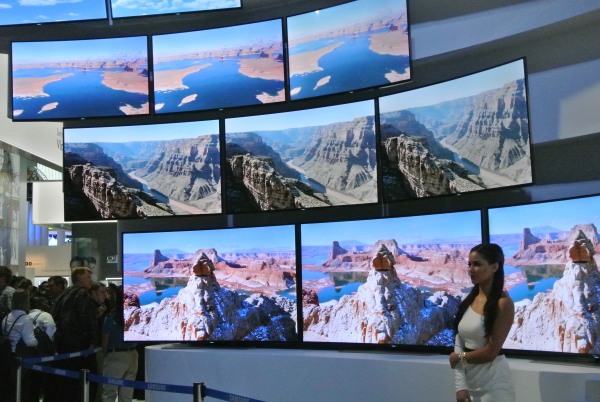
Samsung's 2014 TV lineup centers on curved 4K LCD panels, spanning the HU9000 and HU8700 series (55 to 78 inches, $4,000 to $8,000) alongside a 110-inch S9 UHD set priced at $150,000. The SEK-2500V UHD Evolution Kit adds HDMI 2.0 and HDCP 2.2 support via an Intel Quad Core processor, while a $300 UHD Video Pack bundles five 4K movies for owners lacking streaming options. With global TV sales down 3% in 2013, Samsung's push into 4K content partnerships and Smart Hub software signals a strategic shift toward software-driven revenue.

Pete Putman
Columns

HDTV Expert - Aereo And The Law Of Unintended Consequences

Aereo's Internet retransmission service, which re-encodes terrestrial digital TV broadcasts using AVC coding over IP, faces mounting legal and technical scrutiny as a 10th Circuit judge ruled its operation indistinguishable from a cable company under the 1976 Copyright Act. The service's antenna-per-subscriber architecture, while designed to sidestep copyright liability, likely contributed to catastrophic buffering failures during the Oscars and Golden Globes broadcasts. For cord-cutters, alternatives like the Channel Master DVR+ with dual tuners and USB-expandable storage, or Hauppauge WinTV USB receivers, may offer more reliable local HD reception without the legal uncertainty.

Pete Putman
Columns
HDTV Expert - January's TV is February's Digital Sign

HDTV Expert - January's TV is February's Digital Sign

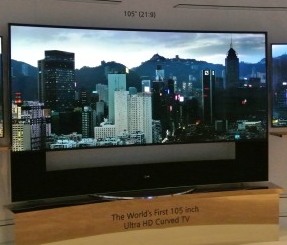
Technologies debuted at CES 2014, including 4K Ultra HD panels and multi-touch displays, rapidly transitioned to commercial digital signage applications at the Digital Signage Expo just weeks later, with LG's 105-inch Ultra HD display and 55-inch OLED Gallery TV among the crossover products. Transparent LCD panels, demonstrated by LG-MRI and others in commercial refrigerator doors and retail kiosks, showed notably improved color saturation alongside genuine transparency. For signage professionals, the convergence of gesture control, customer analytics, and large-format touch interfaces signals a significant shift toward interactive, data-driven display deployments.

Ken Werner
Columns

HDTV Expert - Thursday Evening at a Sony Store

Sony's 84-inch 4K LCD TV at $25,000 MSRP anchors a broader discussion of the company's strategic pivot away from PC hardware toward a media ecosystem built around smartphones and televisions. Quantum-dot enhanced LCD panels, which deliver expanded color gamut at modest added cost, illustrate how quickly hardware advantages erode in consumer electronics. Sharp's Quattron+ four-subpixel technology offers near-4K picture definition at roughly half the price of true 4K sets, though patent protection may prove a temporary shield in a fast-moving display market.

Ken Werner
Columns
HDTV Expert - Digital In The Desert: The 2014 HPA Tech Retreat

HDTV Expert - Digital In The Desert: The 2014 HPA Tech Retreat

The 2014 Hollywood Post Alliance Technology Retreat drew over 500 industry professionals to discuss pressing topics including UHDTV (4K), IP-based facility interconnects replacing traditional copper serial digital interfaces, and a contested comparison between Google's VP9 codec and the emerging HEVC H.265 standard. Signal interface technologies such as HDMI 2.0, MHL, SlimPort, and HDBaseT were examined alongside high dynamic range displays capable of thousands of nits, raising questions about whether HDR and wider color gamuts offer more practical value than increased pixel counts for consumer televisions.

Pete Putman
Columns

HDTV Expert - QD Vision Co-Founder Predicts Death of OLED-TV

QD Vision co-founder and CTO Seth Coe-Sullivan argued at the SID Los Angeles Chapter conference that OLED-TV will become irrelevant within five years, citing quantum-dot-enhanced LCD backlights as capable of exceeding OLED color gamut while consuming less power than OLED panels displaying a white screen. He systematically dismantled eight pro-OLED arguments, noting that mature LCD fabs maintain yield and cost advantages over OLED manufacturing processes such as ink-jet printing and OVJP, which have proven harder to scale than anticipated. For consumers, this suggests that quantum-dot LCD televisions - already appearing in 2013 Sony and Amazon Kindle Fire HDX products - may deliver premium picture quality at lower prices than OLED alternatives.

Ken Werner
Columns

HDTV Expert - "Antenna" Digital TV: When All Else Fails...

Terrestrial digital TV proved its resilience during a severe ice storm in southeastern Pennsylvania, where a three-antenna home setup covering roughly 55 channels in the Philadelphia metro market delivered uninterrupted broadcasts while Comcast cable, Verizon mobile data, and VoIP all failed simultaneously. A TiVo HD DVR with a built-in terrestrial DTV tuner remained fully functional, underscoring the practical advantage of maintaining an over-the-air setup alongside subscription services. The experience also frames the ongoing FCC UHF spectrum auction debate, questioning whether reallocating broadcast frequencies to mobile carriers is wise given how reliably the one-to-many broadcast model performs when cellular networks collapse under disaster-driven traffic loads.

Pete Putman
Columns
HDTV Expert - Samsung was King of the CES Hill

HDTV Expert - Samsung was King of the CES Hill

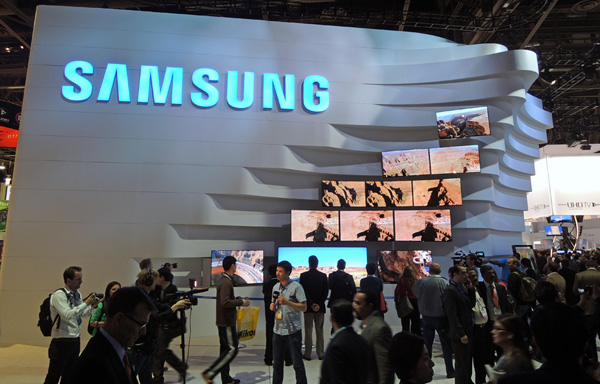
Samsung dominated CES 2014 with a sweeping UHD TV lineup spanning 50 to 110 inches, featuring PurColor wide-gamut technology, a quad-core processor, and UHD upscaling claimed to deliver near-native-4K image quality. A joint announcement with M-Go and Technicolor confirmed that native-4K streaming requires 15 Mb/sec bandwidth while optimized upscaled content needs as little as 3 Mb/sec, giving streaming providers meaningful flexibility. Samsung also previewed a 4K content partnership with Amazon and an Evolution Kit for firmware upgrades, signaling a long-term ecosystem play that extends well beyond the display hardware itself.

Ken Werner
Columns

HDTV Expert - Consumer Television: It's Business As Usual (Or Maybe Not)

Samsung sold an estimated 49 million flat-panel TVs in 2013, cementing eight consecutive years at the top of the global television market, while Samsung and LG together command over 40% of worldwide TV share. Sony and Sharp continue bleeding market share, with Sharp holding just 5% globally and 3% in the U.S. as of Q3 2013, and LG's 55-inch curved OLED has already dropped 67% in price to roughly $4,910 in the UK. Vizio's new full-array LED 4K smart TVs, starting at $1,000 for a 50-inch model, signal further price compression that threatens premium-tier manufacturers.

Pete Putman
Columns
HDTV Expert - Quantum Dot Makers Defy Conventional Wisdom

HDTV Expert - Quantum Dot Makers Defy Conventional Wisdom

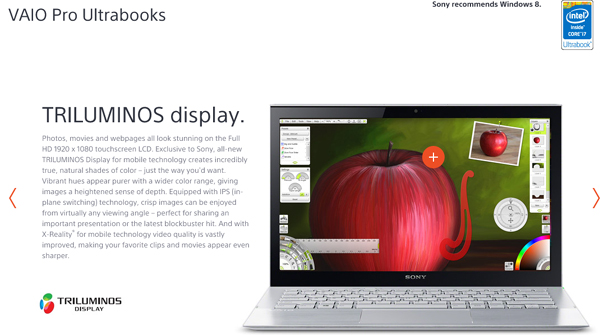
Quantum-dot display technology from QD Vision and Nanosys/3M is defying early assumptions about natural market segmentation, with QD Vision's Color IQ element appearing in Sony VAIO Pro Ultrabooks and Flip PCs as small as 11.6 inches, while Nanosys/3M's Quantum Dot Enhancement Film is being used in HiSense UHD TVs up to 85 inches. QDEF's cost scaling with the square of screen diagonal was expected to limit it to smaller displays, but Nanosys notes that QD Vision requires higher quantum-dot density, narrowing the anticipated cost gap at large sizes. These shifts have real implications for display buyers, as both Full HD Triluminos notebooks and wide-gamut large-screen TVs now leverage QD technology across previously unexpected form factors.

Ken Werner
Columns
HDTV Expert - The RCA Brand Prospers

HDTV Expert - The RCA Brand Prospers

RCA, now a licensed brand managed by Technicolor and manufactured by ON Corporation of Korea, is entering the Ultra HD TV market in 2014 with 55-, 65-, and 84-inch sets featuring native 4K resolution of 3840x2160, LED backlights, and the Google TV platform providing access to over 100,000 on-demand titles. The more affordable HDTV tier, ranging from 28 to 65 inches, integrates smart features via a Roku Streaming Stick inserted into an MHL port. Buyers considering value-tier 4K sets will find RCA positioning itself competitively as UHD adoption accelerates, with the brand reporting sales growth exceeding 20% in the past year.

Ken Werner
Columns
HDTV Expert - Display Surprises at CES 2014

HDTV Expert - Display Surprises at CES 2014

CES 2014 surfaced several notable display advances, including 3M's Quantum Dot Enhancement Film (QDEF) deployed in the Kindle Fire HDX 8.9-inch tablet, boosting color gamut from 60% to 72% NTSC while substantially improving battery life. Sharp demonstrated an HDR TV prototype using Dolby professional monitor technology, potentially targeting consumer pricing by 2015, and LG disclosed an internal yield target of 75% for its new OLED TV panel plant opening in Q3. For consumers, these developments signal meaningful near-term improvements in display quality, power efficiency, and OLED availability across price tiers.

Ken Werner
Columns
HDTV Expert - CES 2014 In The Rear-View Mirror

HDTV Expert - CES 2014 In The Rear-View Mirror

CES 2014 showcased a wave of 4K LCD and OLED televisions, with HEVC H.265 encoding poised to halve required bit rates and enable 4K streaming at roughly 10-20 Mb/s over existing broadband infrastructure. Quantum dot film technology, already deployed in Sony's 55-inch and 65-inch 4K LCD TVs, offers a compelling alternative to OLED by delivering stable, narrow-bandwidth color without the differential blue-emitter aging that threatens OLED longevity beyond 5,000 hours. Consumers weighing early adoption of these technologies will find the display interface landscape still evolving, with HDMI 2.0 capped at 18 Gb/s and DisplayPort 1.3 promising higher headroom for 10-bit 4K at 60 Hz.

Pete Putman
Columns

HDTV Expert - At CES, Sharp Calls Its Quattron+ Almost-4K TV a "Game Changer"

Sharp's Quattron+ display technology uses a four-sub-pixel pixel structure (red, green, blue, and yellow) to generate two luminance peaks per pixel both horizontally and vertically, effectively upscaling a 1920x1080 Quattron panel to a 3840x2160 near-4K output via its proprietary Revelation Technology. Demonstrated at CES 2014, the resulting image quality is described as nearly indistinguishable from true 4K at typical living-room viewing distances, at roughly half the price of native 4K sets. Sharp's roadmap reportedly extends this approach to 4K panels delivering 8K output by CES 2015.

Ken Werner
Columns