Richard Fisher

Richard Fisher

A/V Science Director

Richard Fisher is the President of Mastertech Repair Corporation, serving north east Atlanta, Georgia, and has been servicing, calibrating and reviewing audio video products since 1981. Tech Services USA, a division of Mastertech, creates sites, communities and libraries for consumers and professionals to share their technology knowledge and learn from each other. These include The ISF Forum and HD Library. HDTV Magazine exclusively publishes HD Library and Forum for Tech Services USA. Richard is ISF and HAA certified providing calibration and A/V reproduction engineering services. Richard is a technical consultant and also provides performance ISF and HAA home theater systems and calibration via Custom HT. Mastertech Repair Corporation is a factory authorized service center for Hitachi, Mitsubishi and Toshiba and a member of the National Electronics Servicing Dealers Association, NESDA, and the Georgia Electronics Servicing Dealers Association, GESDA.

30 articles

From the Trenches - 2 Million 3D Ready Displays Already in the Home, but...

Mitsubishi and Samsung DLP rear projection HDTVs sold over the past three years use a wobulated 960x1080 DMD chip running at 120 Hz to produce a 1920x1080 2D image, making roughly 2 million existing sets technically 3D-ready without a new display purchase. In 3D mode, the checkerboard processing splits left and right eye images at half resolution per eye, and a required 3DC-1000 adapter will handle the Blu-ray 3D 48 Hz standard. Owners should verify compatibility before replacing a working set, but should also understand the per-eye resolution trade-off before assuming full 1920x1080 3D performance.

Columns

WirelessHD - Integrating Wireless HDMI For Displays

WirelessHD - Integrating Wireless HDMI For Displays

WirelessHD operates exclusively in the 60 GHz band via SiBeam technology, supporting lossless transmission of 4:4:4 color depth, HD audio bitstreams, and multi-channel PCM at distances up to 30 feet within a single room. Unlike competing standards such as WHDI, which employs perceptual masking compression similar to MP3 encoding and caps video at 1080p/30fps, WirelessHD passes stringent interoperability testing including full HDMI CEC protocol support. For performance-focused buyers, understanding these technical distinctions is critical before committing to any wireless display solution.

Articles

3D HDTV in the Home

Stereoscopic 3D HDTV for home use relies on two competing display approaches: active LCD shutter glasses operating at 120 Hz (60 frames per eye) and passive polarizing systems that halve vertical resolution to 1920x540 per eye. Hands-on demos at CEDIA from Sony, Panasonic, Mitsubishi, and Digital Projection revealed that active shutter glasses cause measurable light output reduction, color temperature shifts, flicker, and eye fatigue, while passive X-pol systems avoid those issues but deliver visibly degraded resolution. Full-resolution 3D delivery via Blu-ray will require HDMI 1.4 bandwidth, making display and source upgrades unavoidable for consumers pursuing reference-quality 3D.

Articles

CEDIA 2009 Review: PC Home Theater Integration

PC home theater integration remains elusive in 2009, with Cable Card support inconsistently adopted by local providers and a full IP-based cable transition potentially forcing half the market onto set-top boxes within 5-10 years. Satellite stands out as the most promising universal solution for delivering SD and HD broadcast content to a PC, with both Dish and DirecTV demonstrating working prototypes at CEDIA 2009, though content protection remains the primary obstacle to commercialization. In the meantime, devices like the PS3, Xbox 360, and TiVo are already delivering multimedia directly to the main display, leaving full PC integration largely a pursuit for enthusiasts.

Articles

CEDIA 2009 Review: Multimedia Directly To Your Display

At CEDIA 2009, manufacturers including Samsung, LG, and Mitsubishi showcased smart TV platforms integrating Yahoo widgets, VUDU HD movie streaming, and Netflix instant video directly into HDTVs and Blu-ray players, with Samsung's Internet@TV suite offering DLNA compatibility and dual USB 2.0 ports for local media playback. Netflix confirmed partnerships spanning LG, Samsung, Roku, Xbox 360, TiVo, and upcoming Sony and VIZIO displays, though wireless delivery risks cutting streaming throughput by roughly half compared to wired connections. Despite the feature expansion, real-world adoption remains low, with most consumers unaware of or unable to navigate these capabilities.

Articles

HDTV TLC: Mounting Your HDTV Over the Fireplace

Wall-mounting an HDTV shifts service liability to the owner, a fact most consumers overlook when positioning displays above fireplace mantels or at heights exceeding shoulder level. Plasma panels run heavier than same-size LCD screens, and flat panels over 50 inches require the cabinet bottom at roughly waist height to remain within safe handling range for technicians. Fireplace installations introduce additional risks including heat damage, soot infiltration between panel layers, and potential warranty voidance, while also creating ergonomic strain from elevated viewing angles.

Articles
Portable TV and the Haier HLT717

Portable TV and the Haier HLT717

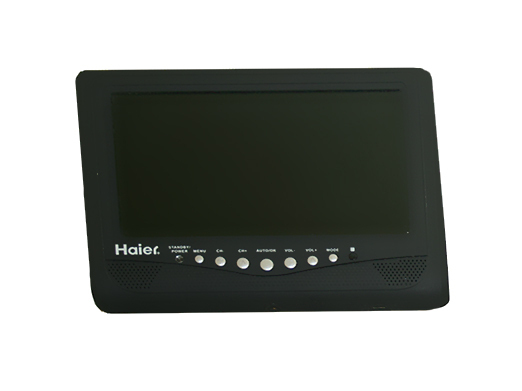
The Haier HLT717 is a 7-inch 480x243 portable LCD TV with an ATSC DTV tuner, analog cable tuner, Clear QAM support, and RCA composite A/V inputs, reviewed here primarily as a compact display solution for navigating DVD Audio menus. Its dual memory slots for OTA and cable tuning modes offer practical flexibility, though OTA reception with the included telescoping omni-directional antenna proved unreliable, requiring a directional antenna like the Silver Sensor for stable DTV lock. Buyers should calibrate expectations around the panel's 480x243 resolution limit, which introduces moire and horizontal line artifacts, and note the absence of audio delay compensation causing lip sync issues.

Reviews

HDTV TLC: Projection Lamp Failure and Replacement

Projection lamp cartridges for rear-projection micro-displays typically cost $150-250, while front-projection units command $300-450, and understanding the difference between OEM and aftermarket replacements is critical to avoiding counterfeit products that may fail to meet color temperature or light output specifications. Physical lamp failure can be identified by a cracked glass rod or missing wire segment between the rod and reflector, and body oils transferred during handling can cause thermal stress fractures due to the intense heat generated. Purchasing OEM lamp cartridges directly from manufacturers or authorized distributors, and using a credit card for consumer protection, reduces the risk of costly service calls caused by non-conforming replacements.

Articles
HD Waveform - CinemaScope, Zoom Versus Anamorphic

HD Waveform - CinemaScope, Zoom Versus Anamorphic

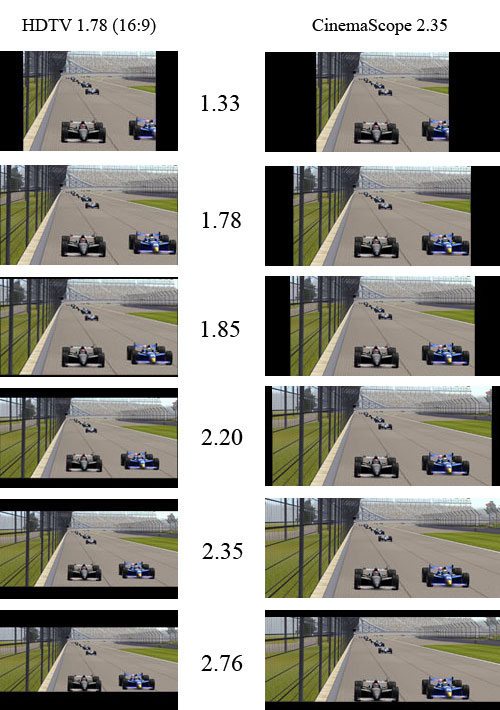
Achieving a native 2.35:1 CinemaScope presentation at home can be accomplished via two competing methods: an anamorphic lens paired with a scaler, or a projector zoom approach requiring a minimum 1.3x zoom range and a 2.35 screen. With 1080p projectors, the zoom method preserves 1:1 pixel mapping for Blu-ray sources, avoiding the scaling artifacts and optical errors introduced by an additional lens element, while a manual iris can compensate for the roughly 33% drop in light output. The choice between a hands-on zoom setup and a fully automated anamorphic system ultimately hinges on budget, viewing distance, and tolerance for image processing trade-offs.

Columns
Mitsubishi LT-46148 LCD HDTV - On the Test Bench

Mitsubishi LT-46148 LCD HDTV - On the Test Bench

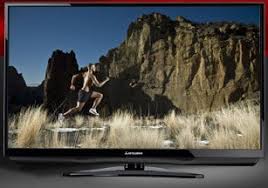
The Mitsubishi LT-46148 46-inch LCD HDTV delivers a measured contrast ratio of 2438:1 at maximum backlight, but its unconventional backlight control uses video processing rather than actual lamp dimming, keeping peak black fixed at 0.045fl regardless of setting. The display passes 1:1 pixel mapping only at 720p in PC input mode, exhibits chroma errors via HDMI YPbPr, and lacks the low-end grayscale controls needed for proper ISF calibration. Viewers will get the best results using the NATURAL picture mode with color temperature set to LOW, an external 1080p scaler, and an upconverting DVD player to compensate for weak internal SD scaling.

Reviews
OPPO DV-983H Upconverting DVD Player - On the Test Bench

OPPO DV-983H Upconverting DVD Player - On the Test Bench

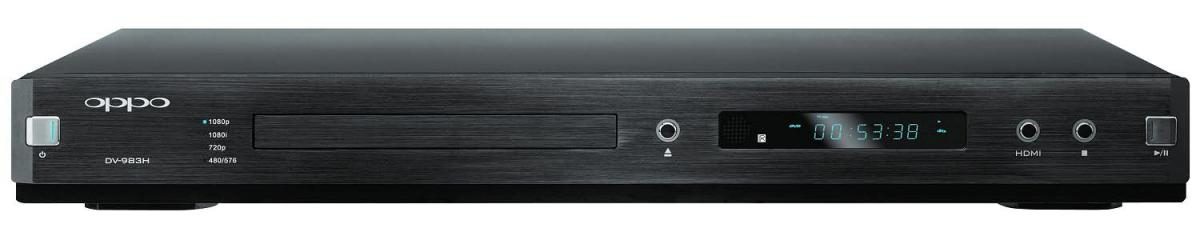
The OPPO DV-983H upconverting DVD player delivers strong overall test bench performance, passing HQV Benchmark cadence tests at 720p, 1080i, and 1080p with correct 16/235 IRE levels and accurate color decoding, though its chroma burst response trails both the OPPO DV-981HD and the reference Toshiba HD-A35. Its 8-channel analog outputs with 24/192 D/A converters produce a euphonically pleasing but tonally inaccurate signature, while SACD playback suffers from DSD-to-PCM downconversion at 88.2 kHz. Buyers prioritizing versatile cadence handling and HD audio access via HDMI will find strong value here, but critical audiophiles and videophiles should weigh these measured limitations carefully.

Reviews

HD Waveform - Vertical and Horizontal Filtering

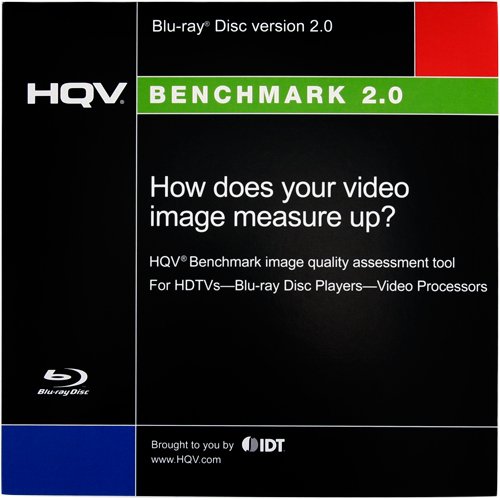
Vertical filtering, which reduces luminance detail by blending adjacent pixel rows, has persisted from analog CRT displays through first-generation 1080p fixed-pixel panels, where internal scalers converting 1080i to progressive scan commonly suppress a full 1080-line burst response. The Silicon Optix HQV Benchmark disc, available in Blu-ray and HD DVD formats, provides a practical tool for detecting this flaw, with the stadium bleacher sequence serving as a real-world analog to a 1:1 pixel-mapped vertical burst. Viewers at close distances of 3-4 screen heights will notice subtle detail loss and line softening, while casual viewers at standard distances may never perceive the artifact.

Columns
HQV Benchmark Blu-ray, DVD and HD DVD

HQV Benchmark Blu-ray, DVD and HD DVD

The HQV Benchmark discs from Silicon Optix offer a structured battery of deinterlacing and scaling tests across DVD (480i, no progressive flags), Blu-ray, and HD DVD formats, with Blu-ray and HD DVD tests centered on a SMPTE RP-133 1920x1080 1:1 pixel-mapped pattern. Most players fail the raw 480i cadence tests yet perform well with Hollywood titles because commercial releases embed progressive flags that guide the video processor directly. Understanding this distinction helps buyers evaluate whether a player or external scaler can handle edge cases like anime cadences, 4:3 letterboxed content, and native 1080i-captured concert or documentary material.

Reviews

CRT Rear Projection and Direct View Service and Repair

CRT rear projection and direct view displays, capable of native 1920x1080 resolution on later HDTV models with DVI or HDMI inputs, remain cost-effective to service at $300-$500 for rear projection and $100-$400 for direct view, compared to DLP, LCD, and plasma repairs that can cost significantly more. Component-level repair is still viable for CRT technology, unlike modern flat panels where board-level replacement is often the only option and proprietary parts availability is a growing concern. For viewers seated beyond 4 screen heights, CRT's superior black levels and dynamic light output may outweigh the resolution advantages of newer displays.

Articles
Toshiba HD-A3, HD-A30, HD-A35 HD DVD and SD DVD players

Toshiba HD-A3, HD-A30, HD-A35 HD DVD and SD DVD players

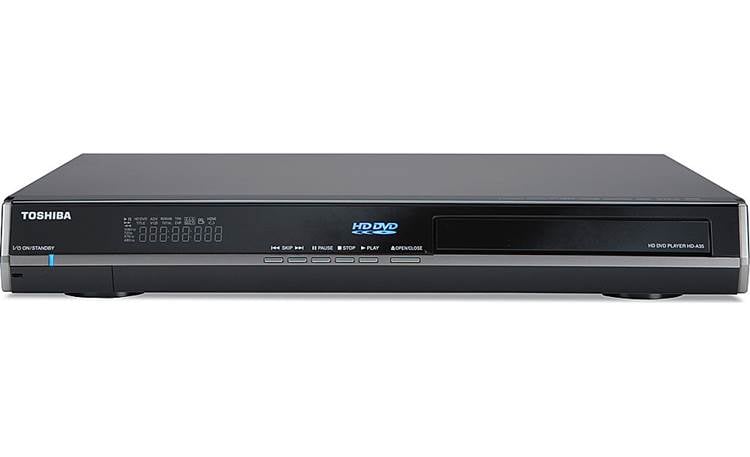
The Toshiba HD-A3, HD-A30, and HD-A35 represent the final generation of HD DVD players, with the flagship HD-A35 delivering native 1080p24 output and HDMI 1.3 bitstream support for all HD audio codecs. Bench testing against the OPPO DV-981HD reference player showed the Toshiba excelling in luminance frequency response, color decoding, and SD DVD scaling at 1080p60, though a firmware bug causes the player to remain locked in 1080p24 mode when switching to SD DVD content, producing aliasing and chroma artifacts. Buyers seeking reference-grade HD DVD and upconverted SD DVD performance at dramatically reduced street prices will find strong value here, provided they can tolerate manually switching output scan rates between disc formats.

Reviews
OPPO HM-31 HDMI Switch

OPPO HM-31 HDMI Switch

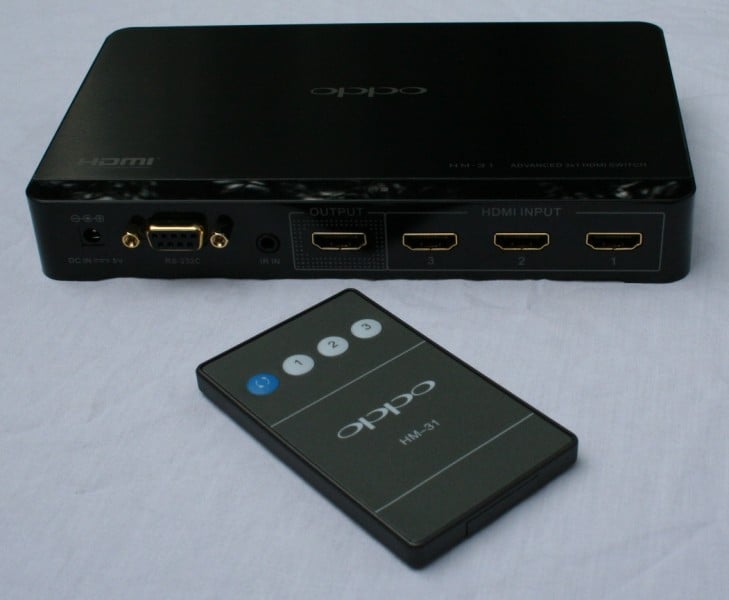
The OPPO HM-31 is a 3x1 HDMI 1.3 switch priced at $99 that supports 1080p24 video, Deep Color, bitstream and PCM HD audio, and includes a TMDS EQ circuit to maintain signal integrity over cable runs beyond the typical 30-foot threshold. Priority and auto-switching logic handle most source-selection tasks without requiring manual input, though always-on sources like cable boxes require workarounds. For users needing to expand HDMI inputs on an A/V receiver or display, this switch offers a practical alternative to paying $200-300 more for a higher-tier receiver with additional HDMI ports.

Reviews

Will Internet Video Replace Blu-ray?

Internet-based video delivery services, positioning themselves as rivals to Blu-ray, face a fundamental bandwidth gap: Blu-ray's bitstream throughput far exceeds what current internet infrastructure can reliably deliver, making claims of equivalent HD quality questionable. These proprietary set-top hardware solutions also introduce real-world risks such as hard drive failure wiping purchased libraries, the absence of calibration disc support, and no portability options. For consumers and the packaged media industry alike, whether convenience will outweigh measurable quality and ownership security is the central question.

Articles

HD DVD or Blu-ray: My Choice is...?

The HD disc format war between Blu-ray and HD DVD draws direct parallels to the earlier SACD versus DVD Audio conflict, where competing formats confused consumers and ultimately collapsed the market. Blu-ray's higher disc capacity, PS3 integration with 1080p gaming potential, and broader manufacturer support give it a pragmatic edge, while HD DVD lacks comparable hardware backing from third-party manufacturers. For enthusiasts demanding the best picture and audio quality, neither format yet delivers the same obvious performance leap that broadcast HDTV offered over standard NTSC, making mass-market adoption far from certain.

Articles
Panasonic DMP-BD10A Blu-ray and SD DVD player

Panasonic DMP-BD10A Blu-ray and SD DVD player

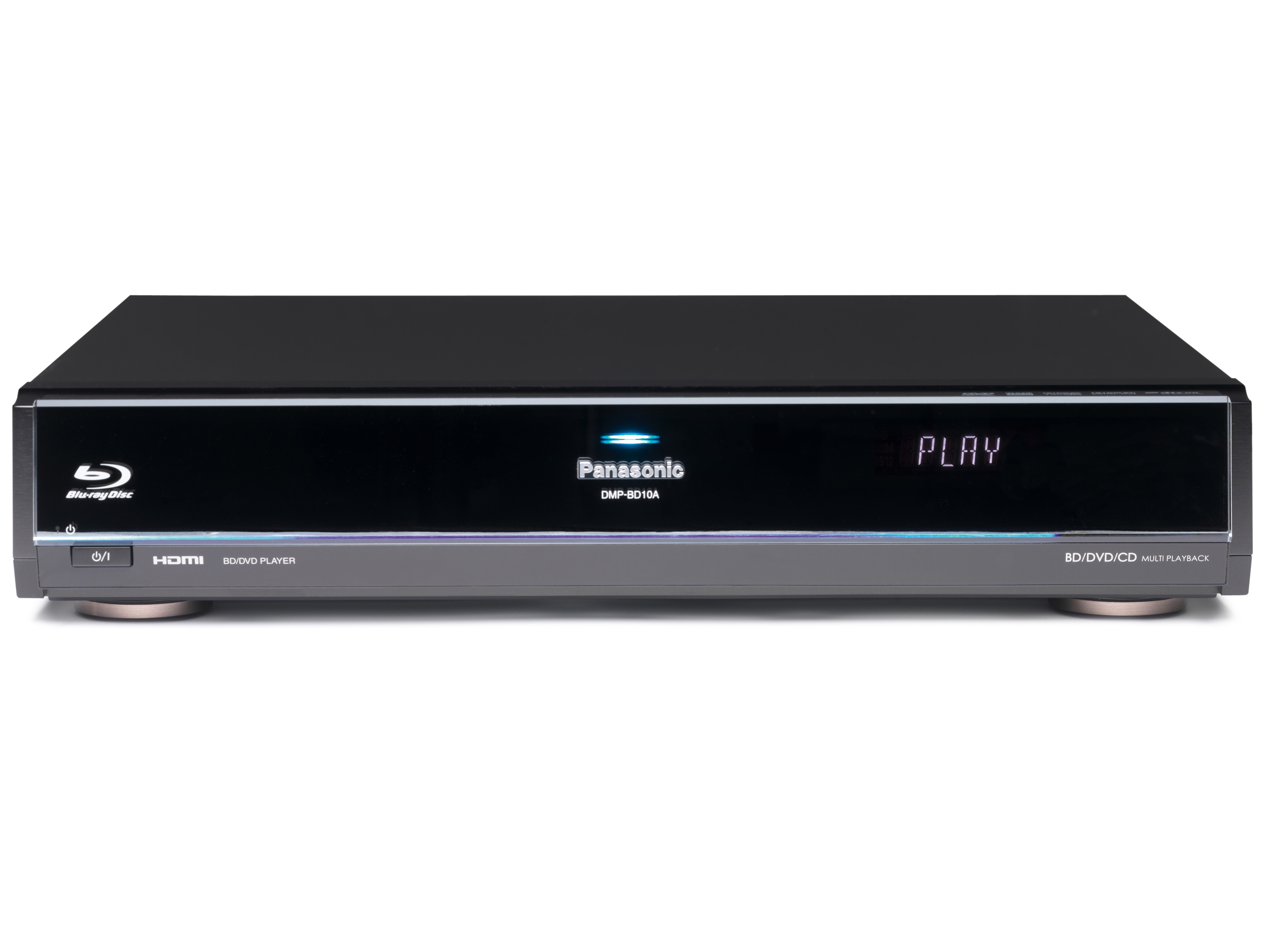
The Panasonic DMP-BD10A Blu-ray player ($599) delivers solid 1080p Blu-ray performance via HDMI and strong analog component output at 1080i, but its SD DVD upconversion to 1080p reveals notable color frequency response failures, an 18-pixel horizontal scaling error, and visible noise, dithering, and contouring artifacts. HD audio codecs including Dolby TrueHD and DTS-HD are limited to HDMI 1.3 bitstream output, with PCM multichannel downmixed to 2-channel stereo. Owners of legacy multiscan CRT displays running 480p or 1080i will find this a capable Blu-ray entry point, while those relying on HDMI upconversion for SD DVD should look elsewhere.

Reviews
BenQ W10000 1080p DLP Front Projector

BenQ W10000 1080p DLP Front Projector

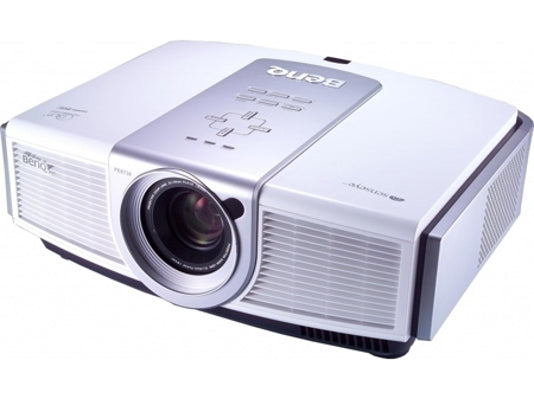
The BenQ W10000 is a 1080p DLP front projector using a full 1920x1080 Dark Chip3 DMD with an 8-segment color wheel, street-priced near $6,000 without wobulation, enabling true pixel-perfect output. Pre-calibration Delta C errors ranged from 2.5 to 5.5 driven by cyan bias, but post-calibration achieved near-reference D65 tracking, and the REAL aspect mode delivers 0% overscan with 1:1 pixel mapping for 1080p and 720p sources. Buyers should note the aspect ratio catch-22 between REAL and ANAMORPHIC modes, which has practical implications for multi-source installations requiring consistent 1:1 pixel fidelity.

Reviews
OPPO DV-981HD Upconverting SD DVD Player

OPPO DV-981HD Upconverting SD DVD Player

The OPPO DV-981HD is a third-generation SD DVD upconverting player delivering 1080p output and multichannel PCM audio via HDMI, including support for SACD and DVD Audio with 24/192 DA converters. DCDi by Faroudja video processing, correct 16/235 IRE levels, and CUE pass results place its scaling performance above first-generation HD disc players like the Toshiba HD-A1 at 1080i. Priced at $229, it offers a compelling value for videophiles seeking clean SD DVD upconversion, though audiophiles requiring native high-resolution analog output will need to look at more specialized hardware.

Reviews
Panasonic PT-AE1000U LCD Front Projector

Panasonic PT-AE1000U LCD Front Projector

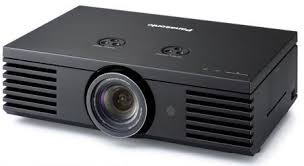
The Panasonic PT-AE1000U is a transmissive LCD front projector delivering native 1080p/24 and 1080p/60 capability with a powered 2x zoom, extensive lens shift, and a measured contrast ratio of 703:1 (dynamic iris off) at a street price around $3,795. Calibration revealed heavy green and blue channel boosting that pushed color temperature toward cyan, requiring significant correction at the cost of roughly half the projector's light output. Casual viewers and first-timers will appreciate its flexible placement and big-screen impact, but performance enthusiasts will find its inherent LCD softness, limited intrafield contrast, and light output shortfalls difficult to overlook.

Reviews
HD Waveform 10 - Dynamic Iris and Gamma

HD Waveform 10 - Dynamic Iris and Gamma

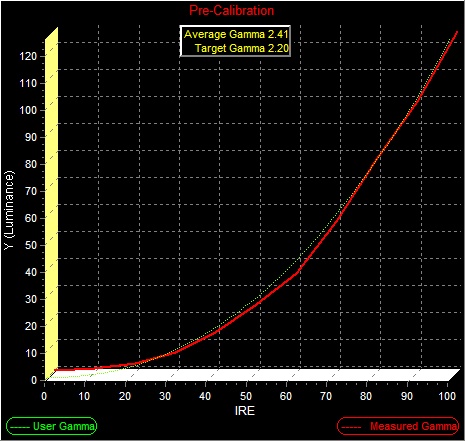
Dynamic iris and gamma manipulation in front projectors are marketing techniques that inflate contrast ratio specs, as demonstrated by a Panasonic PT-AE1000 measuring a real-world calibrated contrast ratio of 703:1 with iris off versus a manufacturer-claimed 11,000:1 using a full-on/full-off test methodology. The auto iris adjusts light output based on scene content while gamma is non-linearly redistributed across IRE levels, creating a perceptual illusion of greater dynamic range without improving the native capability of the imaging technology. Viewers seeking accurate, standards-compliant imaging should disable these systems, as the manipulated gamma response deviates from the industry-standard 2.2 curve and cannot faithfully reproduce the original source material.

Articles
LG BH100 Universal HD DVD/Blu-ray Player

LG BH100 Universal HD DVD/Blu-ray Player

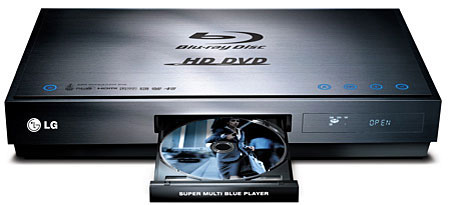
The LG BH100 is a universal HD DVD/Blu-ray player priced at $1,199 that outputs 1080p24 via HDMI, making it the only HD DVD player at the time to do so, but it falls short in several critical areas. HD DVD support is limited to movie playback only with no disc menus or special features, SD DVD is capped at 480i over analog component, DVI output fails video standards with peak white clipping and color errors, and there is no HD audio bitstream or multichannel PCM support via HDMI. Buyers seeking a true one-box solution for both formats will find the LG a capable but incomplete option, with competing combinations like a Sony PS3 plus a Toshiba HD DVD player offering more complete feature sets at a comparable price.

Reviews

HDTV TLC: RPTV Viewing Screen Maintenance and Repair

Rear projection TV viewing screens come in two primary types - smooth screen protectors (Plexiglas with optional optical coatings) and grooved lenticular screens exclusive to CRT RPTV displays - each requiring distinct cleaning methods to avoid permanent damage. Replacing a damaged inner and outer screen pair can cost $350-800 installed, while chemical cleaners like Windex will degrade optical-grade plastic and strip anti-glare coatings over time. Knowing the correct vacuum-based cleaning technique for grooved screens versus the mild soap-and-water method for smooth screens can extend the life of your display and prevent costly repairs.

Articles

TV Guide On Screen

TV Guide On Screen is a free universal program guide system that downloads scheduling data via QAM digital cable tuners, typically through PBS broadcast channels, and requires up to 24 hours to update whenever a cable system change forces a new channel map selection. The service supports up to two weeks of scheduling data, though the actual range depends on channel count and how long the product remains powered off, with too many channels potentially limiting coverage to under one week. Users relying on DVRs or DVD recorders for automated recording should understand that TV Guide update cycles can disrupt scheduled recordings, and manual recording remains a reliable fallback for time-sensitive or variable-length programming.

Articles

HDTV TLC: Extending the Lamp Life of Your HDTV Microdisplay

Lamp-based microdisplay technologies including DLP, LCoS, SXRD, D-ILA, and LCD projection carry replacement lamp costs of $200-$500 and rated lifespans of 2,000 to 8,000 hours, making proper maintenance critical for long-term value. Key factors affecting lamp longevity include minimizing power cycles (striking the lamp is the most destructive event), using AC surge suppressors to protect the ballast, allowing a 2-minute cool-down before cutting power, and running the lamp at low power mode until brightness visibly drops. Notably, Toshiba engineering contradicts several of these conventions, recommending high power settings and instant shutoff based on dealer demo units achieving 7,000-8,000 hours.

Articles

ATSC Cable QAM Tuners - CableCARD or ATSC Ready

ATSC and QAM tuners, mandated by FCC regulation for all US televisions sold since 2006, allow direct reception of digital cable channels without a cable box, but introduce a non-linear channel numbering system that can require 10-30 minutes to scan and produces hundreds of raw channel numbers that do not match cable company guide listings. CableCARD support resolves the channel mapping problem by providing the cable company's official channel map, though it does not cover VOD or PPV services. Shoppers should also note that some ATSC/QAM-capable displays, such as certain Hitachi CRT rear-projection models, are limited to 480i output despite carrying a compliant tuner.

Articles

CableCARD Basics

CableCARD technology uses a PCMCIA interface to deliver encrypted cable signals directly to compatible HDTV displays, eliminating the need for a separate cable box and its associated rental fee. The card functions as a one-way computer modem device, receiving channel map data and conditional access permissions via a dedicated carrier on the cable system, but does not support VOD or PPV services at this stage. Consumers should be aware that most installation issues trace back to cable company configuration errors or signal noise on the exclusive carrier frequency rather than hardware faults.

Articles
Cinemascope - Zoom and Anamorphic Methods

Cinemascope - Zoom and Anamorphic Methods

Achieving native 2.35:1 CinemaScope presentation via projector zoom rather than an anamorphic lens offers a compelling alternative, particularly with 1080p displays where 1:1 pixel mapping eliminates the scaling artifacts that plague anamorphic setups. A 1.3x zoom range is sufficient for most projectors, and a manual iris can compensate for the roughly 33% light output reduction, keeping screen luminance at an acceptable 20 foot-lamberts from a 30Fl baseline. For OAR purists willing to handle manual adjustments, the zoom method delivers artifact-free imaging for under $1000 in screen costs alone.

Testing Grounds