
LCD TVs

HDTV Expert - QD Vision Co-Founder Predicts Death of OLED-TV

QD Vision co-founder and CTO Seth Coe-Sullivan argued at the SID Los Angeles Chapter conference that OLED-TV will become irrelevant within five years, citing quantum-dot-enhanced LCD backlights as capable of exceeding OLED color gamut while consuming less power than OLED panels displaying a white screen. He systematically dismantled eight pro-OLED arguments, noting that mature LCD fabs maintain yield and cost advantages over OLED manufacturing processes such as ink-jet printing and OVJP, which have proven harder to scale than anticipated. For consumers, this suggests that quantum-dot LCD televisions - already appearing in 2013 Sony and Amazon Kindle Fire HDX products - may deliver premium picture quality at lower prices than OLED alternatives.
Ken Werner
Columns
HDTV Expert - CES 2014: First Impressions (4K, Curved Screens, OLEDs, and All That)

HDTV Expert - CES 2014: First Impressions (4K, Curved Screens, OLEDs, and All That)

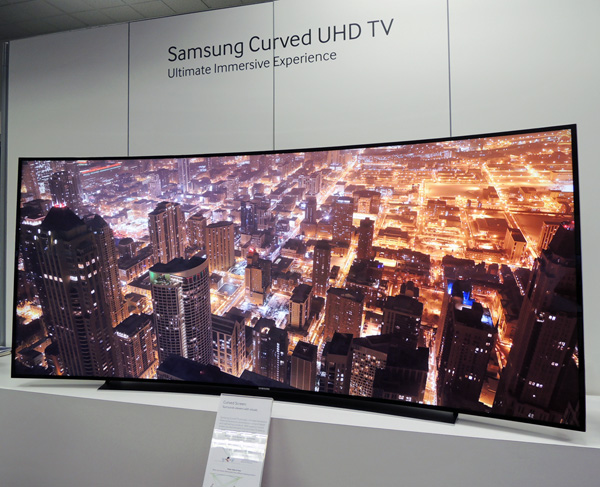
CES 2014 brought a wave of large-format display technology, highlighted by three manufacturers unveiling 105-inch 21:9 curved 4K LCD TVs, LG's 77-inch curved 4K OLED as the world's largest, and Vizio's 120-inch 4K LCD using Sharp's Gen 10 ASV glass from Sakai, Japan. Chinese manufacturers replicated nearly every Samsung and LG breakthrough with far less fanfare, while Panasonic's conspicuous absence of a consumer LCD lineup signals a potential exit from the TV market. For buyers, the practical takeaway is that large 4K LCDs are on track to become the standard within 2-3 years, with competitive pricing pressure accelerating from Chinese brands.

Pete Putman
Columns

HDTV Expert - There's a New QD Maker in Town

Quantum Materials Corp. (QMC) is entering the quantum dot display market with tetrapod-shaped QDs that offer a 20nm FWHM emission spectrum, roughly half the width of conventional spherical QDs produced by rivals QD Vision and Nanosys. Using a patented microfluidic continuous-flow reactor derived from Rice University technology, a single unit can produce 100 kg of tetrapod QDs per day, addressing the throughput limitations of colloidal batch processes. For display manufacturers, this combination of narrower emission peaks and scalable production could enable wider color gamut LCDs at competitive cost, with QMC targeting a commercial product launch in 2014.

Ken Werner
Columns

HDTV Expert - It's "Fade To Black" for Plasma and Projectors in Japan

Panasonic's exit from plasma TV production by March 2014 marks a broader collapse for Japanese display manufacturing, as plasma held only 5.7% global market share in FY2012 compared to LCD's dominant 87.3%. Chinese manufacturers are accelerating the pressure, with CSOT's 110-inch 4K panels and sub-$40-per-diagonal-inch LCD pricing reshaping both consumer and commercial AV markets. Mitsubishi Electric Visual Solutions has already withdrawn from the projector market entirely, and Sharp faces similar pressure, signaling that front projection and niche display technologies are losing ground to large-format LCD screens.

Pete Putman
Columns

HDTV Expert - Who ARE Those Guys?

Chinese LCD TV manufacturers like BOE Technology and TCL are rapidly gaining market share in the 4K UHDTV segment, with BOE posting an 8.9 percent operating margin and CSOT achieving 9.6 percent in Q2 2013, outpacing LG Display's 5.6 percent. Global 4K TV shipments multiplied 20 times in roughly a year, driven largely by China's 28 percent year-over-year TV shipment growth. For consumers, this competitive pressure is already collapsing 4K pricing from roughly $300 per diagonal inch in 2012 to around $90-$100 today.

Pete Putman
Columns

HDTV Expert - Display Panels in the News

LG Display unveiled the world's slimmest Full HD smartphone panel at 2.2mm thick with a 5.2-inch diagonal, achieving 535 nits peak luminance and a 3.74:1 ambient contrast ratio at 10,000 lux, making it potentially readable in direct sunlight. Sharp's IGZO backplane technology is gaining momentum, with rumors of Apple adoption in H1 2014 and a new $2.84 billion joint venture with China Electronics Corp. targeting 7.2 million panels per month. Quantum-dot-enhanced backlights for Ultra HD wide color gamut TVs are also emerging as a competitive differentiator, with Innolux reportedly pursuing Toshiba and Panasonic supply deals.

Ken Werner
Columns
HDTV Expert - LCD Always Wins

HDTV Expert - LCD Always Wins

Quantum-dot-enhanced backlights, already available in Sony's Triluminous TVs using QD Vision's Color IQ optical element, deliver OLED-like color gamut at a price premium estimated around $300 per set. At SID Display Week 2013, 3M also announced volume production of its Quantum Dot Enhancement Film (QDEF), targeting small to medium-size screens including potential 1920x1080 smartphone panels. These developments suggest LCD could close the image quality gap with OLED-TV before large-screen OLED manufacturing yields become commercially viable, potentially repeating the historical pattern of LCD neutralizing rival display technologies.

Ken Werner
Columns

HDTV and Home Theater Podcast - Podcast #584: Plasma vs LED

Plasma TVs deliver superior black levels, contrast ratios, and color saturation compared to LED LCD displays, with edge-lit LED panels frequently exhibiting backlight uniformity defects such as clouding, halo, and flashlight effects that are absent in plasma panels. Plasma's per-pixel brightness and hue control produces richer, more saturated color that mid-tier plasma sets match against higher-cost LED competitors, while In-Plane Switching (IPS) LEDs improve viewing angles only at the cost of contrast. For buyers prioritizing picture quality in a controlled-light environment under 65 inches, plasma remains the stronger value proposition despite its weight and image retention considerations.

The HT Guys
Podcasts

HDTV Expert - Digital Signage Expo Grows in Size and Energy

The 2013 Digital Signage Expo in Las Vegas drew 22% more exhibitors than the prior year, with major panel makers and technology vendors showcasing advances including 4K 84-inch touch displays from LG and ViewSonic, Corning Gorilla Glass directly bonded to Christie 55-inch LCDs, and E Ink electrophoretic panels that survived the 2011 Sendai tsunami. Sharp leveraged its Gen 10 fab to deliver panels up to 90 inches, while BSI demonstrated a resized and curved 26-inch LCD at 1366x384 pixels using Tovis heat-bending technology. Transparent display refrigerator doors and interactive demographic-sensing signage signal where the industry is heading in real-world retail deployments.

Ken Werner
Columns

HDTV Expert - CES 2013: From Hype to Ho-Hum in Minutes - by Pete Putman

CES 2013 showcased a flood of 4K Ultra HD TVs from virtually every major brand, with Chinese manufacturers like Hisense, TCL, and Haier matching Japanese and Korean rivals across panel sizes from 50 to 110 inches - all sourcing LCD glass from China Star Optoelectronics, a TCL-Samsung joint venture. IGZO semiconductor technology emerged as a key differentiator for Sharp, promising lower power consumption and faster pixel switching, while LG and Samsung debuted curved 55-inch OLED panels still unavailable for purchase. The practical takeaway is that rapid commoditization of 4K displays, driven by Chinese manufacturing scale, points toward significant price drops across all screen sizes by late 2013.

Pete Putman
Columns

Sharp Introduces Ultra High-Resolution Displays with the Industry's Thinnest Design

Sharp unveiled a 32-inch class professional LCD monitor series at CES 2013, built on its proprietary IGZO thin-film transistor technology and delivering 3,840 x 2,160 (4K2K) resolution - four times the pixel density of 1080p full HD. The monitors measure just 35 millimeters at their thickest point, and one model supports 10-point projected capacitive multi-touch via finger or stylus input. Connectivity includes dual HDMI ports and a DisplayPort interface, each capable of carrying the full ultra-high-resolution signal over a single cable, simplifying deployment in professional graphics, CAD, and financial-services environments.

Shane Sturgeon
Bulletins

Panasonic Unveils Stunning Design Innovations And Cutting-Edge Features On VIERA® 2013 LED/LCD Models

Panasonic's 2013 VIERA LED/LCD lineup spans seven series from the flagship WT60 to the entry-level B6, with the top-tier models featuring 4200 BLS backlight scanning technology, IPS panels with 178-degree wide viewing angles, and 1080p resolution across most configurations. The WT60 and DT60 series add a Dual Core Hexa Processing Engine, three HDMI ports, and Voice Interaction via a Touch Pad Controller, while all Smart VIERA models support Swipe and Share 2.0 for seamless Android and iOS content transfer. New high-efficiency LED panels reduce power consumption by up to 15 percent and carry Energy Star 6.0 certification, making the lineup a practical upgrade for both picture quality and energy savings.

Shane Sturgeon
Bulletins

HDTV Expert - Frequently Asked Questions - by Pete Putman

Pete Putman addresses recurring consumer questions about TV purchasing, calibration, and display technology in this late-2012 roundup, noting that 42-inch 1080p plasma TVs had dropped to under $400 while plasma held only 5.5% of global TV shipments in Q2 2012. Plasma's decline is attributed to consumer preference for large, inexpensive LCD panels over superior black levels and viewing angles, while streaming services like Netflix and Amazon are eroding Blu-ray disc sales despite lower picture quality. For practical guidance, Putman recommends enabling a cinema or movie preset and manually setting sharpness to zero and color temperature to warm as a cost-free alternative to professional calibration.

Pete Putman
Columns

HDTV Expert - Red Ink at Morning; Investors Take Warning!

Sharp, Panasonic, and Sony reported severe fiscal losses in November 2012, with Sharp warning of a $5.6B loss and Panasonic shocking analysts with a $9.6B forecast - roughly 30 times market expectations - while Sony managed a $379M operating profit partly from a chemicals business sale. The near-commoditization of the TV market, now dominated by Samsung and LG at 45% combined share, has left Sharp at just 5% and Sony at 9% of LCD shipments. Analysts suggest all three companies must exit television manufacturing and pivot to stronger units like batteries, solar, IGZO display technology, and imaging to survive.

Pete Putman
Columns

HDTV Expert - Panasonic Rumors are Two-and-a-Half Thirds False - by Ken Werner

Panasonic is not exiting the TV business or its LCD panel manufacturing for TVs, despite circulating reports translated from Asian media claiming otherwise. Jim Reilly, VP of Corporate Communications at Panasonic Corp. of North America, confirmed that while Panasonic Display is increasing production of small and medium-sized LCD panels for smartphones and tablets, its TV-oriented LCD panel operations remain active. For consumers and industry watchers, this distinction matters as financial pressure across the LCD TV sector continues to fuel speculation about consolidation and divestitures.

Pete Putman
Columns