PP

Pete Putman

HDTV Expert

Peter Putman is the president of ROAM Consulting L.L.C. His company provides training, marketing communications, and product testing/development services to manufacturers, dealers, and end-users of displays, display interfaces, and related products. Pete edits and publishes HDTVexpert.com, a Web blog focused on digital TV, HDTV, and display technologies. He is also a columnist for Pro AV magazine, the leading trade publication for commercial AV systems integrators.

208 articles
HDTV Expert - Samsung Has No Trouble With The Curve

HDTV Expert - Samsung Has No Trouble With The Curve

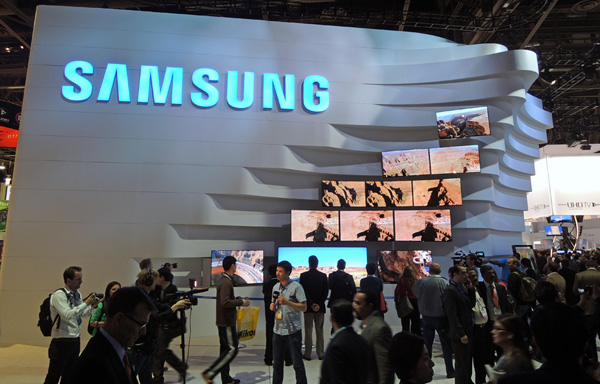
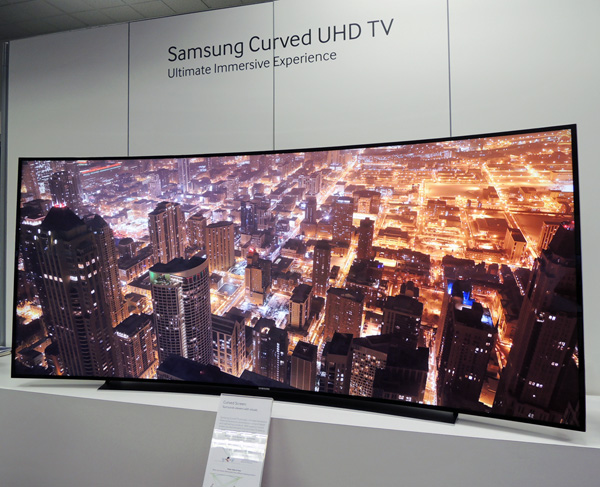
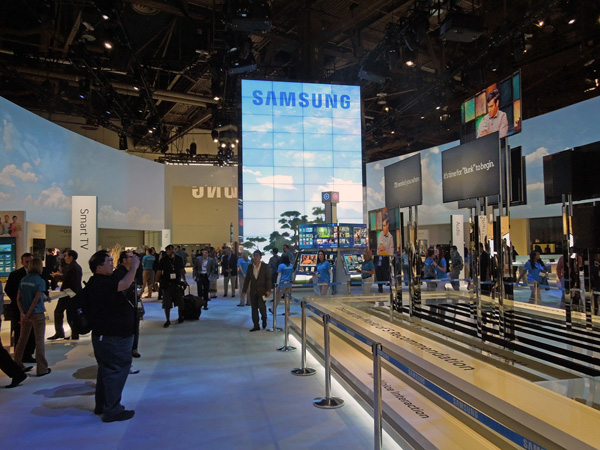
Samsung's 2014 TV lineup centers on curved 4K LCD panels, spanning the HU9000 and HU8700 series (55 to 78 inches, $4,000 to $8,000) alongside a 110-inch S9 UHD set priced at $150,000. The SEK-2500V UHD Evolution Kit adds HDMI 2.0 and HDCP 2.2 support via an Intel Quad Core processor, while a $300 UHD Video Pack bundles five 4K movies for owners lacking streaming options. With global TV sales down 3% in 2013, Samsung's push into 4K content partnerships and Smart Hub software signals a strategic shift toward software-driven revenue.

Columns

HDTV Expert - Aereo And The Law Of Unintended Consequences

Aereo's Internet retransmission service, which re-encodes terrestrial digital TV broadcasts using AVC coding over IP, faces mounting legal and technical scrutiny as a 10th Circuit judge ruled its operation indistinguishable from a cable company under the 1976 Copyright Act. The service's antenna-per-subscriber architecture, while designed to sidestep copyright liability, likely contributed to catastrophic buffering failures during the Oscars and Golden Globes broadcasts. For cord-cutters, alternatives like the Channel Master DVR+ with dual tuners and USB-expandable storage, or Hauppauge WinTV USB receivers, may offer more reliable local HD reception without the legal uncertainty.

Columns
HDTV Expert - Digital In The Desert: The 2014 HPA Tech Retreat

HDTV Expert - Digital In The Desert: The 2014 HPA Tech Retreat

The 2014 Hollywood Post Alliance Technology Retreat drew over 500 industry professionals to discuss pressing topics including UHDTV (4K), IP-based facility interconnects replacing traditional copper serial digital interfaces, and a contested comparison between Google's VP9 codec and the emerging HEVC H.265 standard. Signal interface technologies such as HDMI 2.0, MHL, SlimPort, and HDBaseT were examined alongside high dynamic range displays capable of thousands of nits, raising questions about whether HDR and wider color gamuts offer more practical value than increased pixel counts for consumer televisions.

Columns

HDTV Expert - "Antenna" Digital TV: When All Else Fails...

Terrestrial digital TV proved its resilience during a severe ice storm in southeastern Pennsylvania, where a three-antenna home setup covering roughly 55 channels in the Philadelphia metro market delivered uninterrupted broadcasts while Comcast cable, Verizon mobile data, and VoIP all failed simultaneously. A TiVo HD DVR with a built-in terrestrial DTV tuner remained fully functional, underscoring the practical advantage of maintaining an over-the-air setup alongside subscription services. The experience also frames the ongoing FCC UHF spectrum auction debate, questioning whether reallocating broadcast frequencies to mobile carriers is wise given how reliably the one-to-many broadcast model performs when cellular networks collapse under disaster-driven traffic loads.

Columns

HDTV Expert - Consumer Television: It's Business As Usual (Or Maybe Not)

Samsung sold an estimated 49 million flat-panel TVs in 2013, cementing eight consecutive years at the top of the global television market, while Samsung and LG together command over 40% of worldwide TV share. Sony and Sharp continue bleeding market share, with Sharp holding just 5% globally and 3% in the U.S. as of Q3 2013, and LG's 55-inch curved OLED has already dropped 67% in price to roughly $4,910 in the UK. Vizio's new full-array LED 4K smart TVs, starting at $1,000 for a 50-inch model, signal further price compression that threatens premium-tier manufacturers.

Columns
HDTV Expert - CES 2014 In The Rear-View Mirror

HDTV Expert - CES 2014 In The Rear-View Mirror

CES 2014 showcased a wave of 4K LCD and OLED televisions, with HEVC H.265 encoding poised to halve required bit rates and enable 4K streaming at roughly 10-20 Mb/s over existing broadband infrastructure. Quantum dot film technology, already deployed in Sony's 55-inch and 65-inch 4K LCD TVs, offers a compelling alternative to OLED by delivering stable, narrow-bandwidth color without the differential blue-emitter aging that threatens OLED longevity beyond 5,000 hours. Consumers weighing early adoption of these technologies will find the display interface landscape still evolving, with HDMI 2.0 capped at 18 Gb/s and DisplayPort 1.3 promising higher headroom for 10-bit 4K at 60 Hz.

Columns
HDTV Expert - CES 2014: First Impressions (4K, Curved Screens, OLEDs, and All That)

HDTV Expert - CES 2014: First Impressions (4K, Curved Screens, OLEDs, and All That)

CES 2014 brought a wave of large-format display technology, highlighted by three manufacturers unveiling 105-inch 21:9 curved 4K LCD TVs, LG's 77-inch curved 4K OLED as the world's largest, and Vizio's 120-inch 4K LCD using Sharp's Gen 10 ASV glass from Sakai, Japan. Chinese manufacturers replicated nearly every Samsung and LG breakthrough with far less fanfare, while Panasonic's conspicuous absence of a consumer LCD lineup signals a potential exit from the TV market. For buyers, the practical takeaway is that large 4K LCDs are on track to become the standard within 2-3 years, with competitive pricing pressure accelerating from Chinese brands.

Columns

HDTV Expert - Smartphones vs. Digital Cameras: The Death Knell?

Digital camera shipments fell for a third consecutive year, with CIPA data showing a 19 percent drop in worldwide camera shipments in August 2013 and point-and-shoot volumes down 40 percent year-over-year by late 2012, while even Canon's DSLR segment declined for the first time. Nikon's D3200, a 24.2-megapixel DSLR capable of 1080p/60 video at $497, illustrates how flagship specs now compete directly against smartphone convenience at a fraction of the cost. For consumers, the calculus increasingly favors smartphones that combine adequate image quality with instant social sharing, portability, and multifunctionality over dedicated cameras.

Columns

HDTV Expert - A La Carte TV: No Blue Plate Special?

A Needham and Co. analyst estimates that a la carte pay TV delivery could eliminate at least 124 smaller channels, costing $80B to $113B in U.S. consumer value, while a typical cable channel requires roughly 165,000 annual viewers just to break even at $280 million per year in operating costs. Cord-cutting continues to accelerate, with Netflix approaching 30 million subscribers and services like Aereo charging around $10 per month to stream over-the-air broadcasts via the Internet. Canada's upcoming mandate to unbundle TV channel packages will serve as a real-world test of whether a la carte models benefit or burden consumers.

Columns

HDTV Expert - Black Friday: Boom, Or Bust?

Black Friday 2013 retail data presents a contradictory picture: while total weekend spending was estimated at $57.4B and online purchases hit a record 40% of all transactions, Black Friday brick-and-mortar sales actually declined 13.2% from 2012, cannibalized by earlier Thanksgiving store openings. Mobile devices accounted for 40% of online traffic and roughly 22-26% of online sales, with smartphones driving 25% of Friday shopping traffic. Electronics and Blu-ray discs ranked among the top four in-store purchases, yet Walmart, Target, and Best Buy all lowered quarterly expectations amid sliding consumer confidence.

Columns

HDTV Expert - Mixed Signals about UHDTV

Ultra HD (4K) television technology dominated multiple New York-area industry events, with key debates centering on content delivery pipelines, interface limitations such as HDMI 2.0's inability to handle high frame rate 2160p with deep color, and the readiness of H.265 encoder chips. Consumer spending data from CEA shows only 2.6% growth in tech gift spending for 2013, while 4K sets retail at roughly $65 per diagonal inch compared to $15 for standard 2K displays. Chinese manufacturers like TCL are already shipping 50-inch 4K TVs at $999, signaling potential price disruption that could accelerate mainstream adoption despite an incomplete ecosystem.

Columns

HDTV Expert - The Diverging Fortunes of Sony, Panasonic, and Sharp: Is There Life After Television?

Sony posted a net operating loss of $197M in Q2 2013, with its TV division alone losing $95M, while Panasonic raised its operating profit forecast to $2.75B after downsizing plasma TV operations and exiting plasma manufacturing entirely by March 2014. Sharp returned a $138M profit driven by solar cell demand, recovering from a $5.5B loss just one year prior. For consumers and investors, the data signals that Japanese TV brands face structural pricing pressure from Samsung, LG, and Chinese manufacturers like Hisense and TCL, with even the shift to 4K LCD TVs at roughly $80 per inch unlikely to reverse the trend.

Columns

HDTV Expert - It's "Fade To Black" for Plasma and Projectors in Japan

Panasonic's exit from plasma TV production by March 2014 marks a broader collapse for Japanese display manufacturing, as plasma held only 5.7% global market share in FY2012 compared to LCD's dominant 87.3%. Chinese manufacturers are accelerating the pressure, with CSOT's 110-inch 4K panels and sub-$40-per-diagonal-inch LCD pricing reshaping both consumer and commercial AV markets. Mitsubishi Electric Visual Solutions has already withdrawn from the projector market entirely, and Sharp faces similar pressure, signaling that front projection and niche display technologies are losing ground to large-format LCD screens.

Columns

HDTV Expert - Tough Times Ahead For Toshiba

Toshiba is restructuring its television business after losses exceeding 50 billion yen ($512 million) annually, announcing plans to raise ODM-sourced production from 40% to 70% by FY2014 while closing two overseas manufacturing facilities and cutting roughly 3,000 jobs. The company is doubling down on large-screen Ultra HD (4K) LCD TVs and digital signage as its primary differentiators, while merging TV and CE operations into a new Toshiba Consumer Electronics Corporation. With a global TV market share below 5% and potential withdrawal from unprofitable regions including possibly North America, the path to viability remains uncertain.

Columns

HDTV Expert - Who ARE Those Guys?

Chinese LCD TV manufacturers like BOE Technology and TCL are rapidly gaining market share in the 4K UHDTV segment, with BOE posting an 8.9 percent operating margin and CSOT achieving 9.6 percent in Q2 2013, outpacing LG Display's 5.6 percent. Global 4K TV shipments multiplied 20 times in roughly a year, driven largely by China's 28 percent year-over-year TV shipment growth. For consumers, this competitive pressure is already collapsing 4K pricing from roughly $300 per diagonal inch in 2012 to around $90-$100 today.

Columns

HDTV Expert - CCW/Satcon 2013: Wireless Connectivity - It's Here! - Pete Putman

Wireless display connectivity for projectors, monitors, and document cameras reached a commercial inflection point in 2013, with competing high-bitrate video standards including WHDI, Wireless HD, and Wi-Fi-based protocols such as Intel WiDi and Apple AirPlay all vying for adoption. A CCW/Satcon 2013 presentation by Pete Putman examined the technical trade-offs between these systems, each offering distinct approaches to cable-free video transmission. For integrators and AV professionals, understanding these competing standards is critical to selecting the right wireless solution for display deployments.

Columns

HDTV Expert - SMPTE Fall Technology Conference: UHDTV Symposium - Pete Putman

The SMPTE Fall Technology Conference featured a one-day technical symposium on next-generation image formats, including a presentation titled 'UHDTV: The Big Picture on Bigger Pictures' examining Ultra High Definition Television technology. The symposium addressed the broader landscape of pixel density, image quality, and format advancements, separating verified technical claims from speculation. Attendees gained practical insight into where UHDTV stands relative to competing next-gen formats and what those differences mean for real-world display and broadcast applications.

Columns

HDTV Expert - HDMI 2.0 Is Here...And It's Not Fast Enough?

HDMI 2.0 arrives with a maximum data rate of 18 Gb/s, edging past DisplayPort's 17.2 Gb/s and enabling 4K at 50/60 Hz with 8-bit color, while also adding up to 32 audio channels and a 1536 kHz audio sample frequency. However, the standard falls short of supporting 10-bit and 12-bit 4K at frame rates above 60 Hz, which are prerequisites for high dynamic range video, and omits a high-speed data bus overlay increasingly demanded by modern devices. Consumers and integrators adopting HDMI 2.0 can use existing Category 2 cables, but should understand this is an incremental update rather than the future-proof leap many anticipated.

Columns
HDTV Expert - Guess What, LG? Samsung's Got a 55-inch Curved OLED TV, Too.

HDTV Expert - Guess What, LG? Samsung's Got a 55-inch Curved OLED TV, Too.

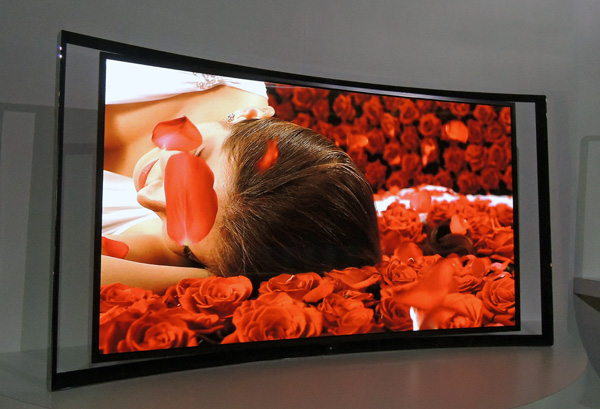
Samsung's KN55S9C enters the OLED TV market as a 55-inch curved display priced at $8,999.99, undercutting LG's $15,000 curved OLED by using RGB OLED emitters rather than LG's white-OLED-plus-color-filter design. The panel features a dual dark-blue pixel layout with brightness compensation circuitry to address differential aging, a known challenge in OLED longevity. Samsung also demonstrated MultiView, which exploits OLED's fast pixel switching at 120/240 Hz to deliver two simultaneous programs via active shutter glasses, making this a technically ambitious debut worth watching closely.

Columns

HDTV Expert - Time To Stop Whistling Past The Graveyard?

Pay TV providers in the U.S. lost 316,000 subscribers between June 2012 and June 2013, with cable operators alone shedding 591,000 video subscriptions in Q2 2013, according to Moffett Research. Competing services like AT&T U-Verse and Verizon FiOS gained 371,000 subs in the same period, while over-the-air antenna reception, Netflix, Amazon Prime streaming, and digital downloads are increasingly viable alternatives for cost-conscious viewers. For consumers paying upward of $185 per month for bundled packages, the math increasingly favors dropping channel tiers and supplementing broadband with streaming.

Columns

HDTV Expert - DEG: Here's The Rest of the Story

The Digital Entertainment Group's mid-2013 home entertainment report buries significant declines behind optimistic headlines, with overall DVD and Blu-ray disc sales falling 4.7% year-over-year to $3.6 billion while subscription streaming surged 32% to $1.5 billion. Physical disc rentals across all channels continued a multi-year contraction, and the 61 million Blu-ray players cited by DEG increasingly function as streaming media boxes rather than disc players. The looming implementation of MPEG-4 H.265 (HEVC) encoding, enabling 1080p/60 streams at 2-3 Mb/s, suggests the shift away from packaged media will only accelerate.

Columns

HDTV Expert - Is Toshiba Spitting Into The Wind?

Toshiba's television division has posted losses exceeding $500M annually for two consecutive years, with global TV market share dropping to roughly 5th or 6th place behind Sharp's 5% share, far below Samsung's dominant 28%. Despite these losses, CEO Hisao Tanaka is pressing forward, citing 4K displays including an 84-inch LG Display panel and autostereoscopic 3D TV development as ongoing innovation efforts. Profitable flash memory and power equipment units are subsidizing the TV business, but the path to profitability remains uncertain given that even vertically integrated Japanese rivals manufacturing their own LCD panels are struggling.

Columns
HDTV Expert - Useful Gadgets: Mohu Sky Outdoor TV Antenna

HDTV Expert - Useful Gadgets: Mohu Sky Outdoor TV Antenna

The Mohu Sky ($169.99) is an amplified outdoor VHF/UHF crossed-dipole antenna with a built-in preamp powered by an inline USB-style phantom supply, tested against the ClearStream 1, ClearStream 2, and Channel Master 4221 using a Hauppauge Aero-M USB DTV tuner and AVCOM PSA-2500C spectrum analyzer. In position A (aimed south-southwest toward Philadelphia), the Sky successfully received all three high-band VHF broadcasts and seven of ten target UHF stations, while the ClearStream 1 edged it out on UHF by pulling in all ten. Cord-cutters considering this antenna should note its genuine directional behavior and plan for a rotor if local transmitters are scattered across multiple compass headings.

Columns
HDTV Expert - InfoComm 2013 in the Rear View Mirror

HDTV Expert - InfoComm 2013 in the Rear View Mirror

InfoComm 2013 showcased a convergence of wireless AV technologies, with live demonstrations including Kramer's KW-11 WHDI transceiver kit operating at 6 GHz delivering 1080p/60 content and DVDO's 60 GHz WiHD Air system transmitting Blu-ray video to projection systems. Sharp's 32-inch 4K LCD monitors using IGZO backplanes and the absence of a single 4K display interface - requiring multiple HDMI connections as a stopgap - highlighted the gap between display capability and connectivity standards ahead of HDMI 2.0. For integrators and AV professionals, these trends signal an accelerating shift toward lamp-free projection, large-format LCD, and gesture-based control systems reshaping commercial installations before 2020.

Columns

HDTV Expert - Faster Broadband Means Abandoning the Pay TV Ship

Cord-cutting is accelerating as 40% of U.S. Internet users have either dropped pay TV or never subscribed, with Netflix streaming growing from 4% weekly viewership in 2010 to 22% by the time of the Leichtman Research Group study. The FCC has noted that fewer than 10% of U.S. households can sustain 2-3 Mbps consistently, yet codec advances like H.265 promise a 50% bit rate reduction over H.264, lowering the bandwidth threshold for quality streaming. Paradoxically, pay TV operators upgrading broadband infrastructure to compete with Google Fiber and Verizon may be accelerating their own subscriber losses.

Columns
HDTV Expert - Projector Manufacturers Are Going Lamp-Free. But Is It Too Late?

HDTV Expert - Projector Manufacturers Are Going Lamp-Free. But Is It Too Late?

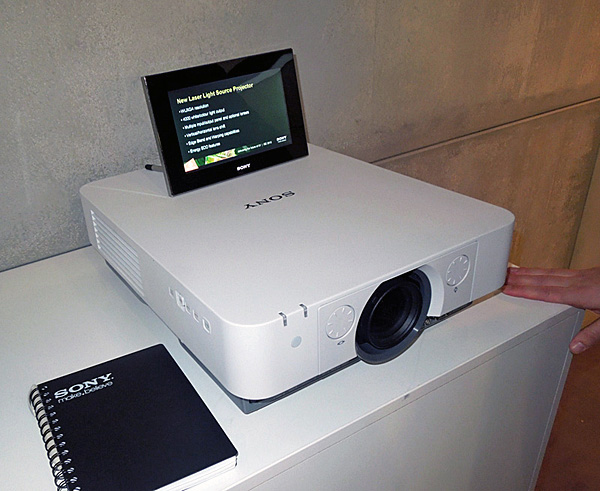
Sony's new laser-powered 3LCD projector, built on the FH31-series chassis with a claimed 20,000-hour lifespan and 4,000-lumen output, signals a broader industry shift toward lamp-free projection as manufacturers including Panasonic, Epson, and NEC race to market with laser and laser/LED hybrid models. In side-by-side testing, Sony's unit showed a visible edge in color saturation over Panasonic's PT-RZ470 single-chip DLP projector. However, AV professionals report that large LCD displays - often 70 to 90 inches - are already displacing projectors in classrooms and conference rooms due to superior brightness, lower maintenance, and dramatically reduced lamp-replacement overhead.

Columns

HDTV Expert - TV, Over The Air and Everywhere!

Aereo's antenna-based internet rebroadcasting service has drawn legal threats from CBS and Fox, who demand retransmission fees despite losing two court battles, while the NFL's silence on Aereo carrying its games without rights payments raises pointed questions about selective enforcement. Nielsen data shows Blu-ray disc adoption grew 14% year-over-year in 2012, yet streaming faces serious reliability problems, with Conviva's analysis of 22 billion video streams finding 60% experienced quality degradation including re-buffering, slow startup, and low bit-rate picture quality. For consumers, the choice between physical media and streaming remains a genuine trade-off between convenience and consistent playback quality.

Columns

HDTV Expert - Lamp? What Lamp?

Lamp-free projection technology is emerging as a competitive response to large-format LCD displays, with manufacturers at Integrated Systems Europe 2013 showcasing LED and laser-based projectors ranging from 500 lumens to over 60,000 lumens for digital cinema. Sony debuted the first 3LCD laser imaging system, while Christie Digital demonstrated a 60,000-plus lumen laser DLP Cinema projector during a GI JOE: RETALIATION screening, and LED-only designs currently top out at 1,100 lumens with laser/LED hybrids bridging up to 4,000 lumens. For end users, lamp-free designs promise 15,000 to 20,000 hours of essentially maintenance-free operation with instant on/off capability, directly addressing the key advantages that large LCD panels hold over conventional projectors.

Columns

HDTV Expert - Windows 8: What if they threw a party and no one came?

Windows 8 adoption has stalled dramatically, trailing even the notoriously failed Vista OS in uptake, prompting Microsoft to slash OEM licensing fees from $120 to $30 and Intel to cut Ivy Bridge CPU prices to push sluggish laptop sales. IDC projects Windows 8 will appear on only 7.4% of tablets by 2017, while Android and iOS are forecast to command a combined 94.8% tablet market share in 2013. For PC users and buyers, the practical takeaway is that discounted Windows 8 hardware is widely available, but the platform's long-term viability remains uncertain as the market shifts decisively toward tablets.

Columns

HDTV Expert - Once More, Back to the - Window??

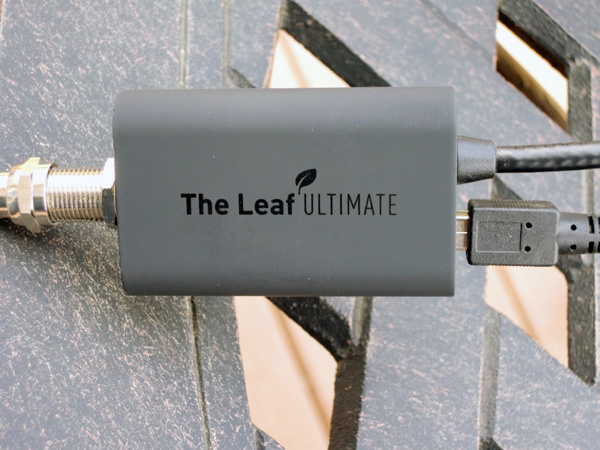
A comparative field test of nine indoor TV antennas, both passive and amplified, evaluates real-world ATSC digital signal reception at a New Jersey test site using an AVCOM PSA-2500C spectrum analyzer and Hauppauge Aero-M USB receiver. The $4 UHF bow tie outscored all passive competitors with nine YES grades, while the Mohu Leaf Ultimate led the amplified category with ten clean receptions, and the ClearStream Micron XG preamp required capping gain at the '15' setting to avoid noise floor degradation. Readers considering cord-cutting can use TVFool.com to assess local signal strength before investing in any antenna, since reliable indoor reception is achievable for under $50.

Columns
HDTV Expert - For Samsung, It's Now Their Game With Their Rules

HDTV Expert - For Samsung, It's Now Their Game With Their Rules

Samsung, controlling roughly 25% of the global TV market and manufacturing over 90% of OLEDs used in handheld displays, announced a $111 million investment in Sharp Corporation for a 3% ownership stake, a move that signals a strategic pivot away from commodity LCD panel production toward next-generation IGZO backplane and OLED technology. Sharp, facing a record 450 billion yen ($4.7B) annual loss and a 55% stock price decline, had been courted by Taiwan-based Foxconn Group, making Samsung's entry a geopolitically significant shift in Asian CE industry dynamics. For consumers and industry watchers, this consolidation suggests Samsung is positioning itself to control both display supply chains and the transition to large-screen OLED technology.

Columns

HDTV Expert - 4k In The Desert

Coverage from the 2013 Hollywood Post Alliance Technology Retreat highlights the industry's unresolved path toward 4K UHD adoption, with key debates centering on H.265's promised 50% bitrate reduction over H.264 as a potential enabler for 4K delivery. Display technology contenders including OLED, LCD, and plasma each face significant hurdles for reference-grade monitoring, while 8-bit color depth remains a limiting factor for Blu-ray and broadcast pipelines. An informal poll found roughly 80% of post-production professionals skeptical that 4K TV represents genuine progress rather than a manufacturer-driven sales cycle.

Columns

HDTV Expert - OLED-TV, Where are You?

LG's 55-inch OLED-TV, priced at roughly $12,000 in the U.S., faces serious production constraints as manufacturing yields at LG Display reportedly hover around 10%, with a target of 30% after defect repair - figures that will keep prices elevated for years. LG's planned Gen 8 OLED fab in Paju, with a monthly input capacity of 26,000 sheets, is not expected to reach mass production until H1 2014. Meanwhile, Panasonic and Sony each debuted 56-inch 4K OLED-TVs at CES 2013 using AUO Gen 6 backplanes, with Panasonic employing a printed front-plane process that could eventually reduce costs more aggressively than Sony's vacuum thermal evaporation approach.

Columns

HDTV Expert - Apple Must Become Phabulous

Apple's absence from the phablet segment poses a growing competitive risk, as ABI Research projects over 150 million phablet shipments in 2013, representing 18% of all smartphone demand. While ABI defines phablets as devices with screens 4.6 inches or larger, a more defensible threshold starts at 5 inches, where rivals like the Samsung Galaxy Note II (5.5-inch, 1280x720 AMOLED) and LG Optimus G Pro (5.5-inch, 1920x1080, 400ppi) set the benchmark. Apple's iPhone 5, with its 4-inch display, lags well behind these specifications, raising real questions about its smartphone competitiveness.

Columns

HDTV Expert - In The Wake of CES 2013: Thoughts and Afterthoughts

The post-CES 2013 landscape reveals a consumer electronics market defined by relentless commoditization, with 80-inch LCD TVs available for under $4,000 and Blu-ray players with WiFi dropping to $70, driven largely by Chinese manufacturers and excess fab capacity. Plasma TVs, despite superior image quality, captured only 5.5% of global Q3 2012 shipments versus 88% for LCD, while 4K sets from brands like Hisense appeared in 50-inch through 100-inch sizes alongside established names. For buyers and integrators, these price collapses mean faster hardware replacement cycles and growing pressure to justify premium display and projection investments.

Columns

HDTV Expert - Technicolor and Portrait Displays Move to Standardize Color on Smaller Screens - by Ken Werner

Technicolor, leveraging 97 years of film color expertise spanning titles like The Wizard of Oz and Blu-ray mastering, has developed a new color specification targeting notebooks, monitors, tablets, and smartphones, implemented by Portrait Displays. The two companies hold a patent pending on a color-matching process that requires both websites and consumer displays to comply with the Technicolor specification, with compliant sites carrying a 'Technicolor Color Certified' logo. For consumers, this means automatic self-calibration without manual setup or professional fees, and more accurate color reproduction when shopping online or viewing creator-intended content on smaller screens.

Columns

HDTV Expert - ISE 2013: Oh, It's ON! - Pete Putman

At ISE 2013, Sony unveiled a prototype 3LCD laser projector rated at 4000 lumens with 1920x1200 (WUXGA) resolution, marking the first publicly demonstrated 3LCD design to use a 100% laser light engine. Mitsubishi countered with three LaserVue DLP models featuring hybrid red LED and blue laser diode illumination, promising 20,000 to 30,000 hours of rated lamp-free operation. These lampless projectors are a direct response to the growing commercial adoption of large-format LCD displays from 70 to 95 inches, which undercut projector installations on cost, maintenance, and ambient light performance.

Columns

HDTV Expert - Ebook Readers At The Crossroads - Pete Putman

Dedicated e-reader sales peaked at 23 million units in 2011 and are forecast to collapse to 7 million units annually by 2016, a 66% decline, as multifunction tablets displace single-task devices. Barnes and Noble Nook device sales fell 12.6% year-over-year, while store closures following the 2011 Borders bankruptcy have further eroded e-book discovery and purchasing habits. For consumers and industry observers, this signals that e-reader hardware is approaching obsolescence, with tablets serving as the dominant portal for both content consumption and retail commerce.

Columns

HDTV Expert - Panasonic Delivers Big OLED Surprise at CES - by Ken Werner

Panasonic stunned CES attendees with a 56-inch 4K (4Kx2K) OLED-TV panel fabricated using solution-based printing technology, marking the first large solution-processed OLED display shown publicly and a potential breakthrough for cost-competitive large-screen OLED production. Samsung and LG both debuted curved 55-inch OLED-TVs, each claiming a world-first, though the practical value of screen curvature for OLED remains questionable given the technology's already wide viewing angles. LG also confirmed its flat 55-inch OLED-TV would go on sale in the U.S. in March, its fourth announced commercial release date.

Columns

HDTV Expert - Even on a Sea of Red Ink, Sharp Innovation Sails Impressively On - by Ken Werner

Sharp's IGZO TFT backplane technology, built on indium gallium zinc oxide, powers a range of shipping products including a 32-inch 4K monitor and the AQUOS Zeta smartphone with a 4.9-inch display delivering nearly two days of battery life. A notable innovation uses Quattron's four-subpixel RGBY architecture to generate 3,840 luminance peaks horizontally from a 1920x1080 panel, producing a true 4Kx1K image without a native 4K pixel grid. For consumers, this means sharper images and longer battery life from existing display form factors, with Sharp signaling continued R&D investment despite financial losses.

Columns

HDTV Expert - The Revival of RCA Television - by Ken Werner

ON Corporation of Seongnam, Korea is manufacturing RCA-branded televisions under license from Technicolor, headlined by the LED55C55R120QS 55-inch smart TV running Android 4.0 at a projected MSRP of $999-$1049. The set features a 120Hz panel, 350-nit luminance, an M-Star system-on-chip integrating smart-TV functions, and the M-GO content platform co-developed by Technicolor and DreamWorks. Consumers considering value-tier large-screen TVs or the niche combination of Android tablets with built-in ATSC and Dyle mobile tuners will find RCA's repositioned lineup worth evaluating.

Columns

HDTV Expert - China Attacks!

Chinese TV manufacturers including TCL, Hisense, Haier, Konka, and Changhong made a strong push at CES 2013, showcasing 4Kx2K panels up to 110 inches produced by CSOT's Gen 8.5 fab in Shenzhen, with Westinghouse Digital announcing a 55-inch 4K set priced at $2999 and a 65-inch model at $3999. Hisense demonstrated a near-zero-throw laser projector while Westinghouse detailed a DLED backlight design using three to four horizontal LED channels that undercuts Edge LED costs while improving power efficiency over CCFL. For North American consumers, these brands are moving beyond private-label arrangements to establish their own identities, signaling more competitive pricing and broader product choices ahead.

Columns

HDTV Expert - Sony Introduces OLED-like Color without OLEDs - by Ken Werner

Sony's Triluminos display technology, unveiled at CES without prior leaks, uses a quantum-dot backlight unit developed by QD Vision that employs a polymer prism strip with blue LEDs to produce narrow spectral emissions for red, green, and blue, dramatically expanding color gamut beyond what conventional white LED backlights achieve. QD Vision's approach differs from competitor Nanosys by keeping quantum dots in a high-heat-tolerant prism element positioned close to the LED strip, reducing material usage at the cost of modified BLU assembly. The result is an OLED-like color appearance on LCD panels, with Sony already pairing the technology with 4K resolution screens.

Columns

HDTV Expert - At CES 4K Gets Cheaper, Much Cheaper - by Ken Werner

At CES 2013, 4K Ultra HD televisions appeared across multiple manufacturers in 50-, 55-, and 65-inch sizes, with Westinghouse Digital pricing the 50-inch model at $2,499 - a dramatic drop from the $20,000-$25,000 range of Sony and LG's 84-inch debut sets. Built-in HD-to-4K up-conversion chips partially offset the lack of native 4K content, drawing a parallel to the effective DVD-to-HD scalers that slowed Blu-ray adoption. These price reductions suggest that earlier projections of negligible near-term 4K sales may need significant revision as the technology moves within reach of mainstream consumers.

Columns

HDTV Expert - CES 2013: From Hype to Ho-Hum in Minutes - by Pete Putman

CES 2013 showcased a flood of 4K Ultra HD TVs from virtually every major brand, with Chinese manufacturers like Hisense, TCL, and Haier matching Japanese and Korean rivals across panel sizes from 50 to 110 inches - all sourcing LCD glass from China Star Optoelectronics, a TCL-Samsung joint venture. IGZO semiconductor technology emerged as a key differentiator for Sharp, promising lower power consumption and faster pixel switching, while LG and Samsung debuted curved 55-inch OLED panels still unavailable for purchase. The practical takeaway is that rapid commoditization of 4K displays, driven by Chinese manufacturing scale, points toward significant price drops across all screen sizes by late 2013.

Columns

HDTV Expert - Goodbye, 2012. Don't Let the Door Hit You on the Way Out - by Pete Putman

A year-end industry retrospective from HDTV Expert Pete Putman surveys the seismic shifts of 2012, including the decline of plasma and rear-projection TV, the rise of 4K Ultra HD displays priced at $20,000, and the tablet market projected to reach 50% of American homes by year-end. Digital camera shipments fell roughly 40% year-over-year as smartphones eroded the category, while 32 GB flash storage dropped to $20, accelerating the collapse of optical disc sales. These converging trends signal a fundamental industry pivot from hardware value to software, content, and streaming ecosystems.

Columns

HDTV Expert - The Tablets They Are A-Changin' - by Pete Putman

The Nook HD+ pairs a 9-inch 1920x1080 display (256 pixels per inch) with a 1.5 GHz OMAP4470 dual-core CPU and Android OS, making it a capable portable productivity platform when paired with Bluetooth peripherals and OfficeSuite software. A complete mobile office setup including a 32 GB MicroSD card, Targus Bluetooth keyboard, Microsoft Wedge mouse, and HDMI adapter came to $419 total. For business travelers who need document editing, spreadsheet access, and presentation playback, this configuration offers a compelling alternative to carrying a full notebook.

Columns

HDTV Expert - Plasma Totters; OLED Delayed - by Ken Werner

Plasma display panel (PDP) technology is in steep decline, with market share in the mid-single digits and manufacturers including Panasonic reportedly considering exiting PDP production by March 2013 in favor of OLED and tablet panel technologies. Large OLED TV development faces serious obstacles, with total manufacturing yield below 30% even after repairs and glass frit encapsulation causing lifetime degradation in large panels, prompting Samsung and LG to reprioritize 4Kx2K (Ultra HD) LCD for volume production in 2013. Consumers eyeing next-generation displays should expect 4Kx2K OLED TVs to remain demonstration-only through 2013, with volume production not targeted until 2014.

Columns

HDTV Expert - Sharp to Manufacture Pixtronix Displays - by Ken Werner

Qualcomm has announced a partnership with Sharp to manufacture Pixtronix field-sequential-color (FSC) MEMS displays, combining Pixtronix technology with Sharp's IGZO backplane to target smartphones and tablets. The deal includes a phased equity investment of up to 10 billion yen ($122 million USD), potentially giving Qualcomm a 5% stake in Sharp, with production planned at Sharp's Yonago LCD facility. The combined MEMS/IGZO approach promises LCD-comparable image quality with significantly higher luminous efficiency and lower power consumption, making it a practical contender in the competitive mobile display market.

Columns

HDTV Expert - 'Black Friday' takes on a whole new meaning - by Pete Putman

NPD research data from Black Friday 2012 shows consumer electronics retail sales fell 5.6% overall, with flat-screen TV revenue dropping 6% as average prices declined from $367 to $333, while TVs larger than 50 inches surged 65% year-over-year. Blu-ray player unit sales spiked 20% but revenue fell 9%, driven by sub-$40 pricing and consumer demand for Netflix streaming capability rather than physical media playback. Shoppers hunting deals on large-screen TVs and streaming devices can expect further discounts heading into the Christmas and January football playoff season.

Columns

HDTV Expert - End of the Road for RPTV - by Pete Putman

Mitsubishi has ended all production of rear-projection DLP televisions effective November 30, 2012, discontinuing its 73-inch, 82-inch, and 92-inch models as part of an orderly exit from the consumer TV business. The collapse was driven by plummeting LCD prices, with Sharp's 70-inch Aquos undercutting the category at under $2,000, while global RPTV shipments fell nearly 75% from 32,000 units in Q4 2011 to just 9,000 in Q3 2012. For consumers, this marks the definitive end of large-screen rear-projection as a viable display option, leaving Mitsubishi to refocus on commercial AV, front projection, and laser and LED light engine development.

Columns

HDTV Expert - Visual Scientists Point the Way to Higher Video Compression - by Ken Werner

Research presented at LatinDisplay/IDRC 2012 introduced saliency maps derived from eye-tracking studies, demonstrating that viewers consistently focus on specific regions of complex images, such as human faces, while largely ignoring peripheral areas like forested backgrounds. Computational models that approximate these experimentally derived saliency maps could enable real-time selective pixel compression, targeting low-attention regions with heavier compression ratios. If accurate enough, this approach could meaningfully reduce video data stream sizes without introducing perceptible quality degradation for most viewers.

Columns

HDTV Expert - 4K Presto Change-O!

Sony's 4K Ultra HD Video Player, a loaned HDD-based media player bundled exclusively with the XBR-84X900 84-inch LCD TV, ships pre-loaded with native 4K content including a mix of critically panned titles and a handful of genuine classics. Sharp, meanwhile, is countering its financial struggles by announcing a 32-inch 3840x2160 IGZO-backplane LCD monitor priced at roughly $5,500, targeting graphics professionals and medical users rather than consumers. Both announcements highlight genuine technical capability, but raise pointed questions about content quality and whether 4K can deliver profitability for two manufacturers bleeding cash.

Columns

HDTV Expert - Frequently Asked Questions - by Pete Putman

Pete Putman addresses recurring consumer questions about TV purchasing, calibration, and display technology in this late-2012 roundup, noting that 42-inch 1080p plasma TVs had dropped to under $400 while plasma held only 5.5% of global TV shipments in Q2 2012. Plasma's decline is attributed to consumer preference for large, inexpensive LCD panels over superior black levels and viewing angles, while streaming services like Netflix and Amazon are eroding Blu-ray disc sales despite lower picture quality. For practical guidance, Putman recommends enabling a cinema or movie preset and manually setting sharpness to zero and color temperature to warm as a cost-free alternative to professional calibration.

Columns

HDTV Expert - 4K: HDTV Redux? - by Pete Putman

4K acquisition and display technology faces a convergence of familiar challenges, including a live 4K baseball broadcast in Japan transmitted at 120 Mb/s and Fox Sports deploying Sony F65 cameras for NFL referee reviews. On the consumer side, Hisense's XT-880 series targets 50- to 65-inch screens at CES 2013, while HDMI remains bottlenecked at 8 Gb/s, struggling to deliver 3840x2160 content above 30 Hz - a gap that DisplayPort at 17.2 Gb/s and an emerging HDMI 2.0 specification aim to close.

Columns

HDTV Expert - The Front Line: Four From Pepcom

At Pepcom's November 2012 showcase in New York City, four products stood out ahead of CES: Lenovo's IdeaTab Lynx hybrid tablet running Windows 8 on an Intel Atom 1.8 GHz dual-core processor with a magnetic keyboard dock offering a combined 16 hours of battery life, and Vizio's 70-inch E701i-A3 Razor LED TV with 10-bit signal processing at a $1,999 MSRP. Barnes and Noble's Nook HD+ delivers a 1920x1280 WUXGA display at $269, while Mohu introduced a redesigned Leaf Ultimate and a new outdoor Sky HDTV crossed-dipole antenna for roof or attic mounting.

Columns

HDTV Expert - Low Unit Sales Do Not Keep Ultra HD TV from Being the Next Big Thing - by Ken Werner

Ultra HD (4K) television is gaining industry momentum, with LG and Sony offering 84-inch, 8-megapixel panels priced at $19,999 and $24,999 respectively, while Hisense enters the market with smaller 50-, 58-, and 65-inch UHD sets featuring ARM dual-core processors running Android Ice Cream Sandwich. IHS iSupply forecasts roughly 4,000 UHD-TV shipments in 2012 growing to just over 2 million by 2017, less than 1% of the global LCD-TV market. The lack of consumer-accessible 4K content and no Blu-ray Disc Association plans for 4K support remain the primary barriers to mainstream adoption.

Columns

HDTV Expert - Red Ink at Morning; Investors Take Warning!

Sharp, Panasonic, and Sony reported severe fiscal losses in November 2012, with Sharp warning of a $5.6B loss and Panasonic shocking analysts with a $9.6B forecast - roughly 30 times market expectations - while Sony managed a $379M operating profit partly from a chemicals business sale. The near-commoditization of the TV market, now dominated by Samsung and LG at 45% combined share, has left Sharp at just 5% and Sony at 9% of LCD shipments. Analysts suggest all three companies must exit television manufacturing and pivot to stronger units like batteries, solar, IGZO display technology, and imaging to survive.

Columns

HDTV Expert - An Ill Wind Blows No Good - Pete Putman

During Hurricane Sandy's aftermath, over-the-air digital TV proved to be the only reliable information source when power outages, downed Comcast/Verizon feeder cables, and overloaded cell towers eliminated Internet and mobile access for days. An Eviant T7 LCD TV paired with a Hauppauge Aero-M USB stick tuner, powered by a 700-ampere truck battery driving a 300-watt AC inverter, delivered uninterrupted DTV broadcasts from Philadelphia and New York City throughout the storm. Unlike shared-bandwidth networks that collapse under simultaneous demand, broadcast digital TV maintains constant picture and audio quality regardless of viewer count, making antenna-based reception a practical resilience strategy worth preserving against ongoing FCC spectrum auction pressures.

Columns

HDTV Expert - Interview with a Cord-Cutter - Pete Putman

A Los Angeles-based cord-cutter replaced a $140/month Time Warner Cable package by combining a Mohu Leaf Plus indoor antenna (capable of receiving 27 major and over 130 minor OTA channels) with a Roku streaming device and subscriptions to Netflix, Hulu Plus, and Amazon Prime. Pay-per-view episodes on Amazon at $1.99 each and movie rentals averaging $2.99 keep total monthly costs between $60 and $80, yielding savings of $20 to $50 per month. The setup demonstrates that targeted streaming services plus a quality OTA antenna can cover most viewing needs without a traditional cable subscription.

Columns

HDTV Expert - Panasonic Rumors are Two-and-a-Half Thirds False - by Ken Werner

Panasonic is not exiting the TV business or its LCD panel manufacturing for TVs, despite circulating reports translated from Asian media claiming otherwise. Jim Reilly, VP of Corporate Communications at Panasonic Corp. of North America, confirmed that while Panasonic Display is increasing production of small and medium-sized LCD panels for smartphones and tablets, its TV-oriented LCD panel operations remain active. For consumers and industry watchers, this distinction matters as financial pressure across the LCD TV sector continues to fuel speculation about consolidation and divestitures.

Columns

HDTV Expert - Let's Talk about Medium-sized Displays for Tablets - and their Challenges - by Ken Werner

High pixel density in tablet displays, exemplified by the new iPad's 2048x1536 resolution at 264 ppi, forces a tradeoff: small pixels shrink aperture ratios in amorphous silicon TFT panels, requiring more powerful backlights and driving the new iPad's battery from 25 Wh to 42.5 Wh - a 70% power increase. Emerging alternatives including LTPS, IGZO oxide TFTs, and Samsung's Pentile Matrix LCD (demonstrated at 2560x1600, 300 ppi, consuming 2.5W versus 3.2W for a comparable RGB panel) each offer distinct paths to higher density at lower power. Understanding these tradeoffs matters for anyone evaluating premium tablet displays or anticipating next-generation hardware.

Columns

HDTV Expert - What If They Gave A Party, But No One Came? - Pete Putman

Despite years of heavy promotion, fewer than 115,000 American TV homes actively watch 3D content at any given time, a figure too small for Nielsen to capture meaningful viewing data, signaling a near-total consumer rejection of the format. Analyst data from HIS and NPD DisplaySearch points to 4K TV as the more viable successor, with 50-inch 4K x 2K LCD panels already priced at $800 using conventional amorphous silicon processes, and DisplaySearch forecasting 4K will represent 22% of the 50-inch-plus TV market by 2017. For consumers, 4K offers a glasses-free immersive experience compatible with all major display technologies, though content availability and delivery infrastructure remain unresolved near-term barriers.

Columns

HDTV Expert - Foxconn and Sharp to Launch 60-inch LCD-TV for $1000 - by Ken Werner

Hon Hai Precision Industry (Foxconn) and Sharp are preparing to launch a 60-inch LCD TV targeting a US $999 price point in North America, leveraging Sharp's unique Generation 10 LCD fabrication plant in Sakai to produce large panels at lower cost than competitors. The sets, branded SIO, will initially launch in Taiwan and China with Internet TV functionality before a global rollout, with volume production slated for early 2013. If successful, this partnership could reshape the 60-inch-and-over TV segment, currently around 1% of unit sales but the most profitable slice of the market.

Columns

HDTV Expert - When a Butterfly Flaps Its Wings - Pete Putman

Optical disc sales have been declining since 2005, and Blu-ray growth has failed to offset the drop in DVD revenue, forcing studios like Viacom and Disney to pivot toward SVOD licensing through Netflix and Amazon Prime Instant Video. The shift to streaming and portable playback on tablets, smartphones, and e-readers is reshaping not just Hollywood's economic model but also consumer display priorities. For buyers, this signals a market moving away from large-screen televisions toward compact, high-resolution, high-brightness portable displays with robust wireless connectivity.

Columns

HDTV Expert - Ain't No Cure for the Summertime (TV) Blues - Pete Putman

TV sales remain sluggish heading into late 2012, hampered by weak consumer demand, fragmented smart TV platforms, and unproven technologies like 3D and 4K - with Sony and JVC announcing 84-inch 4K LCD TVs at IFA and CEDIA at prices exceeding $20,000. A GfK Associates study found only 29% of U.S. consumers were actively seeking Internet-connected TVs, compared to 64% in China, while 67% of global respondents expressed interest in touch or gesture controls. For buyers, the practical takeaway is that no single compelling upgrade driver - not 4K, not Google TV, not an Apple television - appears ready to justify replacing a working set in the near term.

Columns

HDTV Expert - No OLED-TV Panel Production from LGD until 2013 - by Ken Werner

LG Display's 55-inch OLED-TV panels face delayed volume production until 2013, with the oxide-TFT backplane identified as the primary culprit after the company missed two self-imposed deadlines including the London Olympics and Q3 2012. LGD's color-by-white OLED approach, which uses continuous white emissive layers deposited from a linear source rather than Samsung's patterned RGB process, also carries unproven volume manufacturing risks, particularly around blue phosphor lifetime in the emissive mixture. For consumers and industry watchers, this signals that large-screen OLED TVs remain further from retail shelves than manufacturers had projected.

Columns

HDTV Expert - E Ink, the Last ePaper Tiger, Devours SiPix - by Ken Werner

E Ink Holdings, which already controls over 90% of the ePaper display market for eReaders, has agreed to acquire 82.7% of SiPix Technology in a deal valued at approximately US $50.1 million, with full closing expected in Q4 2012. SiPix's micro-cup electrophoretic technology, which uses a single color of charged particle, could not match E Ink's dual-particle microcapsule approach in contrast ratio and quality, eroding a reported 30% initial price advantage. The acquisition expands E Ink's patent portfolio and product range for signage and shelf-label applications, further consolidating its dominance as competing technologies from Qualcomm, Bridgestone, and Samsung retreat from the market.

Columns

HDTV Expert - How The Mighty Have Fallen - By Pete Putman

Sharp Corporation's stock fell nearly 30 percent to a 36-year low after the company warned of a $1.28 billion loss, with its LCD TV market share collapsing from 21 percent in 2005 to under 8 percent in 2011 and a $4.3 billion Gen 10 LCD fab in Sakai City becoming a financial liability. A proposed deal with Hon Hai Precision - which would have secured 46 percent of Sakai output and a 9.9 percent stake in Sharp - remains unresolved after Moody's downgraded Sharp's debt to Prime-3. For consumers and the industry, this signals a broader structural decline of Japanese consumer electronics manufacturers who failed to adapt to shifting competitive and economic realities.

Columns

HDTV Expert - Useful Gadgets: Optoma ML300 LED Projector

The Optoma ML300 is a 1.4-pound LED portable projector with a native 1280x800 DLP panel, rated at roughly 300 lumens but measured at 152-232 ANSI lumens depending on mode and power setting, priced at $499. Its RGB LED light engine delivers an estimated 20,000-hour lifespan to half-brightness and eliminates lamp replacement concerns, though the wide color gamut overshoots the BT.709 standard and color temperature runs high at 7200-7700 Kelvin. For presentations and casual viewing it offers compelling plug-and-play convenience, but limited calibration options make it unsuitable for critical home theater use.

Columns

HDTV Expert - Watching the Olympics in 3D: 'DNF'

Comcast channel 981 carries the 2012 London Olympics in side-by-side frame-compatible 3D, viewable on active-shutter displays such as the Samsung UN46ES7500 46-inch LCD. Gymnastics events proved more compelling in stereoscopic 3D than diving, with close camera positioning creating genuine depth, though viewer fatigue set in after 30 to 60 minutes of continuous glasses-on viewing. Intrusive pop-up ads appearing as frequently as every 3 minutes 50 seconds and blocking 15% of the screen undermine the experience enough that switching back to standard 2D coverage becomes the practical choice.

Columns

HDTV Expert - Is Cord-cutting Hurting the Pay TV Market? - by Ken Werner

Strategy Analytics forecasts digital TV subscriptions growing from 114M in 2011 to 129M in 2016 at a 2.36% CAGR, but their methodology bundles IPTV with traditional pay-TV, obscuring meaningful subscriber trends. When IPTV subscribers are subtracted, combined digital cable and satellite subscribers barely grow from 106M to 109M over the same period. Deloitte's survey data reinforces the concern, finding 9 percent of Americans have already cut the cord and 11 percent are actively considering it, signaling real pressure on traditional pay-TV providers.

Columns

HDTV Expert - Useful Gadgets: Indoor DTV Antennas - The Third Time's The Charm

A field test of six indoor DTV antennas, conducted with an AVCOM PSA-2500C spectrum analyzer and Hauppauge Aero-M USB receiver, reveals that a $4.99 Radio Shack bow tie outperforms the $68 Clear Cast X1 across both VHF and UHF bands, picking up six additional stations including two on high-band VHF. The Antennas Direct ClearStream Micron XG uniquely captured WWOR-38 unamplified, but its accessory reflector degraded reception due to multipath, and its 20 dB amplifier setting introduced noise that weakened marginal signals. For most viewers, a flat antenna under $50 placed near a window delivers reliable over-the-air HDTV without the cost of amplified or premium models.

Columns

HDTV Expert - TV Shipments to Fall 1.4% in 2012 - by Ken Werner

NPD DisplaySearch forecasts global TV shipments will decline 1.4% to 245M units in 2012, while LCD-TV shipments grow 5% to 216M units as average LCD-TV selling prices fall a slower 4% compared to 6% in 2011. LED-backlit LCD-TVs are projected to reach 69% share of LCD shipments, up from 45% in 2011, driven by low-cost direct-LED models, and screens 50 inches or larger will hit 7.7% of shipments. Consumers weighing a TV upgrade will find larger screens and LED-lit models increasingly accessible, though 3D adoption and OLED remain limited factors for now.

Columns

HDTV Expert - Is a Stampede of Big LCD Displays Approaching?

Samsung's 75-inch ES9000 LCD TV, featuring Smart TV, 3D support, and a built-in retractable camera for Skype, launches at $9,999 on a Gen 8 fab - a production constraint that limits large-panel yields compared to Sharp's exclusive Gen 10 Sakai facility. Sharp's 80-inch 1080p LED-backlit LCD at $5,000 has already anchored consumer price expectations, making Samsung's MSRP appear inflated and likely to drop under commercial integrator pressure. The growing trend of substituting large-screen LCDs for two-piece front projector installations signals a meaningful shift in the commercial AV market worth watching closely.

Columns

HDTV Expert - Catch Ken

Ken Werner, an HDTV expert, is scheduled to speak at the Crystal Valley Conference and Exposition (CVCE) in Cheonan City, Korea, from September 18-20, 2012. The event focuses on display and crystal technology sectors relevant to consumer electronics professionals. Readers with interest in HDTV and display industry developments may find value in following Werner's conference appearances for technical insights.

Columns

HDTV Expert - Buy a Plasma TV While You Can - by Ken Werner

Plasma display panel (PDP) technology delivers measurable image-quality advantages over LCD, including higher refresh rates that produce cleaner 3D images, yet its market share is in terminal decline as manufacturers like Panasonic, Samsung, and LG halt new fab investment while significant new LCD capacity comes online. Panasonic's $370 million pilot OLED line at its Himeji plant, combined with Samsung Display's formal merger of its LCD and OLED operations, signals an industry-wide pivot toward OLED as the next high-margin display technology. Consumers who prefer plasma have roughly three to four years to make a final purchase before production becomes economically unviable.

Columns

HDTV Expert - Guess What? You Can Get Away With It!

Aereo's service streams over-the-air broadcast TV as MPEG4 video to subscribers for $12/month by assigning each user a dedicated dime-sized antenna, converting 8VSB RF signals to baseband and encoding for Apple and Roku devices. A federal court denied the major networks' preliminary injunction after the plaintiffs' expert witness failed to testify in person or provide a credible test methodology, while Aereo's witnesses successfully challenged claims that individual antenna elements cannot function independently. The ruling has practical implications for cord-cutters, though the underlying copyright and retransmission disputes remain unresolved as broadcasters vow to continue litigation.

Columns

HDTV Expert - Leap 3D Offers Sub-Millimeter Motion Control Accuracy at Under $70 - Steve Sechrist

Leap Motion's USB-based 3D gesture controller achieves a claimed sensitivity of 0.01mm, roughly 200 times more accurate than the Microsoft Kinect, using a compact COTS hardware package and proprietary algorithms developed around fluid dynamics mathematics. The system maps a four-cubic-foot interaction workspace capable of tracking individual finger movements, facial recognition, and hand-held objects, with a planned retail price under $70 and compatibility with both PC and Mac OSX. For developers and end users, this level of discrete finger tracking opens practical applications from precision 3D modeling to OS navigation that Kinect's coarser resolution could not reliably support.

Columns

HDTV Expert - Can Quantum Dots Save LCD-TV from AMOLEDs? - Ken Werner

Nanosys and 3M have partnered to commercialize Quantum Dot Enhancement Film (QDEF), a drop-in diffuser sheet replacement that uses semiconductor quantum dots ranging from 2 to tens of nanometers in diameter to dramatically expand LCD color gamut. By converting blue LED backlight output into precisely tuned green and red emission with narrow spectra, QDEF enables color performance approaching RGB OLED displays while maintaining LCD cost advantages. This development could meaningfully narrow the visual gap between LCDs and AMOLEDs without requiring changes to existing LCD assembly processes.

Columns

HDTV Expert - InfoComm 2012: Growth and Re-Invention, by Pete Putman

Sharp's 90-inch professional LCD monitor (1920x1080, projected under $10K) headlined InfoComm 2012 as a credible projector replacement, with Samsung's 75-inch edge-lit display reinforcing the shift away from lamp-based projection in commercial installations. Lampless projection also advanced, with Panasonic's PT-RZ470 delivering over 3,000 lumens at 1080p using a laser/LED hybrid engine rated for 20,000 hours, while WHDI wireless video at 5.8 GHz and WiSA 7.2-channel wireless audio demonstrated near-cord-free AV setups. These developments signal meaningful cost and maintenance advantages for integrators deploying large-venue display systems.

Columns

HDTV Expert - Useful Gadgets: Wall-Mounted DTV Antennas Revisited

A follow-up field test of wall-mounted indoor DTV antennas, conducted with a spectrum analyzer and Samsung DTB-H260F tuner at Turner Engineering in Mountain Lakes, NJ, pits the Mohu Leaf, Winegard FlatWave, ClearStream Micron XG, and a $4 Radio Shack bow tie against each other across UHF and high-band VHF channels. The Mohu Leaf led unamplified results at 7-2, while the $100 Micron XG required its inline preamp (up to 20 dB boost) to match the basic Leaf's performance. Practically, the $36 Mohu Leaf Plus remains the recommended choice, outperforming antennas costing nearly three times as much.

Columns

HDTV Expert - NAB 2012: The Show It Is A-Changin'...

NAB 2012 showcased a broadcast industry transformed by consumer electronics, where 4K camcorders like the JVC GY-HMQ10 with an 8.3-megapixel CMOS sensor now retail for $5,500 and Black Magic Design's 2.5K cinema camera with 13 stops of dynamic range sells for $3,000. Thunderbolt connectivity emerged as a dominant theme, with Intel, Black Magic, MOTU, and others demonstrating 4K mobile editing workflows using HD-SDI and HDMI breakout solutions. For working video professionals, the collapse in production gear pricing and the rise of platform-agnostic tools means broadcast-quality acquisition and post-production are now accessible without the six-figure budgets that defined the industry 17 years ago.

Columns

HDTV Expert - Useful Gadgets: Wall-Mounted Indoor DTV Antennas

A controlled comparison of wall-mounted indoor DTV antennas tested at a professional RF facility using an AVCOM PSA-2500C spectrum analyzer and TS Reader MPEG stream analyzer to measure bit error rates across seven broadcast signals ranging from 11.7 to 24.9 miles away. The $74.99 amplified Mohu Leaf Plus outperformed all non-powered competitors by reliably receiving 2-Edge path signals that other antennas missed, while the $39.99 Winegard FlatWave performed no better than a $3.99 Radio Shack bowtie. Readers choosing between indoor antennas will find clear guidance tied to transmitter distance and signal path complexity.

Columns

HDTV Expert - Useful Gadgets: Optoma ML300 LED Projector - Pete Putman

The Optoma ML300 is a 300-lumen WXGA (1280x800) single-chip DLP LED projector weighing just 1.4 pounds, with a 20,000-hour LED lifespan and a measured brightness of 232 ANSI lumens in Bright mode. Calibration testing reveals a 2.24 gamma in Movie mode, 244:1 ANSI contrast, and an Extended color gamut large enough to encompass the digital cinema P3 color space, though a persistent firmware bug forces the HDMI input back to Extended mode regardless of user settings. For anyone needing a compact, easy-to-deploy projector that handles both business presentations and casual movie viewing, the ML300 delivers image quality that punches well above its size and price class.

Columns

HDTV Expert - Panasonic's 2012 Home Entertainment Media Briefing - Pete Putman

Panasonic's 2012 TV lineup spans plasma models up to 65 inches and LED-backlit LCD TVs up to 55 inches, with the flagship ST50 plasma series featuring a dual-core processor, 2500 FFD, built-in WiFi, and Bluetooth alongside a full suite of smart TV functions. The company simultaneously supports active shutter and passive FPR 3D across different product tiers, a contradictory stance given that 3D-driven TV purchases represented only about 7% of North American sales in Q3 2011. With plasma holding just 13.5% of the worldwide TV market and Panasonic facing a $9.7 billion fiscal loss, the breadth of this lineup raises serious questions about long-term product strategy viability.

Columns

HDTV Expert - Useful Gadgets: Mitsubishi HC7800 3D DLP Home Theater Projector - Pete Putman

The Mitsubishi HC7800 is a single-chip DLP home theater projector using a .65-inch 1920x1080 DMD with a 240-watt lamp, priced at $2,999 and supporting HDMI v1.4a frame-packed 3D. Post-calibration brightness measured 388 ANSI lumens in low lamp mode, with ANSI contrast at 477:1 and sequential contrast at 1048:1, making it a strong 2D performer but light-starved for 3D on low-gain screens. Buyers pairing it with a higher-gain screen will get solid value, though the bundled active-shutter glasses draw criticism for bulk and discomfort.

Columns

HDTV Expert - iPad 3: L.H.O.O.Q., by Ken Werner

The third-generation iPad runs measurably hotter than its predecessor, reaching 116 degrees Fahrenheit during sustained gameplay with its 42.5 watt-hour battery drawing roughly 70% more power per hour than the iPad 2's 25 watt-hour pack. A key contributing factor rarely discussed is Apple's last-minute switch from oxide-semiconductor TFT displays to amorphous silicon (a-Si) TFTs, which require larger transistors, reduce aperture ratio, and demand greater backlight output. For owners, this translates to a device that runs noticeably warm during demanding tasks, raising questions about whether oxide-TFT displays would have enabled a lighter or longer-lasting design.

Columns

HDTV Expert - The Rout Is On - by Pete Putman

Samsung captured a record 26.3% worldwide TV market share in Q4 2011, an 18% growth rate in a flat market, while LCD flat screens reached 86.5% of all TVs sold globally. Plasma slipped to a 6.9% niche, CRTs still clung to 6.4%, and RPTVs were nearly extinct at 0.0004%. For consumers, this consolidation signals rising dominance of Korean and Chinese brands as Japanese manufacturers like Sony, Sharp, and Panasonic struggle with unsustainable margins on TVs now selling at $10-$15 per diagonal inch.

Columns

HDTV Expert - A Niche Too Small - Pete Putman

Philips has ended production of its Cinema 21:9 LCD TV, a 56-inch panel running a 2560x1080 resolution designed to match the 2.40:1 Cinemascope aspect ratio that debuted in 2009. The format suffered from a fundamental content problem, forcing conventional 16:9 HDTV broadcasts into pillar-boxed displays with black bars on both sides. Competitive LCD pricing pressures and a limited audience unwilling to accept format compromises for everyday viewing ultimately made the niche too small to sustain commercially.

Columns

HDTV Expert - Samsung 2012 Spring Showcase - Pete Putman

Samsung's 2012 spring line show introduced the ES-series LED and plasma TVs featuring built-in cameras, noise-canceling microphones, and dual-core processors, with voice and gesture control standard on models ranging from the ES7500 to the ES8000 in sizes up to 65 inches starting at approximately $2,200. The Smart Evolution hardware upgrade module addresses future-proofing concerns by mounting directly to the TV chassis, while five new Blu-ray players span $99.99 to $229.99 with built-in WiFi and cloud-based content sharing via AllShare. A 55-inch OLED model is expected later in 2012, potentially priced between $8,000 and $10,000, making Samsung's transition away from LCD fabrication worth watching closely.

Columns

HDTV Expert - Guess What Just Froze Over? by Pete Putman

Extron Electronics, a 25-year InfoComm fixture with over 2,000 employees and one of the show's largest booth presences, has announced it will no longer exhibit at InfoComm USA or Integrated Systems Europe. The shift reflects mounting pressure from low-cost Chinese competitors in HDMI and DisplayPort switching and routing, where digital signal distribution is far more complex than legacy analog, while trade show costs that once made sense for products priced in the thousands are harder to justify as margins compress. For the professional AV industry, the departure raises a pointed question about whether other long-time exhibitors will follow.

Columns

HDTV Expert - What Do You Do After You Realize LCD's Glory Days are Gone? - by Ken Werner

Samsung, LG, and Sony are converging on 55-inch AMOLED TV as the successor to large-panel LCD, with both Samsung and LG committing to H2 2012 product launches. Samsung leverages its near-monopoly in AMOLED smartphone production and plans to spin off its LCD division, potentially folding it under Samsung Mobile Display, while LG pursues a leapfrog strategy using color-by-white technology licensed from Kodak paired with oxide TFT backplanes. For consumers, this competitive race signals that premium large-screen OLED TVs are approaching commercial availability, though initial pricing is expected to be high.

Columns

HDTV Expert - Ken Werner at Digital Signge Expo 2012

Ken Werner, the HDTV Expert columnist, will be attending the Digital Signage Expo (DSE) in Las Vegas on March 7-8, 2012. DSE is a key industry event focused on digital display and signage technologies relevant to the professional AV and consumer electronics sectors. Readers interested in digital signage developments or planning to attend DSE may find value in connecting with Werner at the event.

Columns

HDTV Expert - Dish Network Hops Over the Top, by Ken Werner

Dish Network's new CEO Joe Clayton unveiled a whole-home set-top box called Hopper at CES, featuring a 2 terabyte hard drive and the ability to simultaneously record all prime-time programming from four major networks while streaming to multiple Joey satellite STBs throughout the home. The service integrates Blockbuster@home with 10,000 streamable titles and a satellite download option for broadband-free households, targeting the 87% of TV households that subscribe to both pay TV and broadband. This strategic pivot positions Dish as a broadband-fed content platform rather than a traditional satellite provider, putting direct pressure on cable operators whose primary remaining asset may be the broadband pipe itself.

Columns

HDTV Expert - March is "Read an eBook Month" - If You're Canadian, by Ken Werner

Canadian author Rita Y. Toews successfully lobbied Parliament to designate March 2012 as 'Read an eBook Month' after a two-year effort that included drafting a formal resolution with the Electronic Publishing Industry Coalition (EPIC). The interview highlights key eReader shortcomings, including inadequate battery life and poor page-flipping navigation, with Toews pointing to the KAIST Institute's smart eBook interface prototype as a promising solution that enables intuitive bidirectional page flipping. For readers and device makers alike, the convergence of that interface with flexible screen technology could address the tactile navigation gap that has slowed eReader adoption.

Columns

HDTV Expert - Notes From The Desert: The 2012 HPA Tech Retreat - Pete Putman

The 2012 Hollywood Post Alliance Technology Retreat drew 450+ attendees to sessions covering 4K cameras and workflows, laser/LED hybrid projection, cloud-based content delivery, and NBC's unresolved plan to deliver 3D coverage of the London Summer Olympics to home viewers. Demonstrations featured a Panasonic 4K LCD display, Dolby 2K reference-grade LCD monitor, Sony OLED reference monitors, and stacked Panasonic 10,000-lumen 1080p DLP projectors, with a wireless HDMI (WHDI) link sustaining a clean signal over 75 feet. Professionals across broadcast, post-production, and media services will find the Retreat a practical venue for early exposure to emerging display and workflow technologies before NAB.

Columns

HDTV Expert - The Flood of USB-powered Monitors is Coming, by Ken Werner

USB-powered monitors are emerging as mainstream notebook accessories, driven by DisplayLink's embedded USB display controllers capable of driving resolutions up to 2560x1600 pixels via USB 3.0. Toshiba's 14- and 15.6-inch models at 1368x768 resolution ship in March starting at $199, while AOC offers a 15-inch unit for $130 at Best Buy. Reduced LCD power consumption combined with USB 3.0's higher power delivery has solved previous limitations, and the elimination of market-specific power bricks simplifies global distribution and cuts hardware costs.

Columns

HDTV Expert - Useful Gadgets: Channel Master CM-7400 TV

The Channel Master CM-7400 is a dual-tuner ATSC DVR with 320 GB of storage, built-in 802.11b/g/n WiFi, and HDMI output supporting 1080p/24 playback, priced at $400 with no monthly subscription fee. It integrates Vudu streaming at up to HDX (1080p/24) quality, though reliable HDX delivery requires sustained download speeds of 8 Mb/s or better, making SD or 720p more practical for many users during peak hours. Cord-cutters in strong over-the-air markets will find this a capable all-in-one solution for free broadcast TV recording and on-demand streaming.

Columns

HDTV Expert - SID's New I-Zone Gives Free Space to Tout Innovation at Display Week

The Society for Information Display (SID) has launched a free Innovation Zone (I-Zone) exhibit area at Display Week 2012 in Boston (June 5-6), sponsored by E-Ink Holdings, to showcase pre-product-stage display prototypes and emerging input technologies such as gesture and voice. Submissions require a 100-word abstract and two-page summary, with selection criteria based on novelty, prototype quality, and potential application. The initiative gives startups, universities, and independent research labs a rare platform for focused public exposure in the display industry, with a Best Prototype award and coverage in Information Display magazine.

Columns

HDTV Expert - You Can't Believe Everything You Read On The Web

LG Display's 55-inch OLED TV production target of 48,000 panels per month raises skepticism given current OLED manufacturing challenges, but the more critical issue is a widely circulated claim that LG could supply Samsung with OLED panels. LG Display uses a white OLED emitter with RGBW color filters derived from Kodak patents acquired in 2009, while Samsung employs a discrete RGB OLED matrix with DuPont solution-processed compounds - two fundamentally incompatible approaches. Given these technical differences and the companies' ongoing public rivalry over 3D TV standards, the cross-supply claim deserves serious scrutiny before being accepted as fact.

Columns

HDTV Expert - Welcome Aboard!

Ken Werner, former Editor of Information Display Magazine (1987-2005) and Senior Analyst for Insight Media, joins HDTVexpert.com alongside Steve Sechrist, an eighteen-year display industry veteran with over 350 published articles on display technology. Werner has delivered keynote presentations at venues including Display Taiwan and LatinDisplay, while Sechrist contributes to publications such as Information Display Magazine and maintains ties to the SEMI Manufacturing Association's FPD Today platform. Together, they bring complementary expertise in display technology trends, manufacturing, and industry analysis to the site's readership.

Columns

HDTV Expert - Ken Werner at SID LA Chapter One-Day Symposium

Ken Werner is scheduled to present at the Society for Information Display Los Angeles Chapter's One Day Symposium on February 3, covering display technology trends observed at CES 2012 and the current status of oxide-TFT backplanes for liquid-crystal displays. Oxide-TFT backplane technology represents a key development path for next-generation LCD performance. Readers interested in emerging display technologies and the engineering directions shaping future screens will find this event relevant.

Columns

HDTV Expert - 3M Wants to Expand Market for DBEF Reflective Polarizer, by Ken Werner

3M's Dual Brightness Enhancing Film (DBEF) is a reflective polarizer that recycles otherwise wasted light in LCD backlights, delivering measured brightness gains of 32% while simultaneously reducing power consumption by 15%. A CBS Vision consumer study found that 88% of viewers preferred DBEF-equipped sets, and a significant portion indicated willingness to pay a $200 premium. With typical LCD TV luminance dropping from 500 nits in 2008 to 300 nits today due to Energy Star requirements, DBEF presents a practical path for manufacturers to recover brightness without sacrificing efficiency.

Columns

HDTV Expert - CES 2012: ANOTHER OPENING, ANOTHER SHOW

CES 2012 showcased competing 55-inch OLED TVs from LG and Samsung, with LG using Kodak's white OLED technology with RGBW filters and Samsung employing discrete RGB OLEDs, both drawing constant crowds. Sony countered with 46-inch and 55-inch Crystal LED displays stuffed with 6.2 million small-pitch RGB LEDs via wire bonding, while Toshiba demonstrated 1080p and 4K autostereo 3D panels and Panasonic unveiled IPS-Alpha LED-backlit LCD sets up to 55 inches. Connectivity advances including 60 GHz wireless HDMI from Silicon Image and HDMI-to-multimode-fiber kits from Rainbow Fish signal meaningful near-term changes for home installation flexibility.

Columns

HDTV Expert - Useful Gadgets: Super-Flat Indoor TV Antennas - Do They Really Work?

Two flat indoor HDTV antennas, the MoHu Leaf ($50) and the Walltenna ($40), were evaluated against a Kowatec UHF panel and a Radio Shack 15-1874 using an AVCOM PSA-2500C spectrum analyzer and a Hauppauge WinTV Aero-M USB tuner at a location less than 25 miles from the Roxborough Philadelphia antenna farm. The Walltenna's electrically longer X-shaped dipole elements - over 7 inches versus the Leaf's 4.25 inches - gave it a measurable edge in VHF high-band reception, pulling in channels 6, 9, 12, 17, 26, 34, and 46 reliably. Cord-cutters in fringe reception areas will find the Walltenna more capable across a broader frequency range, though both antennas benefit from careful placement away from metallic surfaces.

Columns

HDTV Expert - Nothing Lasts Forever

ESPN's $4.69 per-household monthly carriage fee, called out by Liberty Media CEO Greg Maffei as a de facto tax on all pay TV subscribers, is drawing scrutiny from multiple industry executives as a primary driver of cable bills that now exceed $150 per month on many systems. Viacom's CEO noted that ESPN alone costs twice as much as all Viacom networks combined on some systems, prompting speculation that sports channels could be moved to premium add-on tiers. For consumers with little interest in sports, such a restructuring could meaningfully reduce monthly bills, while free over-the-air options on CBS, NBC, Fox, and ABC remain a viable alternative.

Columns

HDTV Expert - Goodbye, Free Cable TV

The National Cable & Telecommunications Association has petitioned the FCC to permit fully digital cable systems to apply conditional access encryption to every channel tier, including local broadcast channels currently receivable in the clear on QAM-tuner-equipped televisions. The FCC tentatively concluded this change would not substantially affect cable-to-consumer-electronics compatibility, while acknowledging that basic-only subscribers and households running second or third sets without set-top boxes would require new equipment such as a digital terminal adapter (DTA). For viewers considering cord-cutting, this shift removes one of the last remaining incentives to maintain a basic cable subscription over free over-the-air reception.

Columns

HDTV Expert - Life (and Death) Go On In The Projector World

Sony is preparing a $28,000 4K-resolution home cinema projector for CES 2012, raising practical questions about scaling 2K content to 4K SXRD LCoS chips and whether a typical 92-inch screen at 12 feet can reveal any resolution advantage. Meanwhile, 3D home projector unit sales surged 121% between Q2 and Q3 2011, yet revenue grew only 14% as price erosion thinned margins, while the broader projector market contracted 7% under pressure from sub-$3,000 large-screen LED LCD TVs. Panasonic is also set to retire the Sanyo brand by Q1 2012, eliminating one of the projector industry's most extensive lineups spanning ultraportables to 10,000-lumen auditorium units.

Columns

HDTV Expert - Put Up, Or Shut Up

The CEA's push to reallocate TV broadcast spectrum for mobile broadband lacks a verified spectrum audit, with the FCC yet to release a comprehensive public inventory despite congressional requests spanning over a year. Wireless devices driving holiday demand largely operate on 802.11n in the 2.4-2.5 GHz and 5 GHz bands, not the broadcast spectrum under dispute, while Verizon itself acknowledged underutilizing purchased RF spectrum. Redirecting attention to government-held spectrum or the 800 MHz analog cellular band could address mobile capacity without threatening free over-the-air HDTV and the emerging MH mobile digital TV service.

Columns

HDTV Expert - Ho-Ho-Ho! Is Turning Into Uh-Oh-Oh!

Sony projects a $2.2 billion loss in TV operations for its current fiscal year, its eighth consecutive year of losses, while Panasonic faces up to $5.4 billion in losses and is cutting plasma TV production capacity by 48%. Both manufacturers are restructuring aggressively, with Panasonic closing two Japanese plants and Sony reportedly reconsidering its S-LCD partnership with Samsung. For consumers, these financial pressures translate into significant discounts on large-screen LCD and plasma TVs around Black Friday, with a useful baseline of $10-$12 per diagonal inch for sets up to 55 inches.

Columns

HDTV Expert - Biting The Hand That Feeds You

The Mohu Leaf is a single-bay UHF collinear antenna housed in a thin, waterproof flexible shell, priced at $45, that delivers solid UHF DTV reception and passable performance on highband VHF DTV signals. The antenna gained attention beyond its specs when Time Warner Cable refused to air a 30-second Mohu ad claiming viewers can watch HD programming free over-the-air without expensive cable service. Cord-cutters considering the Leaf get a capable, affordable antenna - and a pointed reminder of the business tensions surrounding over-the-air TV alternatives.

Columns

HDTV Expert - Hey, This Is Really Hard!

Television's dominance as the primary display medium faces mounting pressure from portable devices like the iPad, which outsells 42-inch LCD and plasma TVs at comparable price points while offering flexible video playback. DisplaySearch projected that over half of all new TVs shipped by 2015 would include Internet connectivity, yet neither connected TV features nor 3D have reversed slowing sales since the 2008 recession. With three of Japan's top four TV manufacturers posting losses in Q2 2011 and Sony unable to turn a profit in LCD TVs for eight years, the industry risks sliding into the commodity pricing trap that already afflicts computer monitors.

Columns

HDTV Expert - Product Review: A Tale of Two (3D) Televisions

A head-to-head comparison of two 47-inch passive 3D LCD TVs, the LG 47LW6500 and Toshiba 47TL515U, reveals critical differences in 3D image calibration behavior: the LG's gamma collapses from a calibrated 2.31 to approximately 1.5 in 3D mode with color temperature spiking above 9300 degrees, while the Toshiba maintains a stable 2.36 gamma and roughly 6800-degree color temperature. The Toshiba also permits menu access during 3D viewing, allowing correction of any residual shifts against the ITU BT.709 color space target. Passive 3D viewers should note that Film Patterned Retarder artifacts force a minimum seating distance of roughly 2x the screen diagonal, directly limiting the immersive potential of both sets.

Columns

HDTV Expert - A 'Contrived' Broadband Crisis, Indeed

FCC Chairman Julius Genachowski's push to reclaim 120 MHz of UHF TV spectrum above channel 31 for wireless broadband is challenged here as a fabricated crisis driven by telecom interests from Verizon and AT&T rather than genuine need. A New York Times report reveals only 68% of Americans use available broadband, with cost and digital literacy cited as barriers, prompting an FCC-Best Buy Geek Squad partnership for computer training in 20 cities. The author argues this government-subsidized arrangement wastes taxpayer money and threatens free over-the-air HDTV access that financially pressed Americans depend on.

Columns

HDTV Expert - Attention, All Cord-Cutters!

Channel Master TV is a dual-tuner DVR for over-the-air digital terrestrial television that includes a 320 GB hard drive supporting up to 35 hours of HDTV recording, with no mandatory monthly subscription fees when using PSIP-based program guide data. The box outputs video at up to 1080p/30 via HDMI, supports Dolby 5.1 optical audio, 802.11n Wi-Fi, eSATA expansion, and integrates Vudu streaming alongside apps like Pandora and Twitter. Priced at $399, it offers cord-cutters a self-contained solution combining free over-the-air HDTV recording with broadband streaming, eliminating recurring cable and DVR service fees.

Columns

HDTV Expert - Sneak Peek: Panasonic's TH-42BT300U Reference-Grade Plasma Monitor

Panasonic's TH-42BT300U is a 42-inch reference-grade plasma monitor targeting post-production and critical imaging applications, delivering calibrated peak white levels of 75-80 nits in Cinema mode with ANSI contrast of 771:1 and a maximum color temperature shift of just 76 degrees Kelvin across a full 100 IRE screen. The monitor introduces multiple labeled memory presets, a BT.709 color gamut adjustment with custom x,y primary coordinates, and gamma presets from 1.8 to 2.6 that measure accurately in practice. Priced under $5,000, it offers post houses a credible alternative to costly CRT and LCD reference monitors without sacrificing calibration precision.

Columns

HDTV Expert - Sharp's New Elite LCD TV: Yep, They're Out There!

Sharp's 70-inch Elite PRO-70FX5D LCD TV employs a full array backlight with local area dimming, a technology that aims to achieve deep black levels competitive with plasma displays despite the inherent light transmission limitations of LCD panels. The set was spotted at Value Electronics in Scarsdale, NY, where owner Robert Zohn noted strong preorder demand, though questions remain about common local dimming artifacts such as halos and fringing. Prospective buyers can evaluate the PRO-70FX5D alongside Samsung, Panasonic, LG, and Sony sets at a September 17-18 ISF-calibrated shoot-out event, with seating limited to 30 per session.

Columns

HDTV Expert - Made For Each Other

Antennas Direct and TiVo are bundling the ClearStream 2 UHF figure-8 antenna with the TiVo Premiere for $99 at Best Buy through October 2, a roughly 50% discount off the combined $200 individual retail price. The TiVo Premiere's built-in DTV tuner enables dual-channel over-the-air HDTV recording, with ongoing service costs of $9.95 per month or a $299 lifetime subscription. For cord-cutters in multi-market reception areas, the combination offers a practical path to free HDTV and simultaneous recording of broadcast content without a cable subscription.

Columns

HDTV Expert - Are Pro Sports Leagues Killing The Golden Goose?

ESPN commands nearly $5 per subscriber in monthly fees in some markets, funding aggressive rights acquisitions such as the Wimbledon broadcast previously held by NBC for 43 years, while CBS, Fox, and ESPN collectively pay $3.1 billion annually for NFL coverage alone. As sports rights migrate from free networks to pay channels and league-owned outlets like NFL Network and NBA TV, average NFL games drew 18 million viewers last season, making live sports the last reliable mass audience for advertisers. Subscribers unwilling to pay escalating fees are cutting the cord in favor of Internet video and over-the-air HDTV, raising the question of how long the current pay-TV sports model remains sustainable.

Columns

HDTV Expert - Wishing Won't Make It So

Pioneer and Sharp launched two Elite-branded LCD TVs, the 60-inch PRO-60X5FD at $5,999 and the 70-inch PRO-70X5FD at $8,499, targeting the high-end CEDIA channel vacated by Pioneer's discontinued Kuro plasma line. IHS iSuppli data shows 60-inch-and-larger screens captured only a fraction of the 23% market share held by 50-inch-plus sets in Q1 2011, raising serious questions about sales volume viability at premium price points. Without credible unit-sales projections and with Sharp's Gen 10 Sakai fab producing panels costlier than Korean and Chinese alternatives, the venture faces the same structural economics that ended the Kuro line.

Columns

HDTV Expert - Sony: "Make. Believe" Isn't Making It Anymore

Sony's LCD television business has lost money for eight consecutive years, accumulating nearly $5 billion in losses since 2004, prompting analysts to speculate about a full exit from the TV market. The company cut its fiscal year sales forecast by 19% to 22 million units, and its market valuation has dropped 50% under Sir Howard Stringer to just $25 billion, less than a quarter of Samsung's value. For consumers, this signals that Sony's premium brand positioning is no longer backed by manufacturing differentiation, with a Philips-style brand licensing model to an OEM partner emerging as the most viable path to profitability.

Columns

HDTV Expert - Useful Gadgets: RCA DMT336R Mobile DTV/ATSC Pocket TV

The RCA DMT336R is a 3.5-inch portable ATSC/MH dual-mode digital TV that retails for $169 and runs nearly 3 hours on a single charge. Its Gen 6 adaptive equalizer delivers noticeably stronger sensitivity on weak ATSC signals compared to older receivers, and the MH service uses heavy Forward Error Correction to maintain a stable picture even in motion, though lock-up takes 5-6 seconds per channel change. For cord-cutters or anyone needing a compact over-the-air receiver during power outages or outdoor use, the DMT336R offers solid real-world performance despite its modest 900-milliwatt speaker and 4:3 display.

Columns

HDTV Expert - To the Federal Communications Commission: STOP! Enough, already!

The FCC's plan to reclaim 120 MHz (20 UHF channels) of broadcast TV spectrum for wireless broadband would force over 600 TV stations to shut down, retune transmitters, and relaunch with no simulcast transition period. UHF frequencies offer superior building penetration compared to VHF channels 7-13, and a quarter-wave antenna at 600 MHz requires only 5 inches, making the band well-suited for portable HDTV reception. For the more than 15% of Americans who rely exclusively on free over-the-air digital TV, this reallocation threatens one of the last no-cost media services available.

Columns

HDTV Expert - Useful Gadgets: Hauppauge WinTV Aero-M ATSC/MH USB Tuner

The Hauppauge WinTV Aero-M is a 2.75-inch USB stick DTV tuner supporting ATSC, ATSC-MH, and unscrambled QAM channels, relying on the host CPU for MPEG decoding under Windows 7. Its Gen 6 adaptive equalizer improves on the Gen 5 technology found in older tuners, reducing drop-outs in challenging environments like dense urban areas and fringe reception zones. At $48 to $59.95, it also integrates with MPEG-2 transport stream analyzers like TSReader, making it a practical diagnostic tool for broadcast and wireless audio professionals on the road.

Columns

HDTV Expert - Product Review: Mitsubishi HC9000 Diamond 3D Projector

The Mitsubishi HC9000D is a 3D front projector using three .61 SXRD LCoS chips and a 230-watt short-arc lamp, delivering a calibrated 2D brightness of 635 lumens with a near-perfect 2.3 gamma curve and color temperature of 6542K. In 3D mode with active shutter glasses, brightness plummets by roughly 87% to 146 lux, making the projector underpowered for low-gain screens at typical home theater throw distances. Buyers should budget for a high-gain screen (6.0 gain or similar) and ideally a 3000-lumen output to achieve satisfactory 3D performance alongside a full 2D calibration.

Columns

HDTV Expert - InfoComm 2011, From The Rear view Mirror

InfoComm 2011 showcased a wave of professional AV products, highlighted by Sharp's 70-inch 1080p LC-70LE732U LCD display with full LED backlight array priced at $3,700, signaling a notable crossover of consumer-grade display technology into the professional channel. Encoder and distribution products dominated the floor, with offerings like Visionary Solutions' AVN441 H.264 blade supporting HD bit rates of 5 to 20 MB/s, and Extron's SME 100 handling 1920x1080p at 60 Hz. Installers and integrators will find the expanding range of HDBaseT, fiber optic, and lamp-less projection options increasingly relevant to real-world deployments.

Columns

HDTV Expert - It's Just Not That Complicated!

A DisplaySearch survey of 14,000 TV owners worldwide found LED backlighting ranked as the top purchase driver, with 3D capability a distant third behind LAN/WiFi connectivity in most markets, and three times less important than LED backlighting among U.S. consumers. A companion NPD report revealed that 50% of prospective Blu-ray player buyers intend to use the devices primarily for subscription streaming services like Netflix rather than disc playback, with Blu-ray adoption rising 16% year-over-year. Together, these findings suggest consumers are prioritizing affordable streaming upgrades over new TV features, reinforcing a broader shift away from packaged media.

Columns

HDTV Expert - Cord-cutting: Yet More Perspectives

A 2011 study by Ideas and Solutions! of Los Angeles found that 69% of 'on the fence' Gen Y cable subscribers are at risk of dropping pay TV due to cost, with this group spending nearly half their viewing time on Netflix and Hulu. Time Warner CEO Glenn Britt noted broadband was becoming the company's anchor product, with broadband customers approaching residential video subscribers at 9.5M versus 12.3M in Q1 2011. For Gen Y viewers, free over-the-air digital TV combined with streaming services may represent a viable and largely overlooked alternative to expensive subscription packages.

Columns

HDTV Expert - Reading Between The Lines

A CEA report claiming only 8% of U.S. households rely exclusively on over-the-air TV reception is challenged by the National Association of Broadcasters, which cites Knowledge Networks data placing OTA-exclusive homes above 14% and rising. The author argues CEA's findings are compromised by a clear conflict of interest: CEA members are lobbying Congress to authorize FCC incentive spectrum auctions that would repurpose UHF broadcast TV bands for wireless broadband, potentially generating $33 billion for the U.S. Treasury. For cord-cutters combining free OTA HDTV with broadband to replace pay TV, this spectrum reallocation push has direct practical consequences.

Columns

HDTV Expert - DEG Cranks Up The 3D Hype Machine

A SmithGeiger survey of 3,100 3D TV owners, commissioned by the Digital Entertainment Group, claims 88 percent rated 3D picture quality positively and 85 percent prefer watching most or all content in 3D, but a close reading reveals significant methodological gaps. Critically, 26 percent of respondents reported ongoing difficulty or prolonged adjustment with active shutter glasses, consistent with American Optometrists Association estimates that roughly 25 percent of the population cannot perceive 3D correctly. The survey never asked how many hours per week owners actually watch 3D content, making its optimistic conclusions about adoption rates statistically unreliable.

Columns

HDTV Expert - Is The Bloom Falling Off The Rose for Theatrical 3D?

Theatrical 3D box office performance is showing signs of decline, with Pirates of the Caribbean: On Stranger Tides and Kung Fu Panda 2 generating only 47% and 45% of their respective revenues from 3D screenings, well below the 60% benchmark Hollywood has relied on. Analysts cite a $3 to $5 premium surcharge for RealD glasses as a key factor driving American audiences back to 2D, while 3D remains strong internationally where it is still a novelty. With 16 more 3D releases scheduled by September 2011, the trend raises serious questions about the long-term viability of 3D TV and Blu-ray as consumer products.

Columns

HDTV Expert - The Times They Are A-Changin'

FCC Chairman Genachowski's push to reallocate UHF TV spectrum for wireless broadband signals a fundamental shift in how regulators value free over-the-air HDTV versus paid broadband services. Meanwhile, DVD wholesale revenue collapsed nearly 44% in 2010 with a compound annual decline exceeding 13% over five years, as Netflix streaming surpasses 23 million subscribers and drives connected Blu-ray player sales more than disc purchases. These converging trends suggest consumers will increasingly pay for content delivery that was once freely broadcast.

Columns

HDTV Expert - James Cameron Says Passive 3D Is 'Good Enough' for the Home

James Cameron sparked debate at NAB by claiming half-resolution 3D is adequate for home displays, arguing full HD per eye is only necessary for cinema-sized screens - a position that conflicts with frame-packed 1080p 3D Blu-ray and active-shutter TV standards. Current broadcast 3D formats like side-by-side deliver only 960x1080 per eye, while Sisivel demonstrated a tile-based H.264 AVC system capable of fitting two full 1280x720p views into a standard 6 MHz channel without resolution loss. For consumers who invested in 46-inch-plus 3D TVs or passive sets that already discard half the vertical resolution, Cameron's stance raises serious questions about the industry's commitment to image quality.

Columns

HDTV Expert - NAB 2011: It's All About Streaming, Displays, and Connectivity

NAB 2011 showcased a broad range of broadcast and production technology, with streaming and over-the-top video delivery dominating the floor as Netflix surpassed 21 million subscribers and MSOs pushed multi-platform distribution to handheld devices. Display highlights included Sony's PVM-E250 Trimaster OLED at $6,100, Panasonic's TH-42BT300U plasma reference monitor with half-luminance PWM black-level improvements, and Motorola's demonstration of full 38.8 Mb/s 256 QAM transport of frame-packed 1080p H.264 3D content. Professionals evaluating production monitors, encoders, or mobile DTV receivers will find a wide spectrum of options across sharply varying price points.

Columns

HDTV Expert - Blockbuster And Dish Network: A Marriage Made In Bankruptcy Court

Dish Network won the bankruptcy auction for Blockbuster's assets with a $228 million cash bid, acquiring over 1,700 retail store locations and multiple content delivery platforms. The acquisition targets Blockbuster's kiosk and digital download revenue streams rather than its declining packaged media business, while giving Dish a substantial retail footprint to expand pay TV subscriber acquisition. Dish is simultaneously pursuing Hughes Communications' satellite internet service for approximately $1.3 billion, signaling a broader push into multi-platform content and connectivity delivery.

Columns

HDTV Expert - This TV business is a killer!

Royal Philips Electronics faces a projected Q1 2011 television loss of at least $155 million, potentially matching its entire prior-year TV loss, driven by relentless downward pricing pressure across all TV categories. Philips sold its U.S. TV brand rights to Funai in 2008, and with TV sales representing nearly one-third of its consumer lifestyle division revenue, the sustained losses raise serious questions about its long-term viability in the segment. Meanwhile, Blockbuster has closed over 1,145 stores since entering Chapter 11, as Netflix streaming and VOD continue to erode physical media rental demand.

Columns

HDTV Expert - One Size Fits All

Panasonic and XPand have jointly developed M-3DI, a new interoperability communications protocol designed to synchronize active shutter 3D glasses across multiple manufacturers' displays using a shared signaling standard. The announcement includes support from eight manufacturers such as Hitachi, Mitsubishi, and ViewSonic, and notably targets compatibility beyond home displays to include movie theaters and commercial AV projectors. For consumers, this could eliminate the frustrating lock-in of buying brand-specific glasses, though adoption remains uncertain without Samsung and Sony on board.

Columns

HDTV Expert - Samsung's 2011 Line Show: "The Edge Of Wonder"

Samsung's 2011 lineup centers on its 'Nth-screen strategy,' enabling cross-device content sharing across 21 new LED LCD TVs (19 to 55 inches), 15 plasma models, and seven Blu-ray players, all anchored by the Smart Hub platform featuring keyword video search, Samsung Apps, and a full web browser. Key hardware changes include a shift from infrared to Bluetooth for active shutter 3D glasses, Energy Star 5.1 compliance, and a new One Foot automatic IP configuration feature for connected Blu-ray players. Pricing has dropped significantly, with 3D plasma entry points starting at $799 and flagship 55-inch LED LCD models at $3,599, making high-performance 3D displays more accessible than prior years.

Columns

HDTV Expert - It's Deal Time!

Retailers are clearing 2010 TV inventory to make room for 2011 models, creating significant price drops on name-brand sets. Standout examples include a 50-inch Panasonic 1080p 3D plasma (TCP50GT25) now at $796.84, down from roughly $2,800 at launch, and a Sharp Quattron 40-inch 1080p LED LCD with 120 Hz motion correction at $698.74. Shoppers willing to browse Sunday fliers and major retailer websites can find substantial savings on both displays and Blu-ray players before new model stock arrives.

Columns
HDTV Expert - Product Review: Samsung PN50C8000 3D Plasma TV

HDTV Expert - Product Review: Samsung PN50C8000 3D Plasma TV

Samsung's PN50C8000 50-inch 3D plasma TV ($2,299 MAP) delivers calibrated brightness of 80 nits with a near-perfect 2.3 gamma curve, ANSI contrast up to 913:1, and black levels as deep as 0.09 nits in Movie mode. Four HDMI 1.4a inputs, automatic frame-packing 3D detection, and a 10-point white balance menu round out a feature set that rivals Pioneer KURO performance. For viewers considering 3D at home, plasma's wide viewing angle and absence of crosstalk make it a more satisfying experience than LCD alternatives, though low-level PWM noise in 1080p/24 mode warrants attention.

Columns

HDTV Expert - Panasonic's 2011 TV and Blu-ray Press Briefings

Panasonic's 2011 lineup introduces 19 new plasma TV models, including twelve 1080p 3D-capable sets, with entry-level 3D pricing starting at $1,100 for the TC-P42ST30 - a sharp drop from the $2,800 launch price of its first 3D plasma just one year prior. On the LCD side, two compact 3D IPS panels (32 and 37 inches) with 240 Hz refresh rates and LED backlighting show notably low crosstalk, while the $99 DMP-BD75 Blu-ray player draws criticism for lacking both built-in WiFi and a dongle option. Buyers evaluating this lineup will find meaningful 3D value at multiple price points, but should weigh connectivity features carefully before choosing a Blu-ray player.

Columns

HDTV Expert - 3D At Home: No One's Buying It??

Industry professionals at the 2011 Hollywood Post Alliance Technology Retreat, drawing 450 registrants, voted overwhelmingly that home 3D is effectively dead, with major broadcasters including Fox, ABC, and NBC withholding 3D content until a viable ATSC 3D standard emerges. A Nielsen Q4 2010 survey reinforces this, showing 76% of consumers will not buy a 3D TV within 12 months, while competing display technologies - active shutter, passive half-resolution, and glasses-free autostereo - have created a perceived format war that further suppresses adoption. For consumers and manufacturers alike, the lack of open-market 3D Blu-ray content and a $500-$1,000 price premium over standard sets make a compelling case for waiting.

Columns

HDTV Expert - Who Wins In The New Media Landscape?

Netflix surpassing 20 million subscribers and Blockbuster facing Chapter 7 bankruptcy signal a fundamental shift in home media distribution, with OTT platforms displacing DVD and Blu-ray rental revenue streams that studios depend on. A Hollywood Post Alliance roundtable highlighted that Blu-ray 3D remaster costs cannot be justified by disc sales alone, while a proposed 28-day exclusivity window elimination and shortened theatrical windows (at $29.95-$39.95 pay-per-view pricing) reflect industry pressure to monetize digital delivery. Consumers buying Blu-ray players primarily for Netflix streaming access rather than disc playback underscores how hardware adoption is now driven by connectivity rather than physical media.

Columns

HDTV Expert - Such a Deal!

Best Buy's Buy Back program, underwritten by Chartis WarrantyGuard, Inc., offers consumers a pre-paid option to return smartphones, laptops, tablets, and TVs within a two-to-four-year window, with payouts ranging from 50% of purchase price at six months down to just 10% after two years of heavy use. Returned items must include all original accessories, and compensation is issued as a Best Buy gift card rather than cash. For most consumers, the program's upfront cost and steep depreciation schedule make private resale channels like eBay a more financially sound alternative.

Columns

HDTV Expert - Pico Projectors: Cute, But Does Anyone Use Them?

Picoprojectors remain a niche curiosity despite broad retail availability, with most consumer models delivering only 10 to 50 lumens, making them impractical for any presentation in ambient light. By contrast, a conventional NEC NP115 projector offers 2500 lumens at a comparable $360 price point, exposing a serious value gap. Retailers like Larmon Photo report zero sales of the Nikon CoolPix S1000PJ since its 2009 launch, and industry sources describe picos as frequent return items, suggesting the category has yet to find a real-world use case.

Columns

HDTV Expert - 3D: Americans Still Aren't Buying It

Nielsen's 2010 media ownership report reveals that 46% of Americans own at least one HDTV, while HD-compatible TVs are present in 65 million homes and 43 million homes have a DVR. Consumer appetite for 3D TVs remains weak, with 76% of respondents saying they probably or definitely will not purchase one in the next 12 months, compared to 14% who already own a connected NeTV. For manufacturers facing tight margins, the data suggests prioritizing connected TV features over 3D may be the more viable commercial strategy heading into 2011.

Columns

HDTV Expert - CES 2011: Afterthoughts

A post-CES 2011 roundup examines emerging and stalling display technologies, noting that gesture recognition nearly vanished from the show floor while OLED TVs remained demo-only despite Sony showcasing a 24.5-inch autostereo AM OLED and Samsung displaying a 19-inch AM OLED with 50% transparency. Passive 3D gained traction from VIZIO, LG, and JVC as a low-cost alternative to active-shutter systems, though the micropolarizer approach sacrifices every other horizontal pixel row and may require 4K panels to fully resolve. Readers evaluating a 3D TV purchase or next display interface standard will find useful context on why format fragmentation and vaporware cycles continue to shape the market.

Columns

HDTV Expert - CES 2011: Applications? Plenty! Buzz? Ahhh, Not So Much...

CES 2011 shifted focus from headline hardware to real-world applications, with Android-powered smart phones, networked TVs, and cloud-based content delivery dominating the show floor. Active-shutter and passive 3D formats competed for traction while glasses-free autostereo displays struggled with limited viewing angles, and wireless video distribution using the 6 GHz band delivered full-bandwidth 1080p to LCD TVs. Consumers weighing a connected TV purchase will find meaningful differences between Google TV's complex interface and simpler direct-app platforms from LG, Samsung, and Vizio.

Columns

HDTV Expert - Google TV: Oops! Never Mind...

Google TV launched on Sony Bravia sets in October 2010 with a notoriously complex remote featuring dual mouse disks and dozens of alphanumeric keys, contributing to poor consumer reception. Major broadcast networks CBS, NBC, ABC, and Hulu actively blocked their content from the platform, while Logitech's Google TV set-top box drew 38% of Amazon reviewers to rate it three stars or below. The early stumbles suggest consumers prefer a streamlined, app-driven approach to connected TV rather than a full web-browsing experience merged with traditional viewing.

Columns

HDTV Expert - 3D TV Came In With a Bang, But Appears to Have Fizzled Out

3D TV adoption has stalled heading into the 2010 holiday season, with high-cost active-shutter glasses, brand incompatibility, and scarce premium content such as Avatar locked in exclusive Blu-ray deals cited as key barriers. Google TV-equipped sets like Sony Bravia LCDs are also underperforming, as consumers favor app-driven platforms and lower-cost alternatives including Roku boxes, Blu-ray players, and gaming consoles for Netflix and YouTube access. For buyers, the practical takeaway is that waiting for passive 3D standards and broader content availability may be the smarter move.

Columns

HDTV Expert - Can You Cut the Cord and Still Find Happiness in TV Land?

A Needham & Co. survey of 300 respondents found that CBS (35%), ABC (34%), Fox and NBC (31% each) top the list of channels viewers require online before canceling pay TV, with ESPN leading cable networks at 27%. The pay TV industry recorded its first-ever net subscriber loss from April to September 2010, with analysts split on whether churn is recession-driven or fueled by the rise of Internet-connected TVs, Blu-ray players, and DVRs. For viewers in major markets with access to 30-plus free over-the-air digital channels and fast broadband, services like Hulu and Netflix make cord-cutting a genuinely viable option.

Columns

HDTV Expert - Connected TVs - Are They, Or Are They Not A Threat?

Two competing surveys examine whether Internet-connected TVs, projected to reach 3 million new U.S. household purchases in the 2010 holiday season, pose a genuine threat to traditional pay TV and packaged media. Parks Associates reports that nearly one-fourth of American households already own a connected TV device, outpacing Blu-ray player adoption, while Frank N. Magid Associates counters that only 1% of consumers have cancelled pay TV in favor of OTT services. For buyers weighing cord-cutting, the data suggests Internet video is currently supplementing rather than replacing cable subscriptions, though DVDs and Blu-ray discs face the clearest long-term risk.

Columns

HDTV Expert - Hmmm...A New Blu-Ray Player. Why Not?

The Panasonic DMP-BD85, purchased for $180 with a bundled USB 2.0 802.11n wireless adapter, offers CEC integration with compatible Panasonic displays and Netflix streaming support, making it a practical media hub at a competitive price point. Blu-ray player prices have dropped sharply, with entry-level units now available near $65-$100, while disc pricing has followed suit. The central question remains whether Blu-ray can reach mainstream adoption before digital streaming displaces packaged media entirely.

Columns

HDTV Expert - 3D over broadcast digital TV: Can it be done right now?

Broadcast networks like ABC, CBS, NBC, and Fox could technically transmit 3D programming over digital terrestrial television today using frame-compatible formats such as 720p/60 top-and-bottom or 1080i/30 side-by-side, both constrained to the 19.39 Mb/s ATSC channel limit. A more bandwidth-efficient alternative, the 2D-plus-depth metadata approach, could allow full HD 2D and 3D signals to coexist within a single broadcast stream, though no current consumer TVs support this format natively. The primary barriers are business decisions and format adoption, not technical impossibility, meaning a sub-$100 ATSC converter box could potentially bridge the gap for existing 3D-capable displays.

Columns

HDTV Expert - Product Review: Samsung UN46C7000 3D LCD TV

Samsung's UN46C7000 46-inch 3D LCD TV uses edge LED backlighting, four HDMI 1.4a inputs, and a 240 Hz Auto Motion Plus panel, with ANSI contrast measured at 621:1 and peak brightness reaching 400 nits in Dynamic mode. Calibration in Movie mode yields a workable but unstable 2.44 gamma, largely due to auto-dimming circuitry that complicates consistent grayscale tracking. Practically, active shutter glasses cut brightness by roughly 50 percent, making the best-calibrated Movie mode too dim for comfortable 3D viewing without fully darkening the room.

Columns

HDTV Expert - Cable TV - Socialism?

Cable TV's tiered channel bundling model forces subscribers to subsidize dozens of networks they never watch, with top-tier channels like ESPN commanding over $4 per subscriber while niche networks like Lifetime and Oxygen collect only cents. As broadband-based content access grows and operators like Time Warner Cable's Glenn Britt acknowledge the need for 'value' packages, the industry faces mounting pressure to shift toward a la carte pricing. For consumers already stretched by recession-era budgets, the gap between what they pay for and what they actually watch has become impossible to ignore.

Columns

HDTV Expert - 3CD: Well, that was fun. I'm bored. What's next?

A retail survey of Best Buy's TV demo floor in late October 2010 found 3D television displays largely non-functional, with most Samsung and Panasonic 3D demo stations lacking glasses entirely, while Sony's Google TV platform had taken center stage. Sony's Internet TV setup paired a Full HD 1080p Blu-ray Disc player with a compact Google-powered keyboard interface, though no shoppers engaged with it during a 30-minute observation. For budget-conscious buyers, a Panasonic DVD-S58PP-K with HDMI output and CEC support was available for $50 at a competing retailer.

Columns

HDTV Expert - How to Watch FOX 5 and My 9 Without Cable

WNYW (FOX 5) and WWOR (My 9) broadcast digital TV signals on physical UHF channels 44 and 38 respectively, meaning a UHF antenna is the minimum hardware required to receive them over the air. TVs manufactured after March 1, 2007 include a built-in digital tuner by law, while older sets require a DTV converter box such as the Radio Shack DTX9950 ($60). Cord-cutting Cablevision subscribers within 10 miles of the Empire State Building can get started with a passive UHF antenna for as little as $12, though amplified or rooftop antennas are recommended beyond that range.

Columns

HDTV Expert - Blu-ray: Those hotcakes must be getting cold

Warner Brothers has expanded its DVD2Blu trade-in program to accept any professionally-produced DVD toward the purchase of WB Blu-ray titles, with prices starting at $4.95 and free shipping on orders over $35. The move comes as packaged media sales are down 8% year-over-year, BD players have dropped to as low as $80, and Netflix has announced plans to exit DVD distribution within five years. For consumers, the program offers a low-cost path to upgrading existing DVD libraries to Blu-ray, though the author reads it as a sign that BD inventory is stalling at retail.

Columns

HDTV Expert - The 3D Fire Sales have Begun

PriceSCAN's 3D Blu-ray Player Index shows average retail prices across all current models have dropped 26% in six months, with a 10.6% single-week decline, as consumer demand for 3D TV remains weak. Sony's BDP-S570 fell from $250 to $170 since late February, while Samsung's BD-C6900 slid from a ~$400 launch price to $214 at multiple retailers. An NPD Group poll found only 11% of respondents planned to buy a 3D TV soon, and with content still scarce, further discounts of 30-40% are anticipated by January.

Columns

HDTV Expert - It's all in the Way You Spin the Numbers

DEG market data through Q3 2010 shows total consumer spending on packaged media reached $12.6B, down 4% year-over-year, while Blu-ray sell-through hit $1B with an 80% Y-Y increase and hardware sales up 104% Y-Y to an installed base of 21.2 million U.S. units. Despite Blu-ray's growth, overall packaged media sell-through declined 8% Y-Y, a trend now nearly five years old, while digital distribution claimed 13.5% of total spending with electronic sell-through surging 37%. For consumers, the data suggests physical media ownership is losing ground to streaming and on-demand delivery, regardless of format improvements.

Columns

HDTV Expert - Cord-cutting: Funny Thing About That...

Comcast's Q3 2010 results show a loss of 275,000 basic cable subscribers and an 8.2% drop in net income to $867M, with remaining customers paying an average of $129.75 per month. Despite Comcast executives attributing churn primarily to economic pressures and the digital TV transition rather than OTT services, the data points to a structural shift as consumers combine free over-the-air DTTB reception with flat-rate streaming from Netflix and Hulu. The practical takeaway is that a $12 UHF antenna plus low-cost streaming can replace a $130-per-month cable bundle.

Columns

HDTV Expert - 3D: Amazed, but Not Interested

An NPD Group study of 1,100 consumers found that only 20 percent were amazed by in-store 3D TV demos, and just 11 percent intend to purchase a 3D television despite heavy marketing and ESPN's 3D World Cup coverage. Exclusive Blu-ray bundle deals tied to specific TV manufacturers are restricting content availability, while Panasonic 50-inch 720p plasma sets languish unsold at $397, illustrating the broader HDTV market pressure. For consumers considering an upgrade, the combination of high 3D set prices, mandatory glasses, and scarce content makes a conventional HDTV a far more practical choice heading into the holiday selling season.

Columns

HDTV Expert - To DVR, Or Not To DVR?

A Marist College poll of 1,005 Americans (margin of error +/- 3%) reveals that nearly 70 percent still watch television at its scheduled broadcast time, with DVR adoption remaining modest at 16 percent. Viewership habits split sharply by age: roughly 80 percent of viewers 45 and older prefer appointment television, compared to only 56 percent of those under 45, who are also five times more likely to watch TV online via computer. For consumers evaluating DVR or streaming investments, the data suggests adoption is concentrated among younger, higher-income households.

Columns

HDTV Expert - Goodbye Flo, We Hardly Knew Ye

Qualcomm's FLO TV, a proprietary subscription mobile TV service broadcasting on UHF channel 55 since its 2006 launch as MediaFLO, is shutting down in December after failing to attract customers through Verizon and AT&T reseller partnerships. A dedicated 3.5-inch LCD receiver priced at $250 plus a $9/month three-year contract totaling $570 could not compete against free ATSC MH mobile digital TV and flat-rate smartphone data plans offering Netflix, Hulu, and streaming sports content. Qualcomm may still recover financially by selling its nationwide UHF spectrum portfolio, estimated at over $2 billion based on current auction valuations.

Columns

HDTV Expert - Where's The Beef? Part II

A hands-on test of the Hyundai S465D commercial 3D LCD monitor ($7,000), which uses micropolarizers and passive circular-polarized eyewear to display top-plus-bottom and side-by-side signals at 1920x540 pixels per eye, revealed a significant EDID incompatibility with DirecTV HD receivers that required Gefen's HDMI Detective to spoof the display handshake. The monitor's calibration limitations, inconsistent gamma response, and color temperature drift exceeding 1000 degrees from black to white make it unsuitable as a reference-grade display. Beyond hardware issues, the scarcity of 3D broadcast content on DirecTV and Comcast channels raises serious questions about whether consumers have enough programming to justify investing in 3D television.

Columns

HDTV Expert - Shades of Crazy Eddie...

A chain-wide sale at 6th Avenue Electronics features deep discounts on plasma and LCD televisions, including 720p Panasonic 42-inch plasma sets at $397.95 and 1080p LG 60-inch plasma TVs at $1188. LCD options include a Samsung 46-inch 1080p panel at $648 and a Toshiba 46G300 at $749, while peripherals like a Panasonic Blu-ray player hit $100. The pricing underscores how aggressively commoditized consumer electronics have become, with meaningful savings available across screen sizes and technologies for shoppers willing to act fast.

Columns

HDTV Expert - How Low Can You Go?

Blu-ray players from Samsung, Sony, and Panasonic were spotted at BJ's Warehouse Club priced below $150, with a Vizio VBR-110 available at $99.99, making upscaling red laser DVD players a hard sell at any price. On the TV side, a Samsung 40-inch 1080p LCD was priced at $650 and a Sony 46-inch 1080p LCD at $980, representing significant drops compared to 2008 pricing. Shoppers indifferent to LED backlighting or 3D can find capable LCD and plasma displays for around $1,000.

Columns

HDTV Expert - 3D? Sounds Good! 3D Glasses? Ehhh, Not So Much...

A Nielsen Company survey of 425 participants found that 57% cited mandatory 3D glasses as a barrier to purchasing a 3D TV, with nearly 90% concerned the technology would interfere with casual multitasking viewing habits. Interest in buying a 3D TV within the next year actually declined after hands-on demonstrations, and limited 3D programming availability compounded consumer hesitation. For prospective buyers, the data suggests that glasses-free technology and a broader content library would be prerequisites for mainstream 3D TV adoption.

Columns

HDTV Expert - 3DTV At Home: First Impressions

Samsung's 46-inch UN46C7000 LED LCD TV paired with the BD-C6900 Blu-ray player delivers active-shutter 3D via infrared sync glasses, with ESPN 3D broadcasting at 1280x720 top-plus-bottom format to preserve horizontal resolution. At a viewing distance of 84 inches (roughly 1.8x the screen diagonal), the 3D effect proved underwhelming for football, where over 70% of shots are wide or long angles that yield minimal depth cues. Closeup and field-level shots showed genuine depth gains, but high-angle views critical for tracking yardage and field position remain more informative in standard 2D coverage.

Columns

HDTV Expert - Epson Goes Reflective

Epson has introduced a new .74-inch reflective high-temperature polysilicon (HTPS) LCD chip delivering full 1920x1080 resolution, claiming a 40% improvement in fill factor over its D7 HTPS chips thanks to pixel pitch of approximately 8.5 micrometers. Two projectors using this technology, the EH-R2000 and EH-R4000, are priced at roughly $4,600 and $7,600 respectively and are scheduled to ship in November 2010. For home theater buyers, this positions reflective LCD as a more film-like alternative to DLP, though it still carries a notable price premium over conventional 3LCD and single-chip DLP options.

Columns

HDTV Expert - HDTVexpert in Toyland

Canon's Imaging Expo at the Jacob Javits Center showcased a 128-megapixel CMOS sensor capable of extracting multiple 2K HD video segments from a single still image file, alongside a tiled 4K projection system (4x 1920x1200) with soft-edge blending and a 3D demo using passive glasses with paired ReaLis WUXGA LCoS projectors. Canon's vertical integration - manufacturing its own CMOS sensors, LCoS panels, and proprietary compression codecs - positions the company to innovate across both imaging and display categories. Readers tracking the display and camera markets should watch Canon closely, as its financial stability and deep component expertise suggest significant product developments ahead.

Columns

HDTV Expert - Blockbuster: A Real-life Cliffhanger!

Blockbuster, facing imminent Chapter 11 bankruptcy with over $40 million owed to senior debtholders and stock trading at roughly 13 cents per share, is negotiating a prepackaged reorganization while closing 500 to 800 underperforming retail locations. The company's 28-day new-release exclusivity window campaign struggles against better-positioned rivals including Netflix streaming, Redbox $1-per-night kiosks, and the newly launched $99 Apple TV, which lacks 1080p playback but still draws millions of viewers. For consumers, the shift signals that low-cost digital and kiosk rental models are displacing traditional video retail, with real consequences for Hollywood's DVD revenue pipeline.

Columns

HDTV Expert - 3D: The Price Wars Have Started!

Samsung's aggressive 3D TV pricing strategy, exemplified by its 720p PN50C490B3D 50-inch plasma at $989.99, has triggered a price war that Panasonic and Sony admit they cannot match, with Sony noting prices are falling faster than anticipated. Panasonic's entry-level 1080p 3D plasma carries a $1,600 premium over its comparable 2D model, a gap that is proving untenable given that only 300,000 3D TVs had sold worldwide through early June 2010. For consumers, the practical takeaway is that waiting may pay off, as manufacturers are expected to integrate 3D compatibility into all sets 50 inches and larger by 2012.

Columns

HDTV Expert - Sony 3D TV: Still Not Quite There

Sony's 3D Bravia LCD lineup, spanning 46 to 60 inches and priced from $2,700 to $4,700, uses a single-polarizer shutter glass design that reduces flicker at 50 Hz refresh rates and passes more light than dual-polarizer alternatives, but a persistent crosstalk problem remains visible with as little as 15 to 20 degrees of head tilt. Third-party dual-polarizer glasses such as the Bit Cauldron (Monster) model eliminate crosstalk on these sets but produce noticeably dimmer 3D images. Prospective buyers may want to hold off until Sony addresses the crosstalk issue, which the company acknowledges and is reportedly working to resolve.

Columns

HDTV Expert - Is 3DTV Hazardous to Your Health?

A Strategy Analytics survey of 2,000 respondents found that 17% believe 3DTV poses health risks to the eyes, while 55% remain uncertain, leaving 72% of the market either concerned or unsure about safety. Anecdotal reports of eye strain, dizziness, headaches, and nausea are common despite limited published scientific evidence linking 3DTV to eye problems. For consumers considering a 3DTV purchase, this widespread uncertainty signals that vendors and service providers have significant work to do on clear health and safety messaging.

Columns

HDTV Expert - Toshiba TVs: A Fade to Black?

Toshiba's LCD TV market share in the United States collapsed from 7.4% (570,000 units shipped) in Q2 2009 to 5.5% (402,000 units) in Q2 2010, a nearly 30% year-over-year shipment decline that dropped the brand from fourth to sixth place among U.S. LCD TV vendors. Unlike the top five brands - Samsung, Vizio, Sony, LG, and Sanyo - Toshiba does not manufacture its own LCD panels, leaving it structurally vulnerable in price wars driven by Asian fab overcapacity. For consumers, this signals shrinking retail presence and an uncertain product roadmap, despite promising technologies like Cell TV architecture and active shutter 3D displays.

Columns

HDTV Expert - 3D: Expect a Long Slog

Drawing on the HDTV adoption timeline, which took from 1998 to 2005 before set sales hit their stride, this column argues that 3DTV faces a similarly slow rollout of roughly five years. Key obstacles include expensive active-shutter glasses with no cross-brand compatibility, limited Blu-ray 3D titles, fewer than five dedicated 3D networks, and a consumer base that recently invested in HDTVs at roughly 50% household penetration. The practical takeaway is that buyers can afford to wait, as 3D capability will soon be standard in all HDTVs 50 inches and larger.

Columns

HDTV Expert - Digital Downloads: The Great Gold Rush of '10

Best Buy's CinemaNow service has entered the digital rental market with a 99-cent per-night pricing model, positioning itself against Netflix's flat-rate streaming subscription at equivalent picture quality. Featured titles include The Bounty Hunter and Kick-Ass, films that underperformed at the box office and now serve as loss-leader draws for the platform. For consumers, this a la carte pricing model offers a low-cost alternative to subscription services, though whether it can compete with Netflix's buffet-style value remains an open question.

Columns

HDTV Expert - Fujifilm Debuts its Newset FinePix REAL 3D Digital Camcorder

Fujifilm's second-generation FinePix REAL 3D W3 pairs dual 10-megapixel CCD sensors with FUJINON 3x optical zoom lenses and a 75mm interocular distance, enabling 720p 3D video output over Mini HDMI 1.4 to compatible 3D TVs. The 3.5-inch autostereoscopic lenticular LCD display and synchronized shutters allow hands-on 3D preview without glasses, though hands-on testing revealed stronger depth in still mode than video, with some crosstalk visible in clips. Priced under $500 and arriving at Best Buy in September, the W3 also offers practical dual-perspective 2D shooting modes that make it a versatile everyday camera.

Columns

HDTV Expert - HBO, Showtime...and Netflix?

Netflix is in discussions with Epix on a five-year, $1 billion deal to gain exclusive streaming rights to films from Paramount, MGM, and Lions Gate, complementing its existing Starz arrangement covering Disney and Sony titles. With over 15 million subscribers, Netflix's expanding on-demand library poses a direct threat to DVD sales revenue, particularly for short-tail films that rely on packaged media to recoup production budgets. Subscribers willing to wait a few months post-DVD release could bypass physical rentals entirely, accelerating a shift toward broadband-delivered content and potentially pushing Netflix toward original programming.

Columns

HDTV Expert - No Fizz In The DVD Biz

Cinram's optical disc replication plant in Olyphant, Pennsylvania faces a workforce reduction to roughly one-fourth of its 2005 peak, with 310 additional layoffs announced alongside 482 cuts at a Nashville distribution facility. The loss of the Warner Home Video replication contract, which accounted for 28% of Cinram's annual revenue, compounds a 14.5% drop in compact disc revenue to $31.7 million in Q1 2010. For consumers, the shift signals accelerating industry consolidation as packaged media distributors struggle to compete against streaming, downloads, and video on demand.

Columns

HDTV Expert - Redbox: A "Blu-race" to the bottom?

Redbox is rolling out Blu-ray disc rentals at $1.50 per night, initially across 13,300 kiosks before expanding to its full network of 23,000 locations by fall, with each kiosk holding roughly 200 movie titles. With BD player penetration estimated at 19.4 million homes and entry-level players now under $100, the format's accessibility is improving, though competition from Netflix streaming and upscaling players like the OPPO DV983 may limit demand. Whether enough consumers will prioritize BD picture quality over cheaper red-laser DVD rentals will determine if this kiosk rollout meaningfully accelerates Blu-ray adoption.

Columns

HDTV Expert - FiOS is coming! (Yawn...)

Verizon FiOS fiber optic infrastructure has finally reached one central Bucks County neighborhood after a six-year delay caused by franchise fee disputes, but the author finds little urgency to switch from an established Comcast triple-play bundle that saves roughly $40 per month and includes a CableCARD-enabled TiVo HD setup. Comcast broadband speeds have improved substantially since 2004, narrowing FiOS's once-clear performance advantage. Concerns about subcontractor installation quality, including reported gas line punctures and electrical shorts in the area, add further reason to stay with a known and reliable provider.

Columns

HDTV Expert - Saturday mail delivery and DVDs: Six - no, make that two degrees of separation

Netflix, the dominant DVD rental service, faces accelerating pressure to shift its physical disc business to streaming as the U.S. Postal Service prepares a 2-cent first-class postage hike projected to add $18 million to $30 million to Netflix's distribution costs in 2011. Compounding the outlook, Blockbuster carried $895 million in debt and recorded a $569.3 million net loss in 2009, while in-store DVD spending fell to $3.3 billion that year, down $5.2 billion from its 2001 peak. These converging financial pressures suggest the transition from physical disc rentals to broadband streaming will arrive sooner than Netflix's own 2013 peak estimate.

Columns

HDTV Expert - Memo to 3D TV manufacturers: First, you build the highway. Then, you build the cars!

A CEA survey of 250 retail sales associates reveals that while 50% of consumers respond positively to 3D TV, roughly 47% remain confused or indifferent, and nearly 80% of associates believe sales will stall until more 3D content is available. With only a handful of 3D Blu-ray titles and limited broadcast options beyond DirecTV's new 24-hour 3D channel and ESPN 3D, the content gap mirrors the slow early years of the 1998 digital TV transition, when HD programming took four years to reach critical mass. Potential buyers are holding onto their wallets until a meaningful library of 3D content materializes.

Columns

HDTV Expert - 3D TV at Best Buy: An afterthought?

A hands-on visit to a Best Buy store in June 2010 to evaluate 3D TV demos revealed serious failures across four separate displays, including Samsung's UN55C9000 LED-backlight 3D LCD at $6,299 and Panasonic's TC-P50VT20 50-inch plasma at $2,199. Critical issues included a single tethered pair of glasses for the Samsung demo, a locked plexiglass case restricting access to Panasonic's active shutter glasses, and a Samsung 46-inch 3D LCD running Monsters vs. Aliens in 2D without any staff awareness. These conditions make it effectively impossible for consumers to evaluate 3D performance and make informed purchasing decisions.

Columns

HDTV Expert - Samsung and Panasonic 3D TVs: Any better than Sony?

A hands-on off-axis viewing test of Samsung 55-inch LED and Panasonic 50-inch plasma 3D TVs reveals a fundamental optical disadvantage for LCD-based sets: polarized active shutter glasses interact with the LCD panel's own polarizers, causing crosstalk and brightness loss beyond roughly 45 degrees of head tilt. Panasonic's plasma display, which uses no polarizers in its imaging process, remained nearly free of ghost images even at 80-90 degrees of tilt. For viewers who watch TV without keeping their heads perfectly level, plasma's polarizer-free design offers a meaningfully more forgiving 3D experience than current LCD alternatives.

Columns

HDTV Expert - 2010 CEA Line Shows and Summer Digital Experience: A recap

Mitsubishi showcased two upgraded 82-inch DLP rear-projection sets alongside a 75-inch Laser DLP model (L75-A91, $5,999) and a $399 3D Starter Pack (Model 3DC-1000) that retrofits older DLP TVs with active shutter 3D via a dedicated adapter, emitter, and two eyewear pairs. Monster Cable's ZigBee 802.15.4 RF-based universal active shutter glasses ($170/pair) stood out for their interference immunity and cross-brand compatibility, outperforming Sony's own glasses on Bravia LCDs. Vizio's passive 3D LCD prototype suffered visible crosstalk artifacts, while the Logitech Google TV prototype offered HDMI in/out, dual USB, Ethernet, and SPDIF but no native time-shifting capability.

Columns

HDTV Expert - Sony 3D TV: Unwatchable!

Sony Bravia 3D LCD TVs exhibited severe crosstalk ghosting at as little as a 20-degree head tilt, with images becoming largely unwatchable at 30 degrees, as documented with a Sanyo Xacti HD camcorder placed directly behind active shutter glasses. By contrast, Bit Cauldron's RF wireless 3D glasses demoed on the same Sony Bravia hardware showed minimal crosstalk, and competing sets from Samsung and Panasonic performed significantly better. Prospective Sony 3D buyers should hold off until these optical compatibility issues are resolved to avoid a costly return.

Columns

HDTV Expert - More updates on Comcast / ESPN 3D

ESPN's 3D World Cup broadcast uses MPEG2 compression at approximately 18 Mb/s, delivered as a 1920x1080i side-by-side frame-compatible signal, a format chosen to avoid transcoding degradation from 1080i/25 to 720p/60. Comcast plans to enable MPEG4 firmware on compatible set-top boxes in August, though current MPEG2-capable HD boxes can already receive the stream. Consumers with older HDMI-equipped HDTVs lacking native 3D processing represent a significant untapped market for outboard 3D converter boxes supporting QAM and VSB modulation.

Columns

HDTV Expert - 3D TVs: Not Selling like Hotcakes?

Panasonic's TC-P50VT20 3D plasma TV and Samsung's UN55C7000 55-inch 240Hz LED-backlit LCD are appearing in bundled retail packages priced between $1799 and $2769, reflecting significant drops from launch pricing just three months earlier. A key practical barrier remains for cable subscribers, who must upgrade to MPEG4-compatible set-top boxes with HDMI 1.4a outputs to receive ESPN 3D broadcasts, as older MPEG2 hardware is incompatible. With limited 3D content beyond the World Cup and XpanD's universal active shutter glasses expected later this year, further price reductions on 3D TV packages are likely by September.

Columns

HDTV Expert - The DTV Transition: One Year Later

A veteran HDTV installer reflects one year after the DTV transition, describing a challenging over-the-air reception setup in a steep Vermont valley that successfully pulls in UHF/VHF signals from Albany transmitters on Helderberg Mountain at 50-plus miles. His own system captures DTV from New York City at 65 miles and Scranton at 70 miles, demonstrating the practical reach of a well-engineered antenna installation. Readers experiencing co-channel interference, weak signals, or aging set-top box issues are invited to share their reception challenges for potential troubleshooting.

Columns

HDTV Expert - 3D: All revved up, but nowhere to go!

The 3D TV market in 2010 faces a critical content bottleneck, with exclusive bundling deals locking up key 3D Blu-ray titles: Samsung holds rights to the Shrek franchise, Panasonic to Coraline and Ice Age, and Sony is negotiating exclusive 3D BD rights to Alice in Wonderland for its Bravia lineup. Unlike the DVD format launch in 1997, which quickly flooded retail with titles, 3D Blu-ray availability remains a trickle at a pivotal adoption moment. For consumers, this means owning capable 3D hardware with almost no software to justify the investment.

Columns

HDTV Expert - MLB All-Star Game carried in 3D? (And ESPN World Cup coverage in 1080i?)

DirecTV is testing 3D coverage of the 2010 MLB All-Star Game at Anaheim Stadium on July 13, likely in the 1080i/30 format, with Panasonic rumored to announce sponsorship of the telecast given their existing DirecTV partnership. ESPN's 3D World Cup coverage faces a format challenge, as production originating in South Africa uses the 1080i/25 European standard, making a conversion to the network's standard 720p risky due to potential picture quality and resolution degradation. These developments highlight real technical trade-offs in early 3D broadcasting, including frame-compatible delivery structures such as side-by-side for 1080i and top-plus-bottom for 720p content.

Columns

HDTV Expert - Is it time to kill the DVD?

Blu-ray player market penetration reached 11% in Q1 2010, with 15 models available under $200 and six offering Wi-Fi connectivity, signaling a tipping point for the format. A Nielsen Gaming Research survey of over 700 prospective PS3 buyers found that 65% wanted the console for Blu-ray playback rather than gaming, while Avatar on BD accounted for roughly 6.5 million disc sales through mid-May. With BD players from Sylvania and Magnavox now available under $100 and full DVD compatibility retained, the case for continuing to manufacture red laser DVD players has effectively collapsed.

Columns
HDTV Expert - Season Finale of "House" shot with Canon digital SLR

HDTV Expert - Season Finale of "House" shot with Canon digital SLR

The Canon EOS 5D Mark II, a full-frame DSLR with a sensor matching 35mm film dimensions, was used to shoot the entire season finale of Fox's 'House' - marking the first time a complete TV episode was photographed with a DSLR. The full-size CMOS sensor enables cinematic techniques such as shallow depth of field and follow-focus, while footage was recorded directly to flash cards using a custom rig with LCD monitoring. This milestone raises practical questions about the viability of traditional digital camcorders and high-end cinema cameras in professional TV production.

Columns

HDTV Expert - tru2way: Who cares?

CableCARD technology, introduced nearly a decade ago with PCMCIA card slots on HDTVs from LG, Panasonic, Samsung, and others, never achieved meaningful adoption, with fewer than 200,000 units deployed nationally by 2005 due to persistent pairing failures and inconsistent multi-brand support. Its planned successor, tru2way, a bi-directional cable platform enabling video-on-demand, has been effectively abandoned as manufacturers pivoted to NetTV sets with simple Ethernet connectivity and open internet content access. For consumers, this shift means broadband-connected smart TVs now deliver on-demand content far more reliably than any proprietary cable card platform ever could.

Columns

HDTV Expert - Classic Pete: Contrast, Shmontrast! (2003)

Sequential contrast ratios marketed at 2000:1 or 3000:1 are largely meaningless without understanding grayscale dynamic range, the true measure of display performance. A Princeton CRT monitor achieved a black level of 0.2 nits and a 440:1 contrast ratio with a full 16-step grayscale, while a Samsung 42-inch plasma measured black at 3.6 nits and only 60:1 contrast, losing shadow detail below roughly 10% of white. Viewers evaluating projectors or flat-panel displays should prioritize low gray-level rendering over peak contrast specs to accurately judge real-world image quality.

Columns

HDTV Expert - Ebert gives 3D a "Thumbs Down"

A point-by-point rebuttal of Roger Ebert's nine objections to 3D cinema argues that well-executed 3D, such as the rack-focus sequences in Avatar and the flight scenes in How to Train Your Dragon, enhances rather than distracts from the viewing experience. The author notes that Christie DLP projectors outperform Sony SXRD models in brightness, and that the polarizing process inherently sacrifices half the projected light, a trade-off deemed acceptable given dark theater conditions. With digital intermediates now standard in film finishing and digital projection quality vastly improved since the late 1990s, the transition away from film is seen as economically and technically inevitable.

Columns

HDTV Expert - NAB 2010: A Show in Transition

NAB 2010 showcased a broadcast industry in transition, with 3D production gear, MPEG-4 AVC broadband encoders, and OLED professional monitors dominating the floor across a noticeably smaller exhibitor footprint. Standout products included the TV Logic LM-150, a 15-inch OLED broadcast monitor at $6,200 with 1366x768 resolution, and Panasonic's AG-3DA1 dual-sensor 3D camcorder priced at $21,000. For working professionals, the shift toward passive 3D displays, compact HD monitors, and ATSC MH mobile broadcasting signals meaningful changes in production and distribution workflows.

Columns

HDTV Expert - They're Back...HDTVexpert.com Archives Update April 8, 2010

HDTVexpert.com is restoring archived product reviews and technical tutorials dating back nearly ten years, with content from 2009 already recovered from backup DVDs and posted under a dedicated Archives section. The restoration effort is reader-driven, prioritizing the most-requested HDTV reviews and tutorials for re-posting with original photos intact. Readers who rely on specific legacy content can email the author directly to influence which materials are recovered first.

Columns

HDTV Expert - Product Review: Three For DTV...Reception (February 2009)

Three indoor VHF/UHF antennas were evaluated for DTV reception 3.5 miles from the Empire State Building, a location plagued by severe multipath from surrounding steel-and-glass high-rises. The Terk HDTVa, built around the Antiference Silver Sensor UHF element with an internal amplifier, locked 12 of 13 available ATSC stations, while both the RCA ANT1450B and Terk amplifiers elevated the high-band VHF noise floor by 20 dB - a critical concern ahead of the June 12 analog shutdown when WABC, WPIX, and WNET return to channels 7, 11, and 13. The $11.99 Radio Shack 15-1874 captured 7 of 13 stations, making it a viable low-cost option for viewers within 10 miles of transmitters.

Columns
HDTV Expert - Product Review: Optoma HD8200 Home Theater Projector (August 2009)

HDTV Expert - Product Review: Optoma HD8200 Home Theater Projector (August 2009)

The Optoma HD8200 is a single-chip DLP home theater projector priced at $4,999 that incorporates mechanical lens shift (+/-15% horizontal, +/-50% vertical) and a 1.5-2:1 manual zoom lens powered by a 220W UHP lamp, directly challenging 3LCD and LCoS competitors. Calibrated testing yielded 364 ANSI lumens in Cinema mode, 559:1 ANSI contrast, and a remarkably stable grayscale varying only 140 degrees in User mode, while the Pixelworks PW9800 co-processor with DNX MotionEngine handled 24p judder correction and interlaced deinterlacing effectively. Buyers seeking a capable single-chip DLP projector with flexible installation options will find the HD8200 competitive, though slightly elevated black levels compared to top LCoS and 3LCD designs remain a practical trade-off.

Columns

HDTV Expert - Product Review: Kramer ProScale VP-729 Presentation Switcher/Scaler (June 2009)

The Kramer ProScale VP-729 is a 1RU presentation switcher/scaler priced at $1,595 MSRP, featuring nine inputs including four universal analog video jacks (up to 1920x1080p), two HDMI 1.3 ports, and an IDT HQV video processor with 3:2 pulldown correction, noise reduction, and image warping. Output options include HDMI 1.3 and VGA up to 1920x1200 WUXGA, with a user-programmable 340ms audio delay line to correct lip-sync errors. Installers gain flexible Fade-Thru-Black switching, Ethernet control, and USB firmware updates, though HDMI transitions cut rather than fade and noise reduction is unavailable on HDMI inputs.

Columns

HDTV Expert - HDTV Tech Talk: I've Got The Low-Band DTV Blues (June 2009)

The U.S. digital television transition exposed serious reception challenges for low-band VHF channels 2 through 6, where frequencies between 55 MHz and 88 MHz suffer from impulse noise, E-skip interference, and adjacency to FM broadcast signals that overload converter box filters. WPVI in Philadelphia required an emergency FCC Special Temporary Authority to boost transmitter power from 7.5 kW to 30.6 kW, yet FM co-channel mixing products still corrupt the 8VSB signal for many viewers. Practical remedies include inline attenuators, FM notch filters, and properly sized folded dipole antennas roughly 5 feet 9 inches in length, rather than UHF antennas that are far off-resonance at these frequencies.

Columns

HDTV Expert - Product Review: Pioneer Elite BDP-09FD Blu-Ray Player (May 2009)

The Pioneer Elite BDP-09FD is a premium Blu-ray player priced at $2,199, featuring eight Wolfson DACs driving 7.1 discrete analog outputs, dual HDMI 1.3 connections, and 16-bit video processing that visibly reduces contouring artifacts in deep blue sky gradients. Firmware version 2.46 enables DTS-HD to linear PCM conversion and full Dolby TrueHD decoding, making the analog audio path a practical solution for receivers lacking advanced HDMI audio support. Audiophiles and home theater enthusiasts willing to invest will find the internal audio processing delivers a measurable improvement in dynamic range over conventional SPDIF connections, though the 31.5-pound chassis and $2,200 price tag position this firmly as a specialist component.

Columns