
articles
IPTV Part 4 - The Good, the Bad and the Ugly
The following article is the latest in the IPTV series by Rodolfo La Maestra. Other articles in this series are as follows:
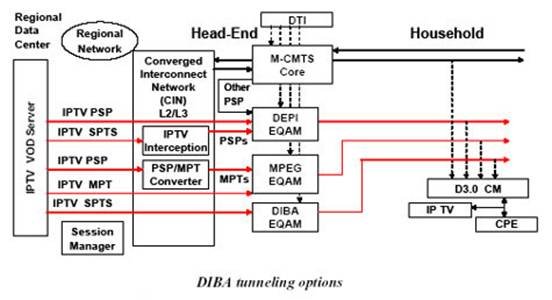
Some IPTV Implementation Lessons Canby Telcom This Texas company's president Keith Galitz commented "It hasn't been easy, but it's been a great experience for us". Canby is a 100-year-old telephone cooperative with 11,000 phone lines that started offering IPTV a couple of years ago, invested about $3 million by Dec 06, and has 900 IPTV subscribers of about 100 channels and VOD, no HD yet. Galitz added, "One of the biggest lessons learned is that customers are even less tolerant of disruptions to TV than to phone service; if you miss Tiger Woods' last putt on the 18th green, you're going to get a lot of angry people calling you, so you had better be prepared to deliver", and he continued "Customers just want it to work, the set-top-box reset is happening far too often to be acceptable to us or our customers". Regarding revenues, Canby anticipates "several years of negative cash" for IPTV services, although the company said DSL subscriptions are up thanks to IPTV (from 2,458 in 2005 to 3,891 lines in 2006). Hancock Telecom This Indianapolis company introduced IPTV in April 2005 to 600 subscribers (out of 8200 phone line services). As Canby above, the company offers about 100 channels, and VOD, but no HD yet. Mike Knoll, Hancock Telecom's CTO very honestly shared the painful experience: "Video is hard. It's very hard. The first six months were terrible, many customers calling for technical support with set-top boxes freezing up or otherwise malfunctioning, some of the problems result from subtle incompatibilities between the middleware and set-tops, and vendors have assured the Telcos that the kinks will be worked out; you'll hear that phrase a lot: 'It will be taken care of in the next release'". The company uses Amino Communications STBs and Minerva Networks middleware. Some Promising Implementations AT&T The company was preparing the introduction of an HD IPTV service as part of "U-Verse", a triple-play service of voice, video and data services to compete with cable, satellite and other Telco operators. "Right now the HD service is in a trial in San Antonio and we'll soon be offering it in Houston," said Ken Tysell, AT&T Homezone managing director. "We expect to be in 15 markets by the end of the year [2006]" said Jeff Weber, AT&T's vice president, product and strategy. Tatung's STB has been implemented in the service, but Scientific-Atlanta and Motorola STBs will also be offered with DVR functionality for $10 extra per month. AT&T's service total bandwidth to and from the home is 20-25 Mbps including video, Internet and voice services, and the company says is sufficient because they do not broadcast the full line up of channels all the time in parallel like a cable company does, they only deliver the selected channel to the subscriber, "It makes channel delivery more efficient and allows us to deliver more channels" AT&T said. "25 Mbps is perfectly adequate", Weber said. "There was an expectation that an HD stream would need 10 Mbps, but 8 Mbps is enough, and with advanced encoding techniques, that's dropping all the time. Even though AT&T can do two simultaneous HD streams, plus Internet access, plus two VoIP streams, I do not believe customers will be watching that much video simultaneously" Weber added. "Twenty years from now, [cable companies] will be all fiber, and we're all fiber. For us it's all just rehab. We have to do it anyway", Weber said. Cavalier Telephone & TV The company launched the first MPEG-4-based VOD IPTV service in partnership with VOD programming aggregator ViewNow for the Richmond VA area. The company plans to extend the service to Norfolk, VA, Baltimore, Philadelphia, and metro Washington, D.C during 2007. Disney World Resort Smart City Television announced 200+ IPTV video channels at the Walt Disney World Resort in Orlando, Fla., and residential neighborhoods in central Florida. The systems features Tut Systems' Astria head end equipment, Minerva Networks' iTVManager middleware, and Latens Systems' Foundation conditional-access system. Tut's Astria would be used for the digital channels conversion to analog for hotel viewers. DOCSIS 3.0 IPTV Implementation Two Motorola engineers, Michael Patrick and Gerald Joyce, submitted a paper at the SCTE Conference on Emerging Technologies suggesting the use of the DOCSIS channel to transmit IP video. They said the framework of DOCSIS 3.0 could help address the accelerated increase of video demand. A scenario was made about peak-usage for a node of 750 homes of which ¾ are cable users, and half of those were expected to demand non-popular content, creating a demand of about 10 Mbps for two SD streams. Such node was estimated to require about 2.8 Gbps, or 73 carriers. Operators (the paper said) typically reserve 5 carriers (1 for DOCSIS, 4 for VOD), which would not be sufficient for that load. That scenario was just for SD; HD would further increase that requirement. Typically, they said, the operator would have to increasingly install more CMTS to meet the growing demand for video. The paper suggested bypassing the M-CMTS redirecting the on-demand traffic through edge QAM as IP video within a DOCSIS IPTV Bypass Architecture (DIBA).
 It was also indicated that the alternative would require software updates to VOD servers as well as software updates for the CMTS, among other requirements.
The proposal for the creation of a DIBA tunnel using the DOCSIS 3.0 architecture would require a spec addendum, which would have to be submitted for consideration to CableLabs.
In the next article I will cover even more implementations of IPTV from other companies.
Next Article: IPTV Part 5 - Additional Implementations
It was also indicated that the alternative would require software updates to VOD servers as well as software updates for the CMTS, among other requirements.
The proposal for the creation of a DIBA tunnel using the DOCSIS 3.0 architecture would require a spec addendum, which would have to be submitted for consideration to CableLabs.
In the next article I will cover even more implementations of IPTV from other companies.
Next Article: IPTV Part 5 - Additional Implementations